
Introduction
In the world of metal casting, Lost Foam Casting (EPC) and Sand Casting are two common methods. This blog looks at the main differences: Lost Foam Casting Vs Sand Casting, and explains why LFC stands out as the better choice for today’s needs. While Sand Casting has served as the usual option for many years, Lost Foam Casting is quickly becoming the preferred way because it offers better accuracy, lower costs, and clear benefits for the environment. With improvements in foundry tools, many companies are now moving toward lost foam foundries to boost performance and cut down on daily expenses.
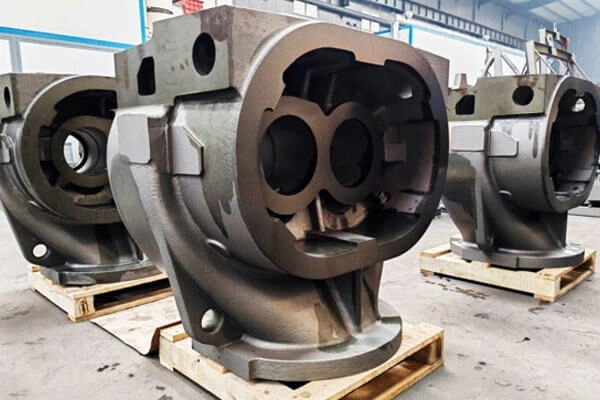
Lost Foam Casting Vs Sand Casting
Sand Casting: The Traditional Approach
Sand Casting means making a mold space in sand, then pouring hot metal into it. After the metal hardens, workers take away the sand to get the finished part. This method stays simple and popular, yet it faces problems with exactness, surface quality, and handling complicated shapes.
Lost Foam Casting: The Modern Innovation
In Lost Foam Casting, workers make a foam pattern first, cover it with a special heat-resistant layer, and put it in loose sand. When hot metal flows in, the foam quickly disappears as vapor, and the metal takes its place exactly. This way removes the need for cores, split lines, and a lot of extra machining, so it turns out more effective and cheaper overall.
Lost Foam Casting Vs Sand Casting: Data Comparison
| Feature | Lost Foam Casting (LFC) | Sand Casting |
|---|---|---|
| Design Complexity | Allows intricate, near-net-shape designs without cores | Limited by sand cores, making complex designs difficult |
| Dimensional Accuracy | ±0.005 mm/mm, reducing machining effort | Lower precision, often requiring additional machining |
| Surface Finish | Smooth (2.5–25 µm) with minimal finishing | Rougher surface requiring extensive post-processing |
| Production Cost | 20-50% lower due to reduced material waste | Higher due to more material and machining requirements |
| Material Efficiency | No risers or exothermic sleeves, reducing metal consumption | More metal is needed, increasing costs |
| Eco-Friendliness | No chemical binders or sand wastage, making it a green process | Generates dust, requires chemical binders |
| Energy Savings | 27% less energy is required compared to Sand Casting | Higher energy consumption |
Why Lost Foam Casting is Superior to Sand Casting
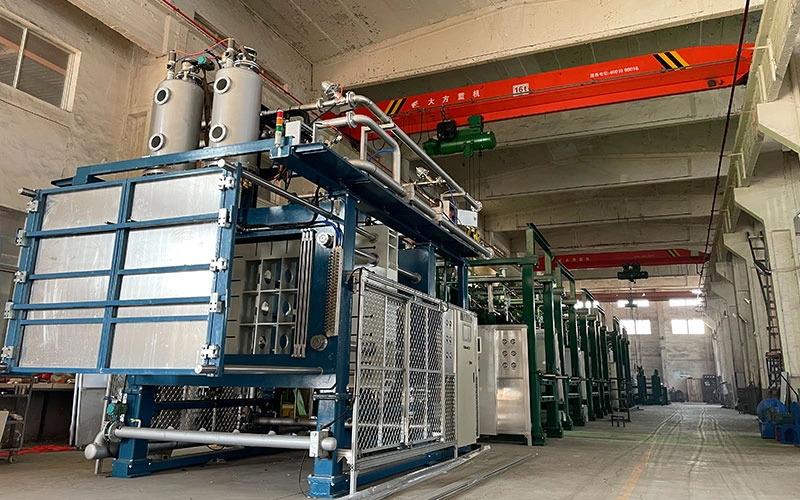
1. Enhanced Design Freedom
Lost Foam Casting gives much more room for creative shapes. It lets workers join complicated parts without using sand cores. As a result, several pieces can become one strong unit. This helps lower weak spots and makes items last longer. Fields like automotive, agriculture, and heavy machinery gain a lot from this choice. They can create detailed parts such as engine blocks, cylinder heads, pump housings, and valve bodies all in a single step.
2. Cost Savings and Material Efficiency
Since it skips cores, binders, and heavy finishing work, Lost Foam Casting cuts production expenses by up to 35% when compared to Sand Casting. Moreover, almost 98% of the sand can be used again. This makes the whole process very sustainable. The close-to-final shape means less scrap and fewer follow-up steps. Thus, it brings big savings in time and supplies, especially for large runs.
3. Superior Surface Finish & Precision
Sand Casting often needs extra work to smooth things out. In contrast, Lost Foam Casting delivers a clean finish (2.5–25 µm) along with close tolerances (±0.005 mm/mm). Parts require little grinding or polishing. This saves material too. The vaporizing pattern copies tiny details reliably. So, the final items show fewer flaws and meet tough standards easily.
4. Environmental and Energy Benefits
Lost Foam Casting runs clean and without dust. It avoids harmful fumes and uses 27% less power. On the other hand, Sand Casting creates dust, needs chemical binders, and takes more energy. Without binders and with reusable loose sand, LFC leaves a smaller mark on nature. This fits well with worldwide goals for greener manufacturing.
5. Faster Production and Reduced Waste
Lost Foam Foundries reach high output levels (85-90%). Meanwhile, Sand Casting sees lower success rates because of core problems. With LFC, issues like shifting cores, trapped dirt, or bad surfaces happen far less. Modern automated lines speed up the work even more. They allow quicker cycles, greater volume, and steady results.
Why Foundries are Switching to Lost Foam Casting
The benefits of Lost Foam Casting over Sand Casting are clear and strong. It brings sharper accuracy, lower expenses, and better care for the environment. Because of this, lost foam foundries are setting the new norm for top-quality, detailed metal parts.
The change comes from growing needs for smart methods that handle tough designs in areas such as automotive (engine blocks and gearbox housings), agricultural equipment, valves, pumps, and machinery parts. As tools improve, LFC keeps providing flexible options for small test runs or big ongoing work. This makes it a smart pick for companies looking ahead.
OC Technology, a leading manufacturer, supplier, and factory specializing in high-end intelligent lost foam casting equipment, provides comprehensive turnkey solutions to facilitate this transition. Key offerings include:
- Fully automatic EPS shape molding machines for precise foam pattern production
- Energy-efficient pre-foaming machines and maturation silos
- Advanced air dryers with heat pump systems for optimal drying
- Central vacuum systems and high-performance coating equipment like lift-type paint mixers
- Complete automated white-area and yellow-area production lines These solutions integrate cutting-edge automation, energy-saving features, and reliable after-sales support to help manufacturers achieve higher efficiency and quality.
FAQ
What is the main difference between Lost Foam Casting and Sand Casting?
Lost Foam Casting uses an evaporative foam pattern that vaporizes during pouring, eliminating cores and parting lines, while Sand Casting relies on packed sand molds with potential cores for complex shapes.
Is Lost Foam Casting more environmentally friendly than Sand Casting?
Yes, LFC uses unbonded sand without chemical binders, produces no dust emissions, and reuses nearly all sand, making it significantly greener.
Which process offers better dimensional accuracy?
Lost Foam Casting provides superior tolerances (±0.005 mm/mm) and smoother surfaces, reducing the need for machining compared to Sand Casting.
Can Lost Foam Casting handle complex designs?
Absolutely, LFC excels at intricate, near-net-shape parts without cores, ideal for consolidated assemblies.
What are the cost benefits of switching to Lost Foam Casting?
Production costs can drop 20-50% due to less material waste, reduced machining, and higher yield rates.
How much energy does Lost Foam Casting save?
It requires up to 27% less energy than traditional Sand Casting methods.
Upgrade to Advanced Lost Foam Casting Solutions
Foundry manufacturers and suppliers seeking to enhance precision, reduce costs, and achieve sustainable production should consider partnering with a reliable equipment provider. OC Technology offers turnkey lost foam casting lines, automated white-area equipment, and customized solutions tailored for high-volume operations in automotive, machinery, and valve production. Contact the team today to discuss project requirements, explore equipment options, and schedule a consultation for seamless foundry upgrades. Email: zyh@oc-epc.com or visit https://www.oc-epc.com/ for details.


 English
  Arabic
  Hindi
Hindi  Indonesian
  Japanese
  Korean
  Malay
Malay  Portuguese
  Spanish
  Thai
Thai  Vietnamese