
Lost foam casting (EPC), is a modern metal casting method. It uses a polystyrene foam pattern covered with refractory material and placed in loose sand. When molten metal is poured in, it burns away the foam and takes its place, creating castings with very good accuracy and almost no extra work afterward. This method works especially well for making complicated shapes, internal channels, and near-net-shape parts used in cars, machines, and big equipment.
Even though it has many benefits—such as better size control, less machining needed, no cores or parting lines, and more design freedom—lost foam casting still has some special problems. Many defects come from poor foam pattern quality, bad coating work, weak sand packing, wrong vacuum use, bad pouring settings, or trouble with gas removal. Fixing these common issues with careful process improvements leads to better castings, fewer scrapped parts, and smoother production.
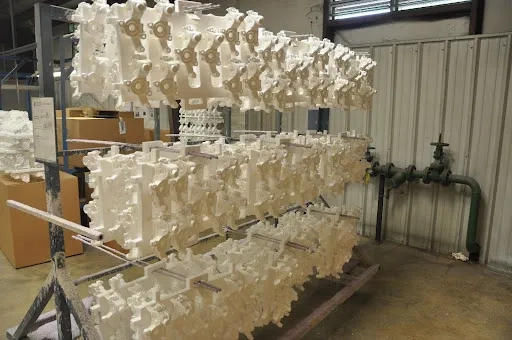
Common Pitfalls in Lost Foam Casting
1. Porosity and Gas Defects
Porosity is one of the most usual problems in lost foam casting. Gases created while the foam burns away do not always leave completely. They get trapped inside the cooling metal. This happens because of weak venting, low coating permeability, too-dense foam, high moisture inside the mold, or not enough vacuum. Turbulent pouring makes it worse by trapping gases in some spots.
2. Sand Sticking (Burn-On)
Sand sticks to the casting surface when metal pushes through the coating or the mold is not strong enough. Reasons include thin or uneven refractory coatings, too much negative pressure that pulls sand down, weak sand compaction, or very hot pouring that wears away the mold.
3. Wrinkles and Fold Defects
Wrinkles show up when foam burning creates extra carbon leftover that collects on the cavity surface, especially at the cooler end of the metal flow or at the top. This comes from fast foam breakdown, high-density patterns, or poor burning conditions.
4. Carbon Black or Lustrous Carbon Defects
This defect is very common in high-carbon irons such as ductile iron. It happens because of incomplete foam burning or too much carbon from the pattern. Binders or high magnesium levels in nodular iron make it worse by raising the temperature for oxide film formation.
5. Slag Inclusions and Metal Penetration
Slag inclusions come from dirt in the molten metal, reactions between magnesium and sulfur, or bad degassing. Metal penetration takes place when coatings are not thick enough or do not let gas through well, so molten metal touches the sand directly.
6. Misruns, Cold Shuts, and Incomplete Filling
These defects appear because of fast cooling, bad metal flow, or not enough feeding. Turbulent pouring, poor gating design, or metal that is not hot enough stops the cavity from filling completely.
7. Mold Collapse or Distortion
Weak sand compaction, bad vacuum control, or soft foam patterns cause the mold to become unstable during pouring. This leads to wrong dimensions or even casting failure.
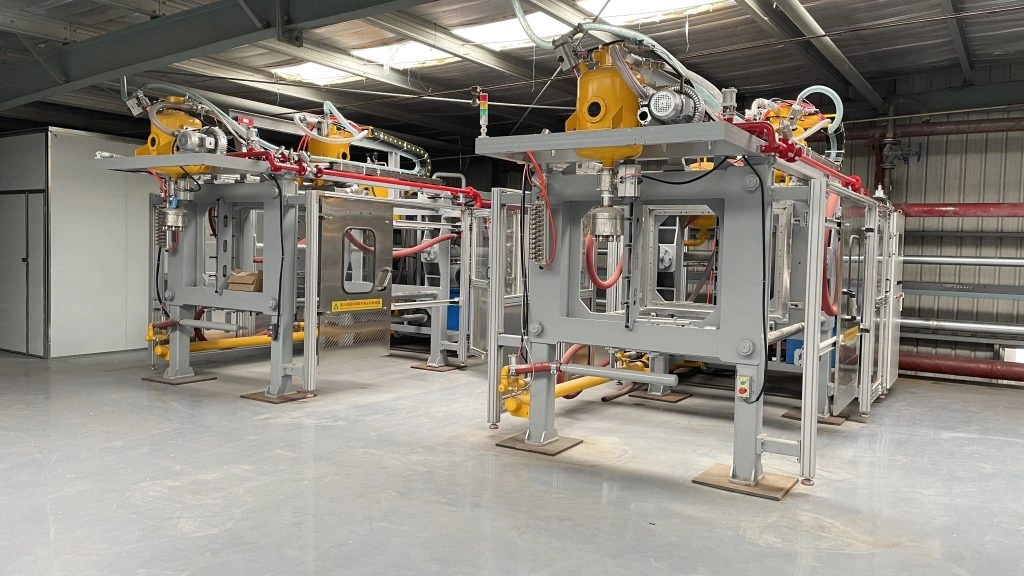
Effective Solutions to Overcome These Pitfalls
Improving the lost foam casting process needs careful attention at every step: pattern making, coating application, mold preparation, and pouring.
For Porosity and Gas Defects
Use high-quality, low-density foam patterns that leave behind fewer burning leftovers. Choose coatings with better air passage. Add good venting systems and use vacuum help to pull gases out quickly. Degass the molten metal before pouring. Keep sand moisture very low. Closed gating systems and keeping liquid metal in the pouring basin stop air from being pulled in.
For Sand Sticking
Put on even, thick enough refractory coatings that resist heat well. Adjust negative pressure so it does not pull sand too much. Choose coarser sand for better air flow and pack it very well. Add thicker coatings or chill inserts in important areas.
For Wrinkles and Carbon Black
Pick low-density EPS foam so it burns faster and leaves less residue. Control pouring temperature and speed for steady burning. Raise vacuum levels to remove burning gases better. Coarser sand and good permeable coatings help gases escape easily.
For Slag Inclusions and Penetration
Use ceramic foam filters to clean the molten metal and remove dirt. Watch alloy composition to reduce magnesium/sulfur reactions. Make sure coatings stay strong by mixing and applying them correctly with good equipment.
For Misruns and Cold Shuts
Design better gating systems to lower turbulence and support directional solidification. Keep pouring temperature and speed steady. Add feeding aids or risers where needed to supply enough metal.
For Mold Collapse
Pack sand properly using vibration tools. Control vacuum carefully so the mold stays stable without too much force. Handle foam patterns gently to avoid any bending before they go into the sand.
Small test runs help find problems early before full production starts. Modern simulation software can predict defect risks and improve settings.
Using these fixes requires steady equipment across the whole process. Automated machines for foam making, drying, vacuum control, and coating preparation reduce human mistakes and keep results the same every time.
Lost foam casting gives excellent results when these common problems are handled early. Foundries that use strict controls get higher good-part rates, lower costs, and better component quality.
OC Technology Lost Foam Casting Equipment
For manufacturers and suppliers looking for reliable lost foam casting equipment, OC Technology stands as a specialized manufacturer, supplier, and factory. Based in Hangzhou, China, the company produces high-end intelligent white-area equipment, incorporating German EPS/EPP technology with independent patents. Key offerings include foam sheet machines, horizontal and vertical PLC hydraulic forming machines, indoor/top/rear-mounted air dryers, central vacuum systems, lift-type paint mixers, and maturation silos. These solutions support turnkey projects, automation, energy efficiency, and defect reduction in lost foam casting operations.
FAQ
What is the most common defect in lost foam casting?
Porosity from trapped gases ranks as the most frequent defect, resulting from inadequate gas escape during foam vaporization.
How can porosity be prevented in EPC?
Prevention involves using low-density foam, permeable coatings, effective vacuum systems, proper venting, and degassed molten metal.
Why does sand sticking occur in lost foam casting?
It arises from coating failure, excessive negative pressure, poor compaction, or metal penetration into the sand.
Is lost foam casting suitable for high-carbon irons?
Yes, but careful foam selection (e.g., EPS-PMMA copolymers) and process controls mitigate lustrous carbon defects.
What role does vacuum play in lost foam casting?
Vacuum extracts pyrolysis gases, improves filling, and maintains mold stability, significantly reducing defects.
Partner with a Trusted Lost Foam Casting Equipment Manufacturer
Manufacturers, suppliers, and factories upgrading lost foam casting operations benefit from partnering with an experienced equipment provider. Contact OC Technology today to explore customized high-end intelligent EPC solutions, turnkey production lines, and expert technical support for enhanced efficiency, quality, and cost savings. Reach out via the official website to discuss requirements and elevate production capabilities.


 English
  Arabic
  Hindi
Hindi  Indonesian
  Japanese
  Korean
  Malay
Malay  Portuguese
  Spanish
  Thai
Thai  Vietnamese