
The EPS Pre Expander Machine plays an important part in current foundry work. It is especially useful in the lost foam casting process. This equipment changes raw expandable polystyrene (EPS) beads into foam beads with exact control over low density. These beads are necessary for making good casting patterns. Industries now need better efficiency, accuracy, and lower costs in metal casting. Because of this, the EPS Pre Expander Machine has become very important. It helps get steady results in large production settings.
Lost foam casting is also called evaporative pattern casting. It gives clear benefits compared to older ways. It lets factories make complex metal parts with less machining. It cuts down on assembly steps and gives very good size accuracy. The whole method depends a lot on the quality of EPS foam patterns. So the pre-expansion step is basic to the final success.
Understanding Lost Foam Casting
In lost foam casting, workers make a foam pattern that copies the final metal part. They coat it with refractory material. Next, they place this pattern in unbonded sand. Then they pour hot metal straight onto it. The foam turns into vapor when it meets the hot metal. This leaves an exact space that the metal fills. This method works well for making detailed shapes. It handles inside passages and combined parts. These would be hard or expensive with usual sand casting or investment casting.
The full process starts with good EPS beads. Raw beads need pre-expansion. This step reaches the right density and evenness before they go into molds for patterns. If pre-expansion is not dependable, patterns can have differences in weight, strength, or surface quality. These differences cause problems in the finished casting.
The Critical Role of the EPS Pre Expander Machine
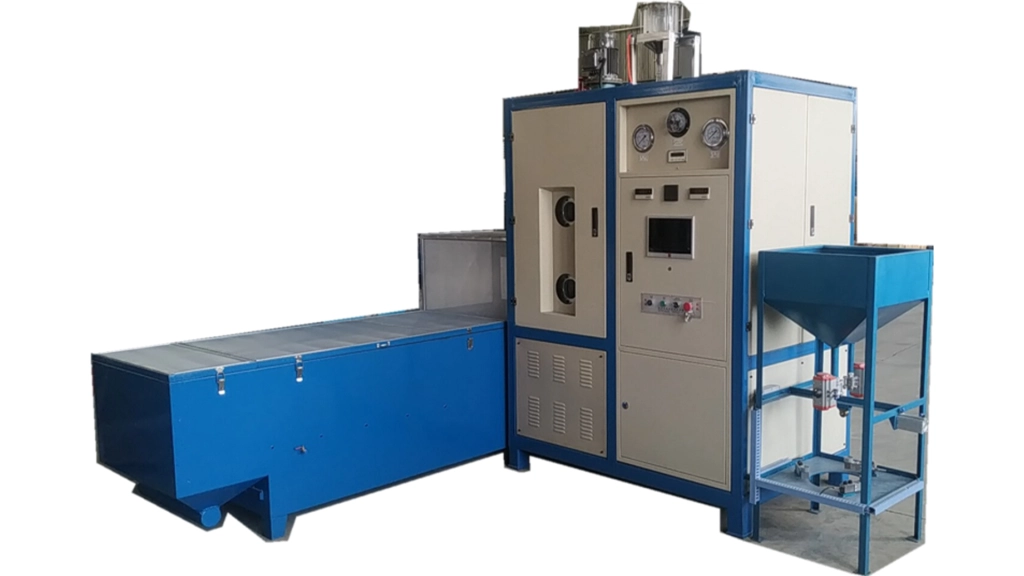
The EPS Pre Expander Machine does the first expansion of raw EPS beads. It increases their volume in a big way and keeps good control over density. This step makes sure the beads are light, even, and ready for later molding. In lost foam casting, pre-expanded beads that have steady qualities help pattern stability. They lower scrap rates and give better casting quality.
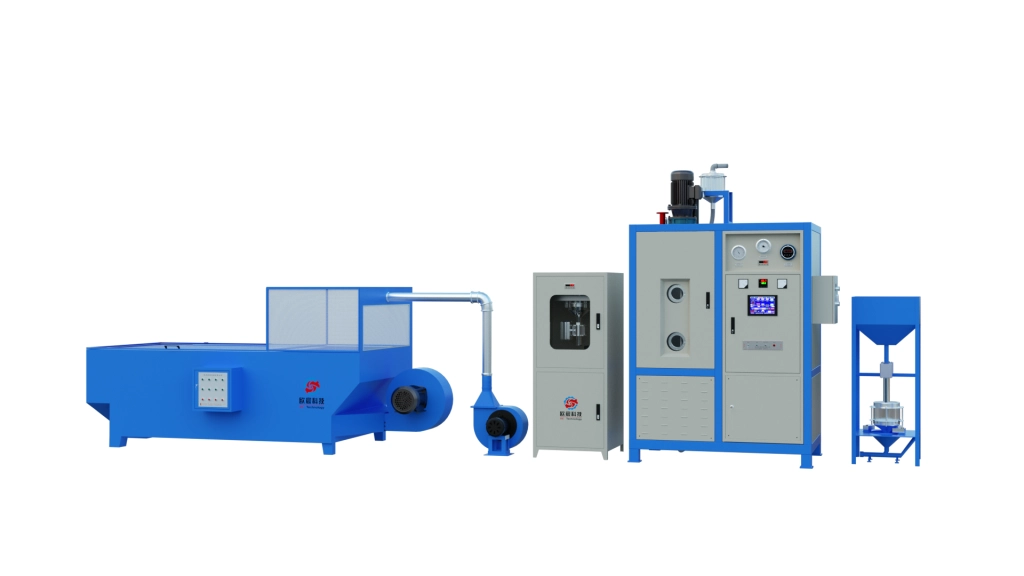
Current machines, such as fully automatic models with built-in fluidized drying beds, make this process smoother. They use exact automation and mixed heating ways. These parts reduce changes and improve output for factory-size work.
Working Principle of the EPS Pre Expander Machine
The working principle of an EPS Pre Expander Machine is based on controlled physical foaming. It uses heat to start a blowing agent inside the polystyrene beads.
Bead Loading and Initial Preparation
Raw EPS beads contain a hydrocarbon blowing agent like pentane. Workers load them into the expansion chamber. The machine usually has screening parts to take out impurities before processing.
Heating and Expansion
The chamber uses a mix of electromagnetic heating and steam. Electromagnetic heating keeps the barrel temperature steady near 98°C. It creates a dry environment without water. This mixed method stops problems like “dead beads” (unexpanded or bad particles). At the same time, it makes sure expansion is even. Steam makes the polystyrene soft. Then the blowing agent turns to vapor. This expands the beads up to 20-50 times their original volume.
Density Control
Quantitative foaming uses electronic weighing for good accuracy. Pre-weight deviation stays within ±1 gram in usual cases. Proportional valves and pressure-reducing valves keep the best temperature and steam pressure during the full cycle.
Fluidized Bed and Maturation
After expansion, beads move to a fluidized drying bed. This bed has a vibrating screen. A double-layer stainless steel screen filters raw materials from the transition bin. It sends them to the maturation bin. This step gives clean and even beads. It also stops them from sticking together.
Discharge and Cooling
The bottom-discharge design lets material come out fast and complete with good speed. When the discharge door opens, compressed air cools the foaming barrel by itself. This shortens cycle times and keeps the equipment ready. No bead sticking happens in the pre-release bucket.
PLC computer control manages the full process. It stores parameters for tracking across different shifts. One-click startup and automatic work make operation easier. It also supports a pre-issue parameter database for quality checks.
This principle gives full beads without breaks. The beads have smooth round surfaces. They are perfect for lost foam pattern production.
Key Benefits in Lost Foam Casting Applications
The EPS Pre Expander Machine gives many practical and quality benefits:
Precision and Consistency
Electronic weighing and automated controls reach close density limits. This leads to even pattern weights and sizes. It cuts casting defects and raises good output.
Efficiency and Productivity
Quick discharge, good drying, and automatic operation help steady production. Models like the OC-YF-Y450 and OC-YF-Y550 give capacities that fit different output needs. Their dimensions are 1650x1200x2680 mm (40kg) and 1750x1250x3450 mm (60kg) one after another.
Energy Savings and Environmental Performance
The electromagnetic-steam mixed method makes energy use better. It keeps a clean foaming space. Parts like leakage and power outage protection improve safety and dependability.
Versatility
The equipment works with different materials. These include EPS, FD, and copolymers. This makes it useful for many lost foam casting needs.
Quality Traceability and Remote Capabilities
PLC systems with human-machine interfaces allow remote control, updates, debugging, and data records. This helps meet rules and steady progress in current foundries.
Reduced Defects
Dry barrel conditions and vibrating screens lower impurities and bead damage. They lead to stronger and more dependable foam patterns. These patterns turn to vapor in a clean way during casting.
In lost foam casting, these benefits add up to lower material costs. They give faster mold production cycles. They also allow making complex parts with little extra work after. Foundries note better surface finishes, closer sizes, and more design choices.
Technical Features Enhancing Performance
Advanced EPS Pre Expander Machines include strong safety and work improvements:
PLC Automation with Parameter Databases
PLC automation with parameter databases.
Proportional Valve Temperature Control and Pressure Regulation
Proportional valve temperature control and pressure regulation.
Remote Monitoring and Optimization
Remote monitoring and optimization.
Dual Screening in the Fluidized Bed
Dual screening in the fluidized bed.
Bottom-Discharge System for Speed and Cleanliness
Bottom-discharge system for speed and cleanliness.
Automatic Post-Discharge Cooling
Automatic post-discharge cooling.
Comprehensive Protection Systems
Comprehensive protection systems.
These parts make sure of long-term dependability in tough factory conditions.
Applications Across Industries
Lost foam casting with good pre-expanded EPS helps areas like automotive, agriculture, heavy machinery, and consumer goods manufacturing. Tractor parts, engine components, aluminum castings, and detailed housings gain from the process. It brings several parts together into one casting. This cuts assembly and machining work.
Turnkey projects show how it can grow. They go from white-zone equipment setups to full production lines. These lines make thousands of tons each year.
FAQ
What is the primary function of an EPS Pre Expander Machine in lost foam casting?
It expands raw EPS beads to a controlled low density. It creates even material for molding high-precision foam patterns. These patterns vaporize during metal pouring.
How does the hybrid electromagnetic-steam foaming method improve results?
It keeps a stable 98°C dry barrel environment. This stops dead beads. It produces full expanded beads with smooth surfaces and little break.
What density control accuracy can be expected?
Electronic weighing makes sure pre-weight deviation stays within ±1 gram. This supports steady pattern quality.
Is the machine suitable for different materials?
Yes, it processes EPS, FD, copolymers, and similar materials well.
What automation features support quality management?
PLC control with parameter storage, one-click operation, remote access, and traceability databases make shift monitoring and process improvement easier.
How does the fluidized bed contribute to bead quality?
Vibrating screens filter impurities. The drying process stabilizes beads before maturation.
Partner with a Leading Lost Foam Casting Equipment Manufacturer and Supplier
For foundries and manufacturers looking for dependable high-end intelligent lost foam casting solutions, choosing the right EPS Pre Expander Machine supplier is necessary. As a specialized manufacturer and factory with knowledge in white-area equipment, OC Technology provides fully automatic pre-foaming systems. These systems connect with fluidized drying beds. They also come with full production lines. Their focus on German-inspired technology, independent patents, energy efficiency, and automation helps large high-quality work. Contact the supplier today via email at zyh@oc-epc.com or telephone +86 15988479417. Discuss custom setups, factory abilities in Hangzhou, and turnkey project support for better lost foam casting output.


 English
  Arabic
  Hindi
Hindi  Indonesian
  Japanese
  Korean
  Malay
Malay  Portuguese
  Spanish
  Thai
Thai  Vietnamese