
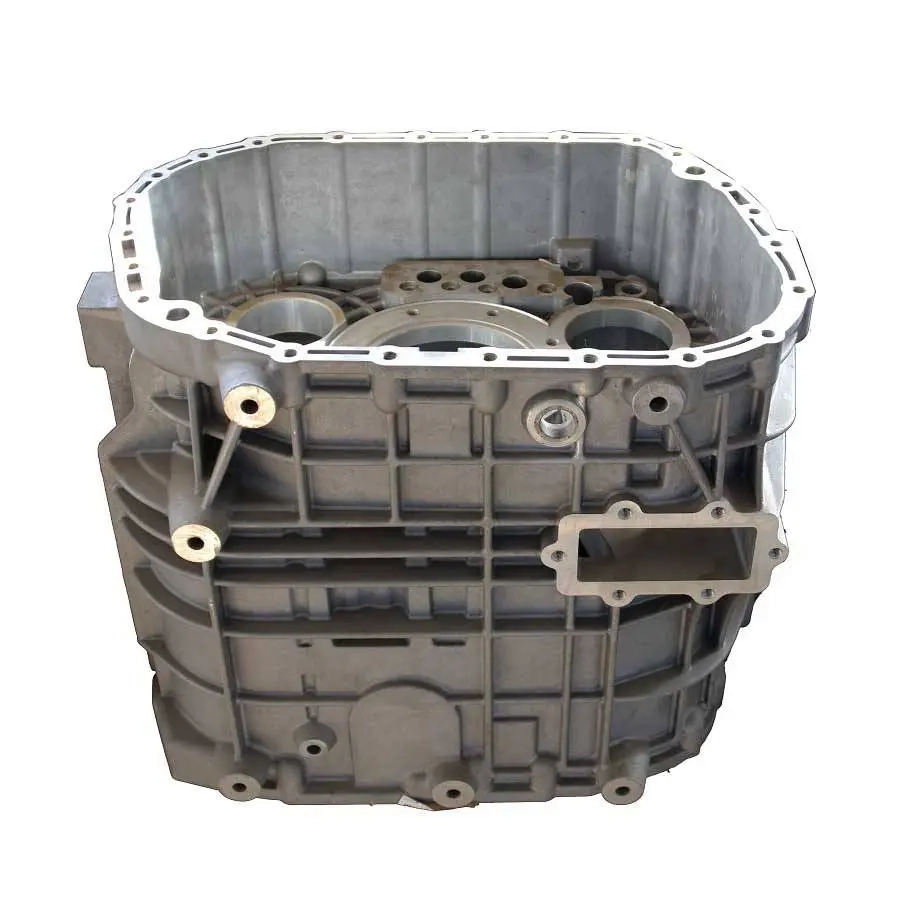
In current making, aluminum casting keeps changing to better close work, less cost, and more plan bend. Among many methods, lost foam aluminum casting—also known as lost foam casting aluminum alloy, aluminum lost foam casting, or lost foam casting of aluminum alloy—gains quick notice in the field. This new casting way joins the easy of sand casting with the close of investment casting. As a result, it becomes a more picked fix for hard aluminum parts in many fields.
ما هو صب الألومنيوم بالرغوة المفقودة؟
Lost foam aluminum casting acts as an air pattern casting method. It uses expanded polystyrene (EPS) foam to make a full-size copy of the end part. The foam pattern gets a cover of fire-proof stuff. Then, it goes into dry sand. Next, hot aluminum takes its place during pour. Unlike old casting ways, the foam pattern does not come out. Instead, it turns to gas when hot aluminum goes in the mould. It leaves a close metal copy. This “no-pattern-removal” way cuts many limits in standard casting methods. For example, it skips needs for slope angles, split lines, and core spots.
How the Lost Foam Casting Process Works
The lost foam casting aluminum alloy method often follows these clear steps:
Foam Pattern Creation
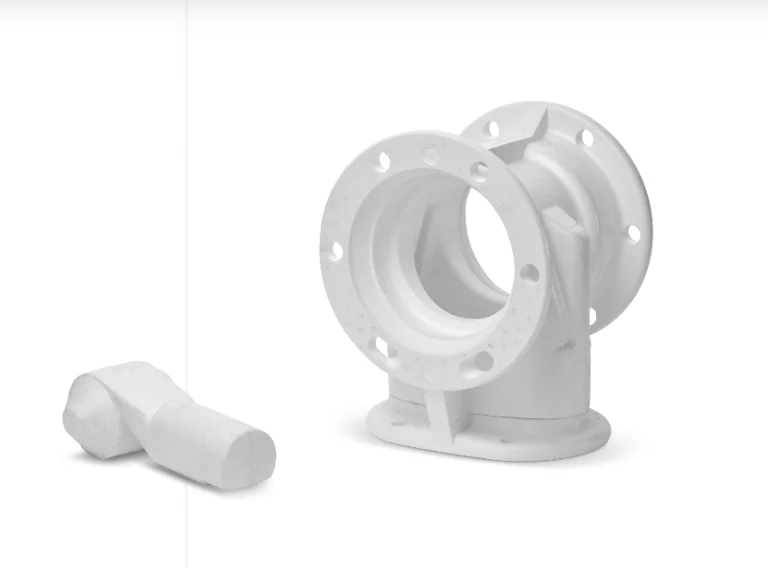
A foam form comes from EPS beads. They shape via push into warm aluminum tools or CNC-cut from foam blocks for tests. For big-batch output, pre-air beads go in at low push. Steam joins them. The forms hold about 97.5% air and 2.5% polystyrene. Ready pour bowls, runners, and risers often stick with hot glue to the form.
تطبيق الطلاء
The foam pattern dips in a fire-proof mix. It makes a thin, pass-through, heat-hold shell. The cover guides gas out during break. At the same time, it keeps face quality. Cover traits, like pass-through and size, matter a lot for flaw stop.
Mold Preparation and Embedding
The covered pattern sits in a box. Dry, loose sand goes around it. Shake packs the sand. This gives build hold and stops fall during pour.
Pouring Molten Aluminum
Hot aluminum, often at 650–780°C by the alloy, pours into the mould. The foam turns to gas right away. Break gases go out through the pass-through cover into the sand. The metal fills the space step by step. It takes the foam spot exact.
Solidification and Shakeout
After hard set, the casting comes from the sand. The sand works again. The near-end-shape part needs little end work. This comes from no cores or split lines.
This simple flow cuts many steps like core build, mould join, and pattern pull. It boosts full work rate.
Why Aluminum Is Ideal for Lost Foam Casting
Aluminum alloys fit lost foam casting very well. This comes from their traits:
- Low melt point (around 660–750°C). It works with set foam gas turn without too much gas trouble.
- Light weight (density ~2.7 g/cm³) but strong. It fits build jobs that need weight cut.
- Good rust fight for long use time.
- Fine flow, which lets hard mould fill and thin parts (down to ~2.5 mm in some cases).
- Common alloys include A356 (hypoeutectic Al-Si-Mg for high strength and heat treatability), A319 (Al-Si-Cu for elevated temperature performance), and A380 (for general-purpose applications).
These points let aluminum lost foam casting make very fine, size-true parts. It does this with few flaws when set points work right.
Key Advantages of Lost Foam Aluminum Casting
Lost foam casting gives clear tech gains for aluminum output:
- Exceptional Design Freedom Enables highly complex geometries, internal passages, undercuts, and uniform wall thicknesses without cores or multi-part molds.
- High Dimensional Accuracy Tolerances often ±0.007″ to ±0.010″ per inch, with no flash or parting lines due to the single-piece pattern.
- Superior Surface Finish Refractory coating yields smooth surfaces (63–250 RMS), reducing or eliminating secondary machining.
- No Parting Lines or Flash Eliminates defects associated with mold separation.
- Reduced Machining and Labor Near-net-shape production cuts finishing work, material waste, and operational costs.
- Elimination of Cores Removes core-related defects and assembly steps.
- Environmentally Friendly Reusable dry sand, no binders, lower energy use, and reduced emissions compared to some alternatives.
Comparison with Other Aluminum Casting Methods
Lost foam casting stands well against common other ways for aluminum parts:
- Versus green sand casting: Offers better dimensional accuracy, no flash, no cores, and superior surface finish, though sand casting suits very large or low-volume parts better.
- Versus permanent mold casting: Provides greater design complexity and zero draft, with similar tolerances but lower tooling wear in lost foam for intricate shapes.
- Versus die casting: Achieves comparable precision for complex parts without high-pressure equipment, though die casting excels in thin walls and high volumes.
- Versus investment casting: Lower tooling costs and suitable for larger parts, with good accuracy but slightly coarser surface finish.
Applications of Lost Foam Aluminum Casting
Lost foam casting of aluminum alloy sees wide use because of its bend and close work. It fits in:
- Automotive industry: engine blocks, cylinder heads, transmission housings, intake manifolds (achieving 15–20% weight savings).
- Aerospace sector: lightweight structural components and housings.
- Machinery and equipment: pump housings, valve bodies.
- Electronics: heat sinks and enclosures.
- Agricultural and heavy equipment: complex load-bearing parts.
The method works best where hard inside builds, thin walls, and weight cut matter.
Challenges and Considerations in Lost Foam Aluminum Casting
Some points need good care:
- Foam pattern fragility may lead to deformation during handling.
- Gas generation during foam decomposition requires proper coating permeability and venting to avoid porosity.
- Process control is critical; issues like high metal velocity, improper pouring temperature, or low coating permeability cause defects such as gas porosity, laps, misruns, or inclusions.
- Patterns are vulnerable to distortion, and pyrolysis gases can introduce porosity if not managed.
Stop steps cover set cover traits, watch pour speeds, make sure even sand pack, and use flow check for flaw guess.
Why Lost Foam Casting Is Gaining Popularity
Some making shifts speed up use of lost foam aluminum casting:
- Demand for Complex Lightweight Components Industries require lightweight yet intricate aluminum parts, especially in automotive and aerospace.
- Cost Efficiency in Mass Production Elimination of cores, reduced machining, reusable sand, and lower labor lower overall costs.
- Digital Manufacturing Integration Foam patterns produced via CNC or molding enable rapid prototyping and scalable production.
- Sustainability Requirements The process minimizes waste, energy consumption, and chemical additives.
- Process Simplification Streamlined workflow reduces labor intensity and production time compared to traditional methods.
These gains set lost foam casting as a key fix for makers who want work and work rate.
FAQ:
Is lost foam casting suitable for aluminum alloys?
Yes, aluminum alloys are highly suitable due to their low melting point, excellent fluidity, and compatibility with foam vaporization.
How does lost foam casting differ from sand casting?
Lost foam casting eliminates parting lines, cores, and binders, using foam patterns that vaporize during pouring for better accuracy and finish.
Partner with a Professional Lost Foam Casting Equipment Manufacturer
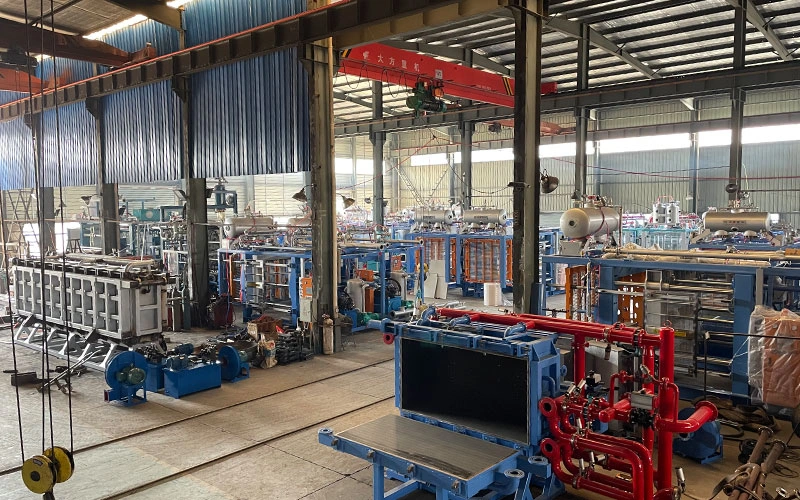
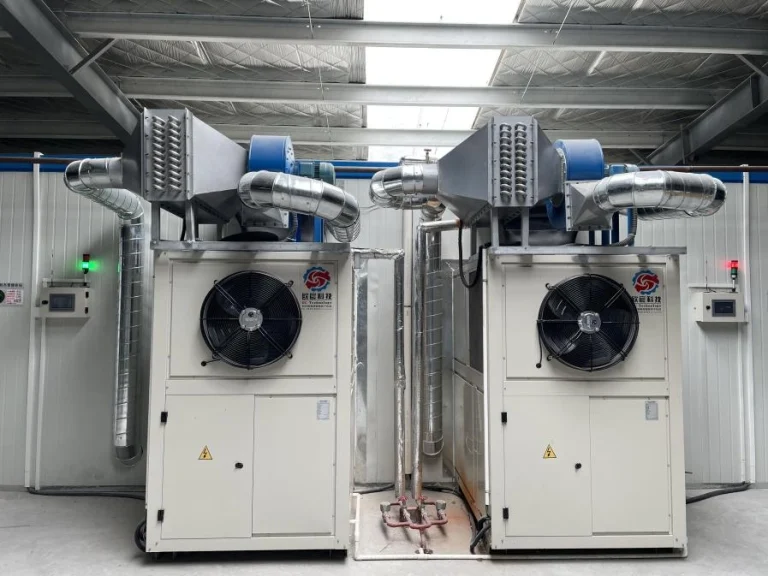
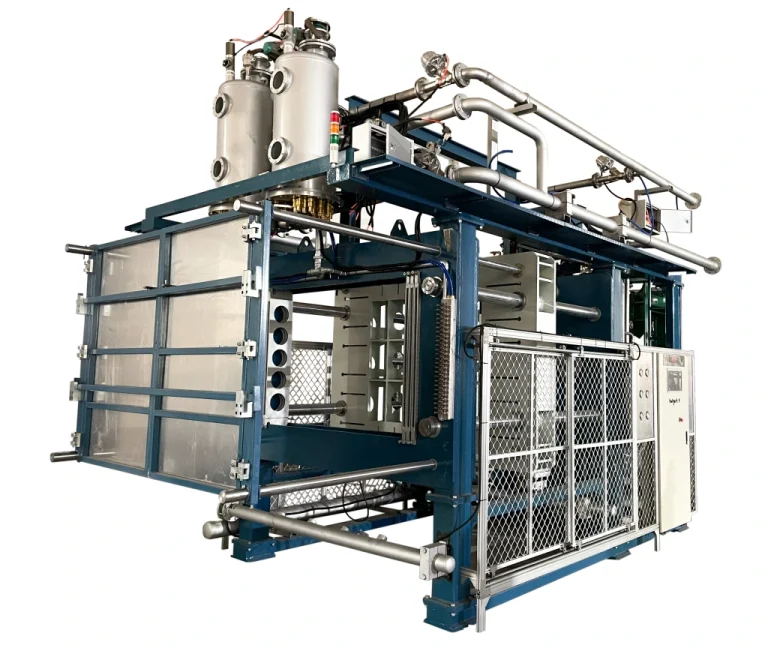
For foundries that aim to take or update lost foam casting aluminum alloy output, picking the right manufacturer, supplier, and factory link matters a lot. تكنولوجيا OC focuses on plan and output of new lost foam casting equipment. It offers complete solutions for modern foundries. Its product range includes lost foam casting production lines, sand processing systems, foam pattern molding equipment (such as fully automatic vacuum EPS pre-expander machines and vertical/horizontal foam molding machines with PLC control), coating and drying systems (energy-saving air dryers), automatic pouring and control systems, central vacuum systems, hot-melt automatic bonding machines, and anti-static maturation silos. With a strong focus on innovation and process optimization, OC Technology provides reliable solutions tailored to large-scale industrial aluminum casting applications. اتصل بتكنولوجيا OC اليوم
 Arabic
  English
  Hindi
Hindi  Indonesian
  Japanese
  Korean
  Malay
Malay  Portuguese
  Spanish
  Thai
Thai  Vietnamese