
For export-oriented foundries, investing in a new production line now involves more than comparing machine price, output, and delivery time. Process stability, operating cost, energy use, and reliable production records all affect how well the line performs over the long term.
EU CBAM 2026 adds a new reporting consideration for companies supplying the European market. The EU Carbon Border Adjustment Mechanism entered its definitive regime on January 1, 2026. For CBAM goods subject to the mass-based threshold, importers whose annual CBAM imports exceed 50 tonnes face authorization and reporting requirements, while the first annual declaration covering 2026 imports is due by September 30, 2027.
Not every casting exported to Europe falls under CBAM; product classification comes first. For foundries planning a new Lost Foam Casting Line, equipment selection still starts with the casting program, target output, utilities, and plant conditions. تكنولوجيا OC supports these projects with white-area equipment and EPC production-line solutions built around actual production needs.
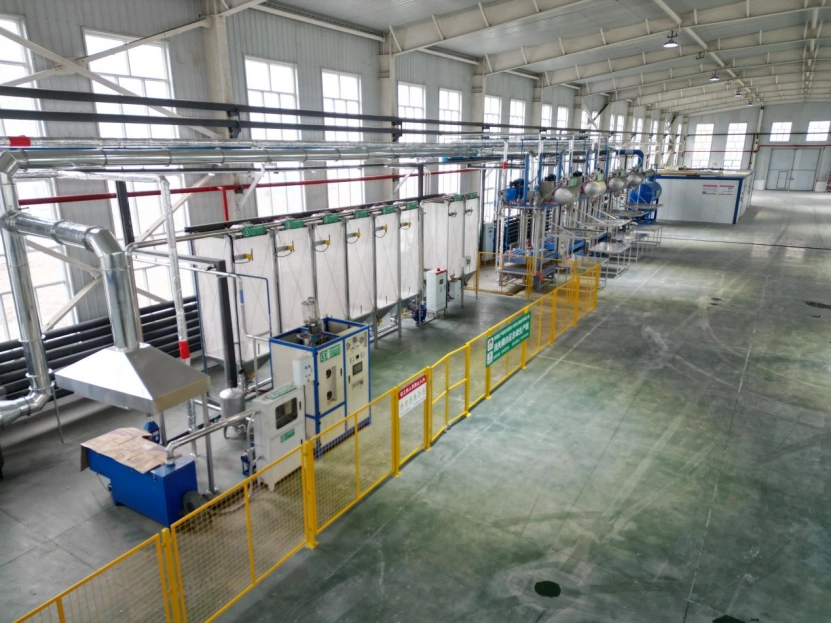
How EU CBAM 2026 Changes the Questions Export-Oriented Foundries Need to Ask
CBAM is an EU mechanism, but the manufacturing data behind an imported part may come from a foundry far outside Europe. Before discussing machines, the exporter needs to know whether the product is in scope and what information the EU customer may need. This keeps regulatory reporting separate from broad claims about “green” equipment.
Start With the Product CN Code, Not the Casting Process
CBAM currently covers selected goods in six sectors: iron and steel, aluminum, cement, fertilizers, electricity, and hydrogen. Coverage follows the relevant CN code and legal scope. A component does not fall under CBAM simply because it was made by casting.
The EU is also working on an extension to selected downstream products. As of August 2026, that extension remains in the legislative process. The Council agreed its negotiating position in June 2026 ahead of negotiations with the European Parliament.
For an export foundry, the sequence is clear: identify the product and CN code, confirm whether current CBAM rules apply, then determine what emissions information is relevant.
Why 2026 Emissions Data Matters for the First 2027 CBAM Declaration
For covered imports, 2026 is the first operating year feeding into an annual CBAM declaration. EU importers can use Commission default values or actual emissions values. When actual values are used, verified emissions information is required under the CBAM verification framework.
Stable process settings, clear batch records, and consistent operating data already support quality control. In affected supply chains, they can also support CBAM reporting. The machinery does not make a plant “CBAM compliant,” but a repeatable process makes production easier to manage and document.
What a Lost Foam Casting Line Can—and Cannot—Influence Under CBAM
أ Lost Foam Casting Line can influence utility demand, process consistency, downtime, scrap, rework, and production traceability. Those factors affect operating cost and plant performance. They do not replace the regulatory calculation of embedded emissions. OC Technology’s guide to sizing and configuring a Lost Foam Casting Production Line covers line balance, utilities, drying load, and vacuum demand in more detail.
Plant Energy Use and CBAM Emissions Are Not the Same Thing
Steam, compressed air, electricity, cooling, drying, and vacuum all matter when comparing معدات صب الرغوة المفقودة. They affect utility bills and production cost.
CBAM accounting follows a different methodology. In the current definitive regime, the CBAM scope is limited to direct emissions for iron and steel and aluminum, while cement, fertilizers, and agglomerated iron ore include both direct and indirect emissions. Lower electricity use therefore does not translate into the same percentage reduction in CBAM liability.
For procurement teams, better questions are practical: What is the utility demand at normal load? Can operators reproduce the same settings after a product change?
Process Repeatability Improves Production Traceability
If bead preparation, molding cycles, or drying conditions vary widely from shift to shift, quality analysis becomes harder and operating-cost data becomes less useful.
A stable process gives engineering teams a clearer record of the settings in use. The next question is where white-area variation can be reduced before it turns into scrap or waiting time.
How White-Area Lost Foam Casting Equipment Affects Process Stability
White-area production is connected. Pre-expansion feeds maturation and molding; molding output then has to match drying and downstream demand. If one stage falls out of balance, extra capacity simply moves the bottleneck. Each stage needs to fit the actual casting program.
Stabilize EPS Pre-Expansion Before Molding
Pre-expansion is one of the first places where repeatability matters. Bead condition affects the material entering later molding cycles, so a kilograms-per-hour figure alone is not enough.
OC Technology’s آلة التوسيع المسبق EPS uses PLC control with stored pre-expansion parameters and electronic weighing for quantitative pre-expansion. The machine specification lists a pre-weight deviation within ±1 gram.
For a foundry producing several pattern families, stored settings make it easier to return to an established recipe after a production change. The value is a more repeatable starting point for molding, not automation for its own sake.
Select the EPS Molding Machine Around Pattern Geometry and Production Rhythm
Maximum working-table size is easy to compare, but pattern geometry, mold opening direction, filling behavior, steam conditions, cooling time, and mold-change frequency all affect practical output.
OC Technology’s EPS Molding Machine is available in several working-table sizes, with customization for special size requirements. Its PLC control stores molding parameters, and the feeding system uses automatic feeding with controlled pressure.
For a high-mix plant, repeatable changeovers may matter more than the largest machine available. High nominal output can disappear if steam pressure fluctuates, cooling cycles run long, or the next process cannot keep pace.
Size Drying and Vacuum Capacity Around Real Demand
Once molding output rises, drying often becomes the next constraint. OC Technology’s rear-mounted وحدة تجفيف بمضخة حرارية تعمل بالهواء range includes models associated with drying-room areas of about 40–50 m², 50–60 m², 80 m², and 100 m². These are reference values, not a universal sizing formula; pattern quantity, coating moisture, airflow, local climate, batch turnover, and drying time still shape the final configuration.
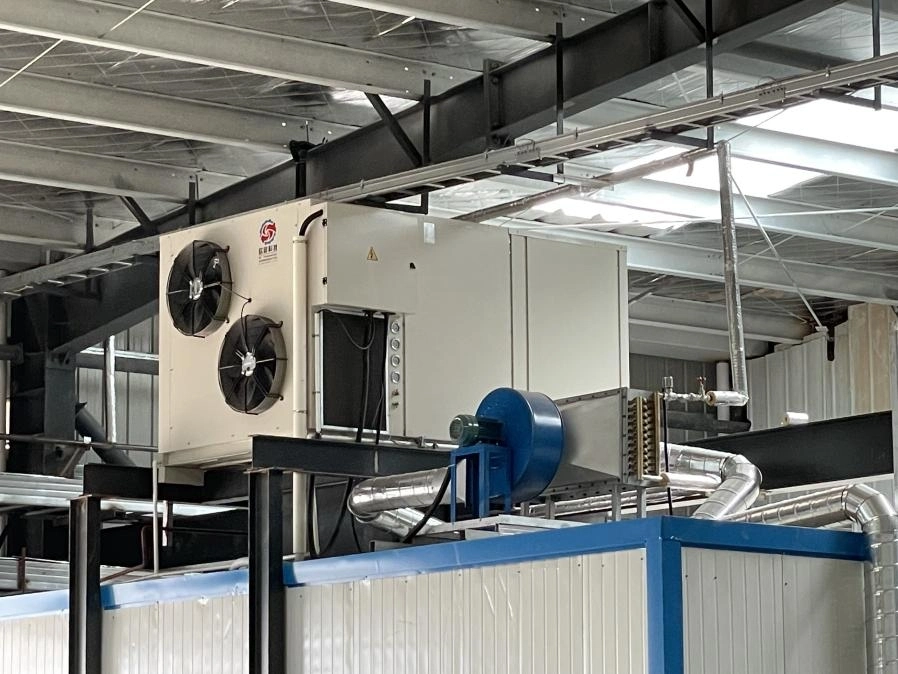
Vacuum capacity follows the same logic. The نظام الفراغ المركزي uses PLC automatic control and variable-frequency control with adaptive start/stop functions. What matters is whether the system can maintain the required vacuum performance when machine demand overlaps.
What Foundries Need to Confirm Before Ordering a New Lost Foam Casting Line
Once white-area capacities are reasonably balanced, project risk moves beyond individual machine specifications. Utility interfaces, layout, installation responsibilities, commissioning, and technical support can influence how quickly the line reaches stable production. A Lost Foam Casting Equipment Supplier therefore needs to work from real project inputs rather than a standard machine package.
Ask for Project-Specific Operating Data
A useful proposal begins with casting drawings, pattern dimensions, product mix, target output, shift schedule, factory layout, and available utilities. These inputs form the basis for matching pre-expansion, molding, drying, vacuum demand, and downstream production capacity.
They also expose problems early: limited steam capacity, frequent mold changes, insufficient drying space, or no room for future expansion. Comparing quotations becomes easier when every supplier is working from the same production assumptions.
Theoretical output, installed power, and machine size only become meaningful when tied to real operating conditions.
Confirm Overseas Project Delivery and Commissioning Scope
Overseas EPC projects bring practical questions about utility interfaces, installation support, commissioning, operator training, documentation, spare parts, and after-sales communication.
OC Technology completed an automated lost foam white-area production line for ITFCO Iran Tractor Group with a target annual output of 10,000 tons of tractor parts. Its Xinjiang Tianshan Aluminum turnkey project covered white- and yellow-area production for electrolytic aluminum anode steel claws with an annual capacity of 10,000 tons, including planning, equipment manufacturing, installation, and final debugging.
These projects show why scope needs to be clear before the purchase order. Similar machine prices can hide very different engineering responsibilities.
خاتمة
For export-oriented foundries, EU CBAM 2026 adds another reporting layer to an investment decision already shaped by quality, operating cost, process stability, and production data.
A new Lost Foam Casting Line still starts with the parts: pattern dimensions, output, product mix, utilities, and factory conditions. From there, معدات صب الرغوة المفقودة can be matched to real operating demand rather than a generic “green equipment” claim.
OC Technology provides white-area equipment and turnkey project support for new plants, capacity expansion, and EPC Casting Production Lines. If your team is planning a project, اتصل بتكنولوجيا OC with casting drawings, target capacity, plant layout, and utility conditions to discuss a project-specific configuration and quotation.
الأسئلة الشائعة
Q1: Does EU CBAM 2026 apply to every lost foam casting exported to Europe?
A: No. Coverage depends on the product’s CN code and the current CBAM scope. The casting process itself does not determine coverage.
Q2: Can a non-EU foundry provide actual emissions data for CBAM reporting?
A: Yes. Actual values can be used when verified emissions information from the third-country producer meets CBAM requirements.
Q3: Does electricity used by a Lost Foam Casting Line count directly toward CBAM emissions?
A: Not on a simple one-to-one basis. Treatment of direct and indirect emissions varies by covered sector. Electricity use still matters for operating cost.
Q4: What information is needed for a Lost Foam Casting Line quotation?
A: Casting drawings, pattern dimensions, product mix, target production, shift schedule, utilities, factory layout, automation requirements, and expansion plans provide the basis for line configuration.
Q5: When is a turnkey EPC Casting Production Line a better choice than individual machines?
A: It is most relevant for greenfield plants, major expansions, and overseas projects where multiple process stages, installation, and commissioning need coordinated delivery.


 Arabic
  English
  Hindi
Hindi  Indonesian
  Japanese
  Korean
  Malay
Malay  Portuguese
  Spanish
  Thai
Thai  Vietnamese