
المفقودة صب الرغوة, also called evaporative pattern casting (EPC), provides an effective way to make complex metal parts. These parts come close to the final shape. They show excellent accuracy in size and a smooth surface. The method uses an expanded polystyrene (EPS) foam pattern. This pattern disappears when hot metal touches it. As a result, it removes the need for usual cores, parting lines, and much machining after casting. Many industries use this approach. Examples include automotive, agricultural machinery, energy equipment, and household appliances. It allows creation of detailed items like engine blocks, transmission housings, tractor components, and gas stove burners.
Lost foam casting brings clear advantages. It cuts down material waste. It gives more freedom in design. It lowers tooling costs for difficult shapes. It also helps the environment because the unbonded sand can be reused. However, the process faces several technical problems. Common issues include porosity, inclusions, surface wrinkles or folds, sand burn-on, shrinkage cavities, and incomplete filling. These problems can raise scrap rates and increase costs if not handled well.
Manufacturers get steady, high-quality outcomes. They do this by fine-tuning main process factors, choosing suitable materials, using modern simulation software, and relying on dependable equipment. The sections below describe frequent challenges. They also provide proven tips and best practices to solve them.
Foam Pattern Design and Material Selection
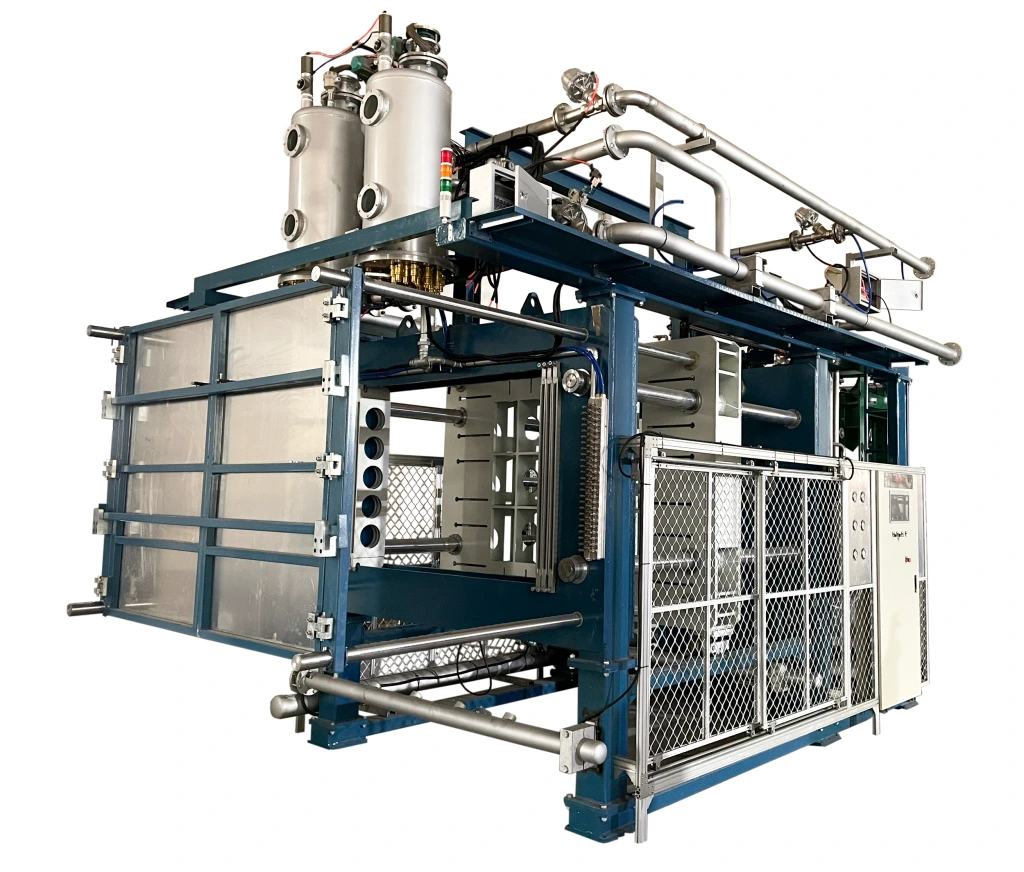
Foam pattern design forms the key base for castings without defects. Patterns need to handle movement, coating, and sand pressing. They must stay firm without bending. At the same time, they should break down cleanly during pouring. Poor design often causes pattern collapse, size errors, or issues like folds and wrinkles.
Good practices suggest choosing EPS foam densities usually between 20-30 kg/m³ for complex shapes. This choice keeps the pattern strong while producing little gas as it burns away. Foams with lower density cut down wrinkle problems. They speed up the burning process. Even wall thickness and added draft angles help metal flow smoothly. Newer bead materials, such as EPS-PMMA copolymers, reduce lustrous carbon defects in ductile iron castings. They make sure everything vaporizes fully with no leftover material. Pre-coats or additives on patterns also improve surface quality. They lower the chance of folds.
Pattern Handling, Storage, and Assembly
Foam patterns can suffer from changes in the environment or from rough treatment. Humidity swings may cause warping. Hard handling can create cracks. Both harm the final casting accuracy.
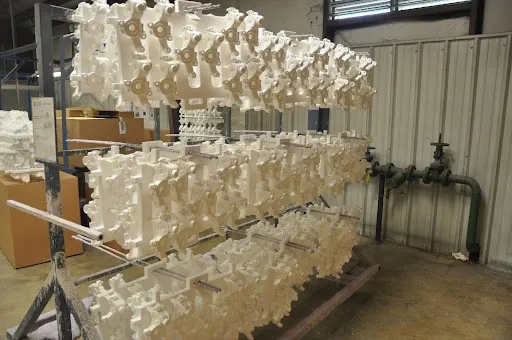
Patterns need storage in steady conditions. Keep temperature around 20-25°C and humidity below 60%. This stops size shifts. Use careful handling with automated tools or protective supports. Regular checks with the eyes help maintain quality. When joining several pattern pieces, apply low-melt hot melt adhesives. Use filleting methods too. These create solid connections without adding defects.
تطبيق الطلاء الحراري
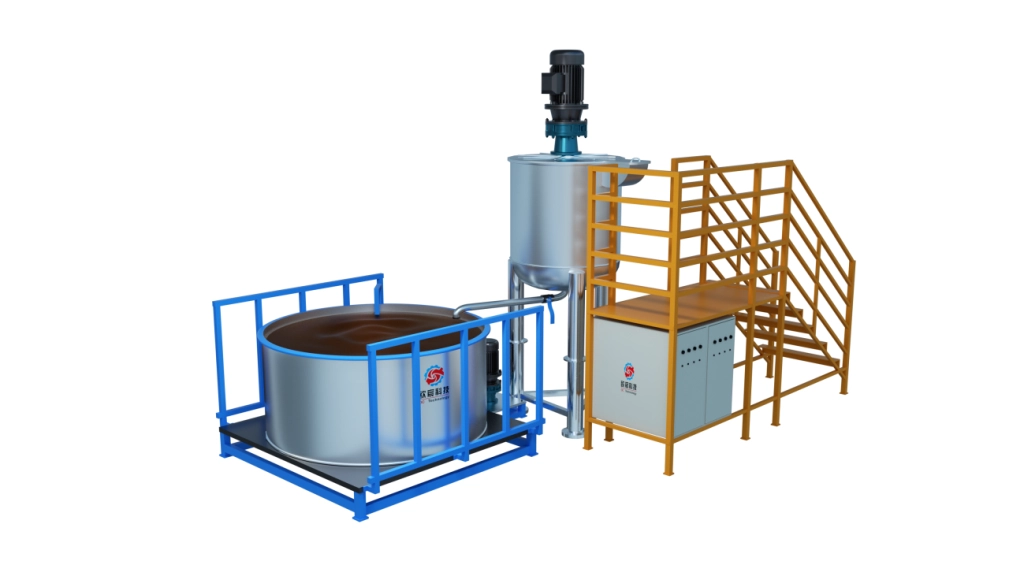
The refractory coating on the foam pattern does important jobs. It holds up the sand mold after the foam vanishes. It controls how metal moves. It lets gases leave. It also improves the surface look. Bad coating application causes metal to seep in, sand inclusions, rough areas, or burn-on.
Apply coating to a thickness of 0.5-2 mm. Make it even by dipping or spraying. Coatings with high permeability and proper thickness avoid defects. They still give enough strength. Dry them using energy-saving heat-pump systems to prevent cracks. New improvements look at blade design, mixing speed, and drying heat. These help reach the right thickness and coating amount. In this way, surface problems decrease.
Gating, Riser, and Filling System Design
Fast, uneven metal flow leads to inclusions, blowholes, oxides, cold shuts, and damage to the mold. In lost foam casting, pressure from foam breakdown makes these issues worse.
Better designs use tapered runners and bottom gating. These lower speed. Place risers carefully to feed shrinkage areas. Simulations show flow paths, hot zones, and defect spots. This allows changes for calm filling. Systems with vacuum help mold permeability. They remove gases better. This works especially well for thin or complex aluminum parts.
Pouring Temperature, Speed, and Cooling Control
Pouring settings affect defects directly. Too much turbulence or quick cooling creates thermal stress, cracks, shrinkage porosity, or poor filling.
Use the best pouring temperatures (for example, 700°C for A356 aluminum alloys) and steady speeds. These give smooth filling without losing too much heat. Slow, even cooling helps. It relies on suitable sand thermal conductivity (around 0.5 W/m·K) and heat transfer at the interface. This reduces stress. Live monitoring and vacuum support make results more uniform.
Mold Compaction, Venting, and Sand Quality
Unbonded dry sand molds must hold shape well. They also need to let gases from foam breakdown escape easily. Weak compaction or poor venting traps gases. This causes porosity or mold failure.
Use good dry sand with steady grain size. Compact it by vibration or vacuum. This keeps the mold solid. Add venting paths and better permeability to avoid pressure buildup. Keep all moisture away. This removes gas-related defects.
Defect-Specific Remedies and Process Optimization
Common defects and specific fixes include:
- Porosity and Gas Defects: Remove gas from molten metal, improve venting, manage pouring speed, and choose low-density foam.
- Wrinkle/Fold Defects: Use low-density EPS, raise pouring temperature and speed by 50-80%, improve vacuum and permeability.
- Sand Inclusions/Burn-on: Make coatings stronger, improve compaction, lower metal speed.
- Shrinkage Cavities: Add proper risers, use chills or insulation for controlled solidification.
- Surface Roughness: Improve coating method and prepare pattern surface (for example, light sanding).
Tools like ProCAST simulation software allow prediction of filling, solidification, and defect risks. They support changes to many factors at once (for example, through Taguchi methods). This lowers porosity and raises mechanical strength.
Operator Training, Quality Control, and Continuous Improvement
Skilled workers notice small changes. They adjust settings well. Regular training includes pattern joining, coating methods, and problem-solving. Statistical process control tracks items like coating thickness and pouring temperature.
Study defects from every batch. This guides ongoing changes. Work with equipment experts speeds up use of new ideas. Examples include automated lines and efficient dryers.
Following these steps greatly cuts defects. It raises good part output. It lowers energy use. It also supports large-scale production of better castings.
الأسئلة المتكررة (FAQ)
What are the most prevalent defects in lost foam casting?
Porosity (gas and shrinkage), surface wrinkles/folds, sand inclusions/burn-on, incomplete filling, and lustrous carbon in ductile irons represent common issues. These often come from foam breakdown, turbulent flow, or coating problems.
How does lost foam casting differ from conventional sand casting?
It removes cores and parting lines. This gives better size accuracy and surface finish. It cuts machining needs. It allows more design options. It uses unbonded sand. Still, it requires tight control of foam patterns, coatings, and evaporation behavior.
Which foam density suits complex or thin-walled parts?
Densities of 20-25 kg/m³ often work best for detailed shapes. They keep gas amount low while holding pattern strength. Lower densities also help cut wrinkle defects.
Why does refractory coating play such a vital role?
It stops direct contact between sand and metal. It handles gases from breakdown. It guides flow. It supports the space after foam removal. It strongly affects surface quality and defect control.
How can simulation tools enhance lost foam casting?
They forecast filling order, solidification pattern, defect spots, and best settings (for example, temperature, vacuum levels). This supports choices based on data. It reduces trial work.
Elevate Lost Foam Casting Operations with Specialized Equipment Manufacturer
Foundry aiming to overcome persistent challenges in lost foam casting and achieve higher yields, superior quality, and operational efficiency should partner with an established equipment provider. تكنولوجيا OC, a premier manufacturer, supplier, and factory specializing in high-end intelligent lost foam casting equipment, offers comprehensive, automated solutions backed by German engineering principles and proprietary innovations. As a national high-tech enterprise and affiliate of the China Lost Foam Industry Association, the company delivers energy-efficient, turnkey systems for demanding production environments.
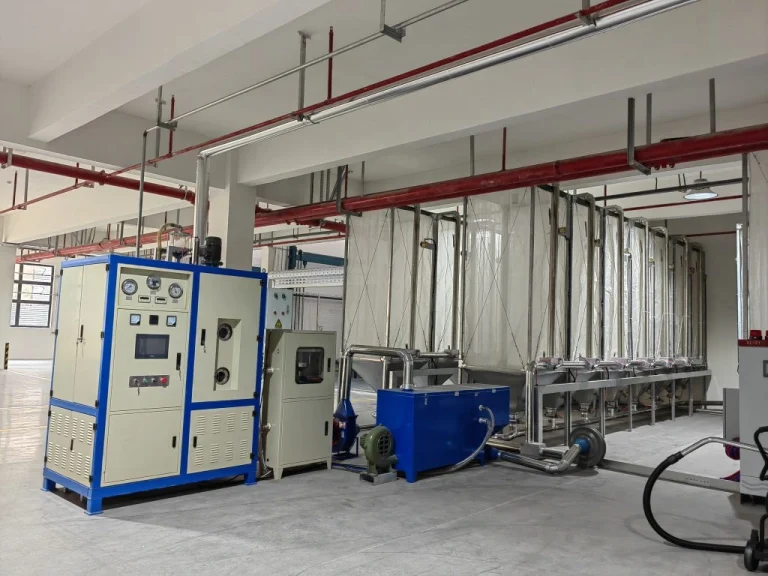
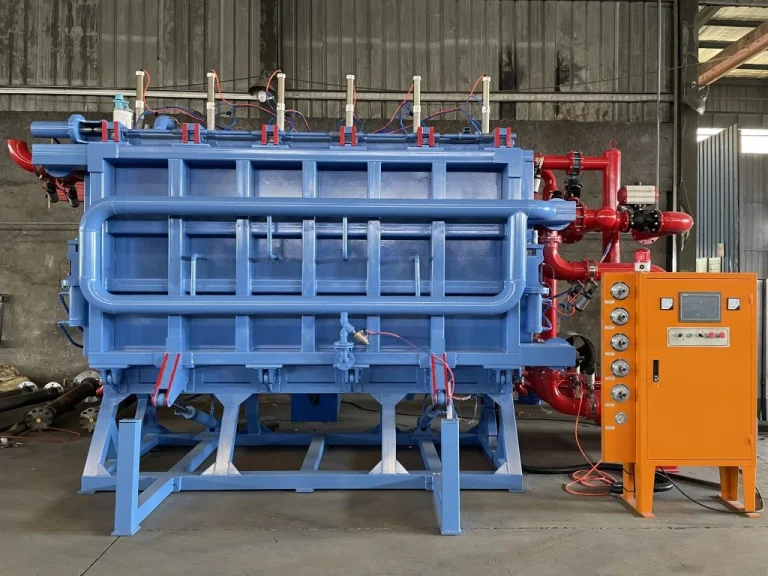
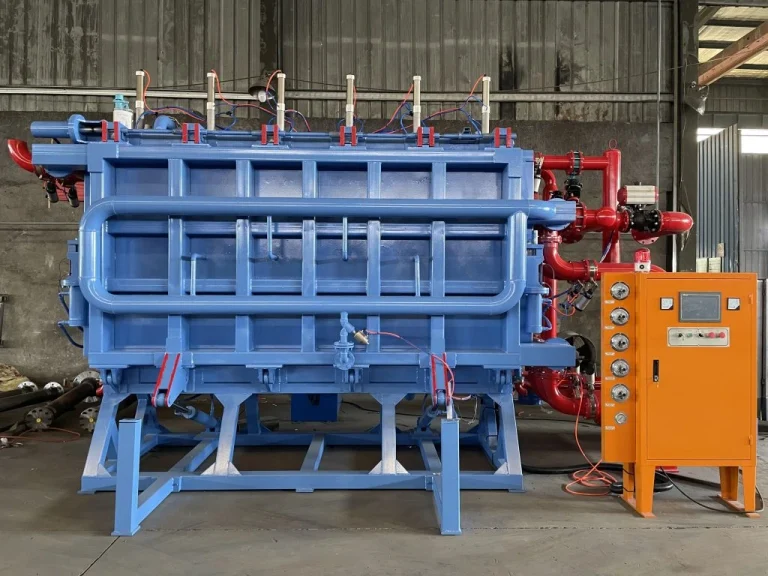
Core product lineup includes EPS pre-expander machines, foam shape molding machines, advanced heat-pump air dryers, vacuum-assisted casting lines, central vacuum systems, lift-type paint mixers, maturation silos, and fully integrated white-area and yellow-area EPC production lines. These systems have proven effective in large-scale applications for gas stove components, tractor parts, agricultural machinery, and aluminum castings.
To explore customized equipment configurations, process consultations, or technical support for upgrading lost foam casting capabilities, اتصل بتكنولوجيا OC at zyh@oc-epc.com or +86 15988479417. Factory address: Xindeng Town, Fuyang District, Hangzhou City.

 Arabic
  English
  Hindi
Hindi  Indonesian
  Japanese
  Korean
  Malay
Malay  Portuguese
  Spanish
  Thai
Thai  Vietnamese