
A useful RFQ for custom EPC lost foam casting equipment must describe the parts, foam patterns, production rhythm, site constraints, supply boundary, and acceptance basis. Annual casting tonnage alone is not enough. Give every bidder the same operating assumptions, ask them to identify exclusions, and require a line-by-line technical response. This lets a procurement team compare configurations instead of comparing headline prices that may cover different equipment and responsibilities.
This guide is for a foundry planning a new line or an upgrade. It treats EPC as evaporative-pattern casting and focuses on equipment and project integration, not the purchase of custom metal castings. Final machine models, utilities, performance values, and test methods still require project-specific engineering agreement.
Define the Custom EPC Lost Foam Casting Project
Start the RFQ with a one-page project definition. State whether the job is greenfield, an expansion, or a retrofit; identify the intended start-up sequence; and name the production areas affected. Then mark the requested boundary: one machine, a white-area package, supporting systems, or a complete EPC line. A broad boundary can reduce interface risk, but only when owner-supplied work and exclusions are equally clear.
Tecnología OC works across high-end intelligent lost foam white-area equipment and EPC project coordination. Its verified portfolio covers bead preparation, maturation, EPS molding, drying, and supporting vacuum equipment, so an RFQ can be reviewed as a connected process rather than as isolated machines. Buyers who need a process map before fixing the supply boundary can first review the complete lost foam casting production line.
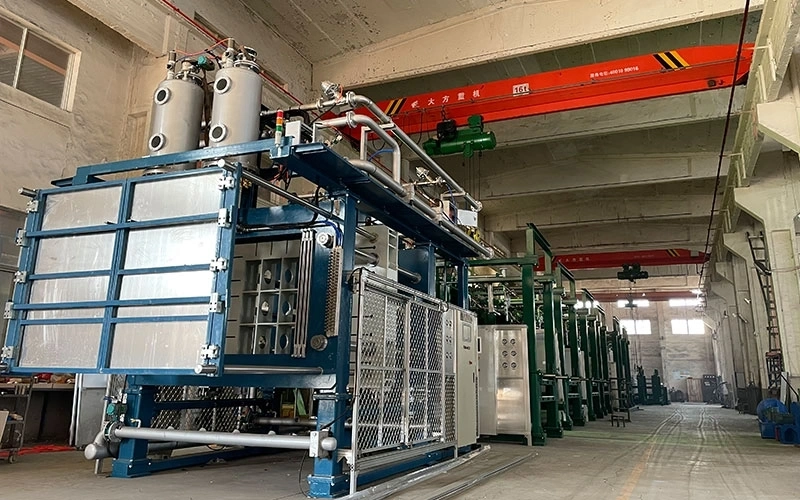
Add a responsibility matrix for civil work, foundations, utility distribution, exhaust or ventilation, raw-material supply, installation labor, lifting equipment, commissioning materials, and operator support. Do not leave these items to commercial fine print. A bidder should either accept the stated boundary or flag a deviation beside the relevant item.
Build the Casting and Foam Pattern Data Pack
Equipment is configured around the product mix, not around a generic casting label. Group representative parts into families with similar pattern size, bead grade, target pattern density, mold arrangement, and production frequency.
Provide controlled drawings or simplified envelopes when intellectual-property rules limit disclosure, then define when full CAD and tooling data will be released.
| RFQ input | Minimum buyer data | Why it changes the proposal |
|---|---|---|
| Casting family | Material, finished weight, maximum dimensions, annual and peak mix | Sets the range of process and handling cases |
| Foam pattern | Single-pattern envelope, cluster arrangement, fragile features, tooling status | Affects molding envelope, filling, handling, and changeovers |
| EPS material | Bead grade, target density range, approved alternatives | Affects pre-expansion, maturation, molding, and segregation |
| Quality plan | Critical pattern characteristics, inspection method, sampling expectation | Defines measurable outputs without assuming a universal tolerance |
| Product changes | Changeover frequency, cleaning rules, traceability needs | Influences bin count, recipe control, and production scheduling |
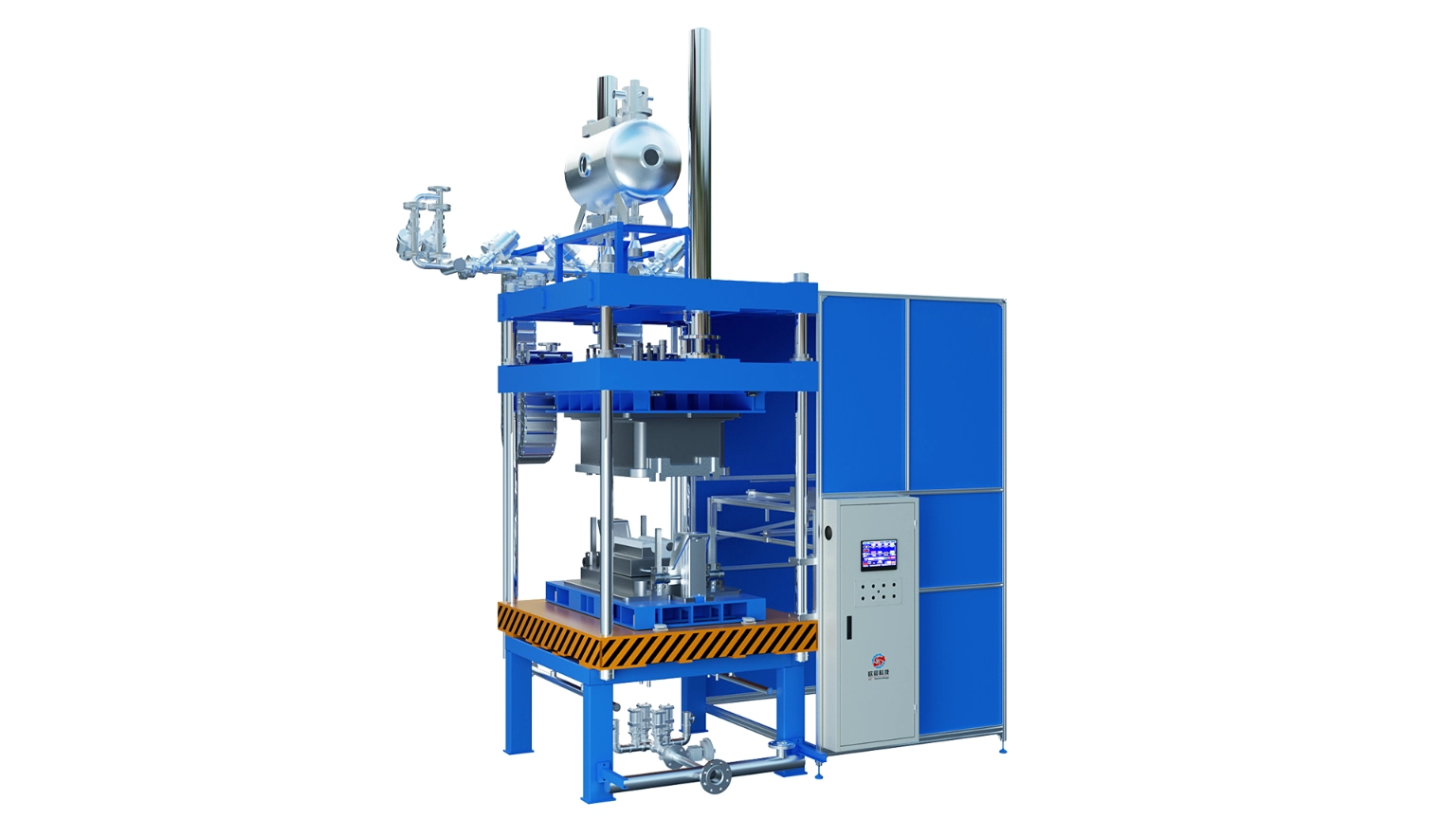
For mold-envelope discussions, OC Technology’s Máquina de formación hidráulica PLC vertical is a relevant verified reference. The model family uses PLC control and stores molding parameters, and special working-table sizes can be discussed for specific requirements.
Treat those points as model-specific evidence: the RFQ still needs the buyer’s pattern envelope, tooling interface, filling zones, and acceptance method before any custom size or performance commitment is fixed.
Convert Output Targets Into Operating Demand
State annual demand, but size the operating case from shifts, net productive hours, peak product mix, planned maintenance, and expected changeovers. Separate the normal case from the peak case and from future expansion. If all three are blended into one number, suppliers may apply different assumptions and produce proposals that cannot be compared.
Work backward from acceptable castings to clusters, patterns, molding cycles, conditioned bead demand, drying load, and downstream handling. The method used to size and configure a lost foam casting production line is more reliable than multiplying annual tonnage by a single utilization factor. Ask each bidder to show the calculation chain and identify which values are buyer inputs, supplier assumptions, or values to be confirmed by trials.
- Normal and peak weekly product mix, including seasonal or campaign production
- Shifts per day, hours per shift, planned breaks, and maintenance windows
- Expected scrap or rework treatment, without hiding it inside required output
- Changeover frequency and the time allowed for cleaning, tooling, and recipe changes
- Expansion case, target year, and whether space or utility capacity should be reserved
Document the Workshop Utilities and Interfaces
Issue a dimensioned layout with columns, doors, pits, crane coverage, clear heights, access routes, and the proposed material flow. For an upgrade, identify equipment that remains in service and the permitted shutdown window. Mark the required delivery path and the largest allowable shipping or installation envelope; a machine that fits the operating space may still be impossible to move into position.
For each utility, give the available source condition and the connection point rather than only naming the utility. The bidder needs to distinguish plant supply from machine demand for electrical power, steam, compressed air, process water, cooling, drainage, ventilation, and data connections. Ask for normal and peak demand separately, together with measurement conditions and any required treatment.
| Interface | Buyer states | Supplier returns |
|---|---|---|
| Mechanical | Tie-in location, elevations, existing equipment, access limits | Connection details, loads, maintenance clearance |
| Utilities | Source pressure, temperature, quality, capacity, connection point | Normal and peak demand, permissible variation |
| Controls | Plant network rules, data ownership, remote-access policy | Signals, protocols, user roles, backup and recovery needs |
| Seguridad | Site rules, applicable local requirements, owner risk controls | Machine safeguards, residual risks, required owner actions |
| Documentation | Language, format, review cycle, document numbering | Drawing and manual register with planned issue dates |
Make Scope and Acceptance Comparable
Provide a bid-return schedule that every supplier must complete. It should list equipment, quantities, principal interfaces, utilities, controls, spares, documents, installation responsibilities, training, tests, exclusions, and options.
Require deviations to be placed in one register. A statement such as ‘included as required’ is not a substitute for an identified deliverable and acceptance basis.
OC Technology can use this common schedule to review both individual white-area machines and connected EPC scope. On the verified vertical forming-machine family, stored molding parameters and remote parameter debugging create useful questions about recipe ownership, user permissions, backups, remote-access approval, and the test environment. These functions should not be assumed for every machine; list them only where the selected model and agreed project scope confirm them.
Define acceptance around observable functions and agreed operating cases. State who supplies material, patterns, utilities, operators, instruments, and test records; identify the number and duration of trial runs only after engineering discussion.
Do not copy a generic factory acceptance test into the RFQ and assume it proves line output. Site conditions, upstream material, downstream readiness, and production duration may require separate factory and site tests.
Final RFQ Completeness Check
- Confirm that the project type, supply boundary, owner work, and exclusions are explicit.
- Attach the representative casting, pattern, material, quality, and changeover data.
- Separate normal, peak, and expansion cases and show the operating calendar.
- Issue layout and utility data with connection conditions and known constraints.
- Require a completed technical schedule, assumption register, deviation register, and document list.
- Define how models, performance values, tests, changes, and final acceptance will be agreed.
Before release, have production, maintenance, utilities, quality, safety, procurement, and finance review the same package. Their comments often expose hidden interfaces earlier than a supplier meeting will. Keep the issue number and question log controlled so all bidders receive the same clarifications.
Conclusión
A custom EPC lost foam casting RFQ is effective when it makes the production case, scope, interfaces, and acceptance logic visible. The goal is not to pre-engineer the supplier’s solution. It is to give qualified bidders the same problem, separate confirmed data from assumptions, and require a response that procurement and engineering can compare. That discipline reduces late scope disputes and makes technical clarification faster.
Prepare the data pack, responsibility matrix, site information, and bid-return schedule, then request an engineering review from OC Technology. The review can establish which inputs are sufficient for preliminary configuration and which items need trials, measurements, or agreement before a firm technical proposal.
PREGUNTAS FRECUENTES
What is the minimum information needed for an equipment quotation?
At minimum, identify the project boundary, representative castings and foam patterns, material grades, normal and peak demand, shift pattern, workshop constraints, available utilities, automation expectations, and destination. Mark missing values as pending rather than estimating them silently, and ask the supplier to state any assumptions used in a preliminary configuration.
Should an RFQ name exact machine models?
Name an exact model only when the buyer has already validated its envelope and interfaces. Otherwise, state the duty, constraints, and acceptance basis and ask for a recommended model with the calculation or selection rationale. This preserves competition and reduces the risk of specifying a machine that fits one parameter but unbalances the line.
How can procurement compare turnkey proposals with different scopes?
Use a common compliance schedule and normalize each offer against the same responsibility matrix. Compare base scope, options, owner work, exclusions, utility conditions, documents, tests, and change-control rules before comparing price. Commercial evaluation should flag the cost and schedule exposure of every material deviation rather than treating all totals as equivalent.
Does a complete RFQ guarantee final performance?
No. A complete RFQ improves engineering quality and bid comparability, but final performance depends on the agreed equipment, material behavior, tooling, utilities, operating practices, and test conditions. Performance values and acceptance criteria belong in the negotiated technical agreement after both parties confirm the data and limits.


 Spanish
  English
  Arabic
  Hindi
Hindi  Indonesian
  Japanese
  Korean
  Malay
Malay  Portuguese
  Thai
Thai  Vietnamese