
A central vacuum system for lost foam casting should be selected from the line duty, the number and timing of vacuum users, and the site interface—not from a pump nameplate alone. For a new or upgraded EPC project, the buyer should first map every vacuum-dependent operation and define the simultaneous-use case.
The supplier can then return a coordinated package covering equipment, piping interfaces, controls, installation responsibilities, and acceptance evidence. This approach is for foundries, EPC contractors, and industrial buyers who need a project-ready vacuum utility rather than a standalone general-purpose pump.
Define the vacuum duty across the complete line
The first decision is whether the project needs Central Vacuum System equipment at all. A central arrangement becomes more relevant when several stations share a vacuum utility, when the layout creates long operating periods with overlapping demand, or when the owner wants one coordinated control and maintenance boundary.
A single-machine comparison is premature until the process map identifies which users require vacuum, when they operate, and what happens during a planned stop or a fault.
List the vacuum users by process area and record their operating state: running, starting, switching, cleaning, isolated, or awaiting material. Do not assume that the highest theoretical demand is the normal design point.
The supplier needs a defined duty case, a peak or recovery case, and any required reserve policy so that a quotation can distinguish normal operation from contingency capacity.
- Identify every vacuum user and its connection point.
- Record operating hours, start-up sequence, changeover pattern, and planned isolation.
- Separate continuous, intermittent, and emergency or recovery demand.
- State which loads may run at the same time and which are mutually exclusive.
- Keep owner-supplied utilities and supplier-supplied equipment in separate scope lines.
Match the system to EPC process interfaces
Once the operating duty is clear, the next task is to define where the central vacuum package begins and ends. The layout, connection points, control signals, owner work, and documentation must be reviewed together because a missing interface can make an apparently complete quotation unusable at site.
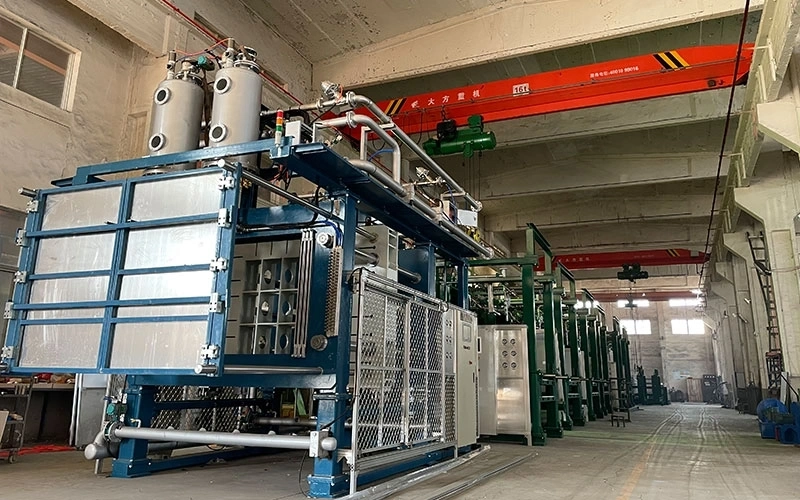
Map Every Mechanical and Control Interface Before Comparing Offers
A central vacuum package is an interface project. The buyer should issue a simple layout showing equipment positions, connection elevations, expected pipe routes, access for maintenance, and the boundaries between the vacuum package, casting equipment, civil work, electrical distribution, and plant controls. This prevents a quotation from appearing complete while leaving a critical connection or responsibility outside the price.
Use the same process map that governs the rest of the complete EPC casting production line. The useful question is not “what pump do we buy?” but “what vacuum service must remain available at each operating step, through which interface, and under whose control?” A supplier response should make that chain visible.
Require Each Bidder to Return the Same Interface Schedule
Ask bidders to return connection conditions, control signals, alarm states, isolation requirements, and installation assumptions in a line-by-line schedule. If a value depends on the selected configuration or process trial, it should be marked as an assumption or confirmation item rather than presented as a guaranteed plant fact.
- Mechanical connection locations and access clearances.
- Electrical supply assumptions and control-panel boundary.
- Signals for start, stop, ready, fault, permissive, and isolation.
- Pipe routing, support, drainage, filtration, and service access assumptions.
- Owner work for foundations, lifting, cabling, utilities, and commissioning support.
- Documents required for operation, maintenance, spare parts, and acceptance.
Size for simultaneous use and operating stability
Sizing requires more than adding nameplate demand. Buyers need to distinguish the load combinations that occur in normal production from short peaks, restart conditions, and future expansion, then define the service condition that must remain stable at the users.
Calculate Capacity From Normal, Peak, and Recovery Cases
Sizing should begin with a time-based duty table. For each vacuum user, record the expected demand state and duration, then overlay the schedules to show the highest sustained combination.
A short start-up spike, a long production campaign, and recovery after a stopped station are different design cases. Treating them as one unexplained “maximum” makes competing quotations difficult to compare.
Do not infer the required capacity from the number of machines alone. Pipe length, elevation, fittings, leakage, filtration, valve logic, user diversity, and the selected process all affect the final design. These are engineering variables, not claims that can be filled with a generic catalogue value.
Define the Stable Service Condition at the Most Demanding User
The project team should also define what stable operation means. That may involve maintaining an agreed service condition at the furthest user, avoiding unacceptable fluctuation when another station starts, or preserving a controlled response when one branch is isolated. The exact technical limits require engineering confirmation; the purchasing requirement is to make the test condition explicit before equipment is ordered.
Add Reserve Capacity Only for a Defined Expansion Case
Include a future operating case only when it is tied to a defined expansion stage. An unexplained allowance can increase cost without solving the expected constraint.
If expansion is planned, show the future users, connection points, timing, and control changes separately so the supplier can price an expandable architecture without treating every future load as an immediate requirement.
Compare control and maintenance boundaries
A central system can simplify supervision, but it also connects several process users to a common utility. The quotation review should therefore examine how faults are isolated, how unaffected users are protected, and which party is responsible for controls, piping, service work, and commissioning support.
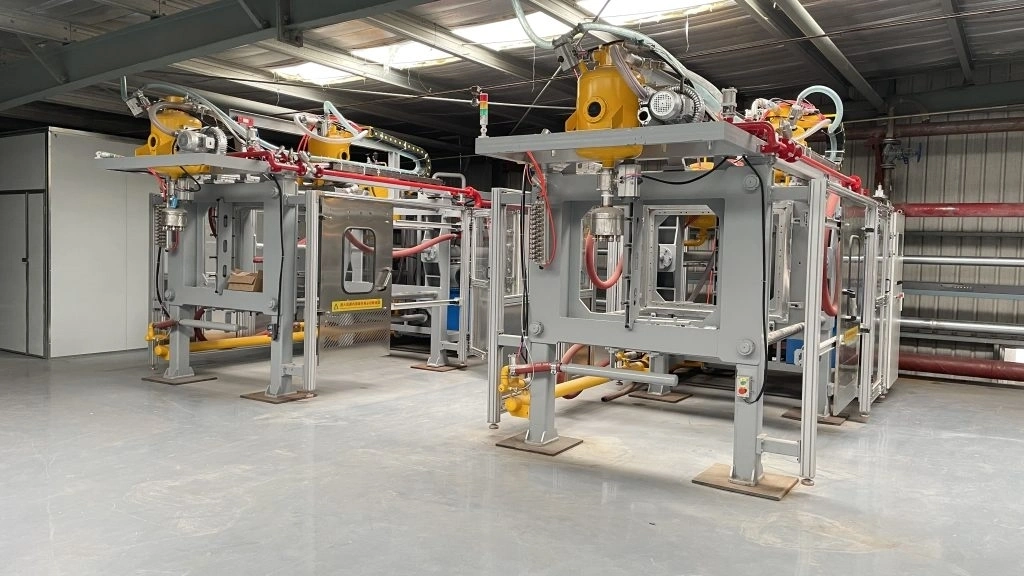
Confirm How the System Isolates Faults and Restarts Production
Centralization can simplify supervision, but it can also create a common dependency. Buyers should ask how operators identify a failed branch, isolate a station, protect unaffected users, and return the system to service. A lower equipment count is not automatically a lower operational risk if one unplanned event disables several areas at once.
Compare Scope Boundaries Before Comparing the Headline Price
Compare quotations using the same responsibility matrix. One bidder may include controls, piping, instruments, and commissioning support while another prices only the vacuum machine.
The difference is a scope difference, not proof that one machine is inherently better. A clear review can be supported by an independent lost foam casting equipment supplier review.
- Ask for normal, peak, and recovery operating cases.
- Request the proposed isolation and restart sequence.
- Confirm which alarms are local and which are available to the plant control system.
- Define cleaning, filter service, inspection, and spare-part responsibilities.
- Require deviations and exclusions beside the affected line item.
Build acceptance around the real buyer risk
Acceptance needs two levels because some functions can be demonstrated before shipment while others depend on the installed pipework, utilities, controls, and operating sequence. The contract should state what each stage proves and how open items will be recorded and closed.
Separate Factory Function Checks From Installed-Site Verification
Acceptance should verify the agreed configuration and interfaces under a documented test condition. A factory demonstration can confirm equipment functions, but it cannot by itself prove that the installed pipework, plant utilities, controls, and operating sequence will behave as intended at the destination site. The contract should separate pre-shipment checks from site verification without turning either stage into an undefined second specification.
Use an Evidence List and Open-Item Register to Close Acceptance
Useful evidence includes the approved configuration, control logic, alarm list, interface drawings, test records, open-item register, and a site verification record. If performance depends on a process condition that the buyer has not yet validated, record that dependency and define who supplies the condition and who closes the item.
Questions to put in a central vacuum RFQ
A focused RFQ reduces the chance that a low headline price hides a missing interface. Ask suppliers to respond to the same duty table and to identify every assumption. The goal is not to pre-engineer the supplier’s design; it is to make the project problem comparable.
- What vacuum users, operating states, and simultaneous-use cases were used for the proposal?
- Which capacity, pressure, stability, and reserve assumptions are confirmed, provisional, or excluded?
- What equipment, piping, valves, instruments, controls, documents, and commissioning work are included?
- What must the owner provide before installation and before site testing?
- How will branch isolation, alarms, restart, cleaning, and maintenance be demonstrated?
- Which results will be verified before shipment and which require the installed plant?
- What deviations would change the technical or commercial basis of the offer?
निष्कर्ष
The best central vacuum system for a lost foam casting line is the one that matches the project’s real operating duty and makes every site interface visible. Start with the process map, define simultaneous and recovery cases, compare complete scope boundaries, and set acceptance conditions before comparing equipment prices. This protects the buyer from selecting a package that looks adequate on paper but leaves piping, control, or commissioning risk unresolved.
Planning a new or upgraded lost foam casting line? Send OC Technology your line layout, vacuum-user list, operating sequence, simultaneous-demand cases, utility conditions, and expected scope boundaries. ओसी टेक्नोलॉजी से संपर्क करें to discuss your project requirements and request a project-specific central vacuum system proposal.
सामान्य प्रश्न
Is a central vacuum system always necessary for lost foam casting?
No. It becomes a candidate when several vacuum users must share a coordinated utility or when the project benefits from a defined central control and maintenance boundary. A small or isolated installation may have a different configuration. The decision should follow the user schedule, site layout, interface responsibilities, and recovery requirements rather than a generic rule.
Can a pump nameplate be used to compare suppliers?
Not by itself. The same nameplate can support different outcomes depending on piping, leakage, filtration, user diversity, controls, and the operating point used in the proposal. Ask each supplier to return the duty assumptions, connection scope, stability condition, and test method so that the comparison is made on the same project basis.
What should be checked before site commissioning?
Confirm the installed pipe routes, connection points, utilities, controls, isolation devices, access clearances, documents, and operator responsibilities. Then verify the agreed operating cases at the installed plant. Keep equipment issues separate from incomplete owner work or site interfaces so that open items can be assigned and closed.
What information should a buyer send with an inquiry?
Send a line layout, a list of vacuum users, operating and recovery cases, expected overlap, utility conditions, control preferences, installation boundary, and the required acceptance basis. If any value is unknown, label it as an assumption. That gives the supplier a usable starting point without pretending that unverified project data is final.


 Hindi
Hindi  English
  Arabic
  Indonesian
  Japanese
  Korean
  Malay
Malay  Portuguese
  Spanish
  Thai
Thai  Vietnamese