
An Air Source Heat Pump Drying Unit for lost foam casting should be selected from the pattern-production duty, target drying condition, room or equipment layout, and the handoff to the next process. It is not enough to compare a heater rating or choose the largest available dryer.
Define what is being dried, what must be ready per shift, which environmental conditions apply, and which interfaces the supplier must include.
This guide focuses on procurement decisions, release verification, and quotation boundaries. It is for foundries, EPC contractors, and procurement teams planning or upgrading a lost foam pattern area.
Start with the pattern and production duty
Start with pattern flow, not chamber volume or heater rating. Describe the production mix first, then define when a pattern can leave drying and which material and environmental inputs affect that decision.
Build the Duty Profile Around the Actual Pattern Mix and Peak Campaign
Drying demand is created by the pattern flow, not by the annual casting tonnage alone. Record the pattern families, approximate size range, cluster or handling method, coating sequence where relevant, and the time between coating and the next operation. Then separate normal production, the highest sustained mix, and recovery after a planned stop. A short peak may be handled by scheduling; a sustained campaign controls the required duty.
Define Release Timing Without Inventing a Universal Drying Cycle
The buyer does not need to guess a final drying time before contacting a supplier. The useful starting point is a controlled duty description: what enters the drying stage, when it enters, what condition is required before release, and how the result will be checked. Material behavior, coating formulation, pattern geometry, ambient conditions, and airflow all need project confirmation.
- List pattern families, dimensions, handling method, and expected batch or flow sequence.
- State the normal and peak number of patterns or clusters per shift.
- Define the release condition required by the next operation.
- Record ambient temperature and humidity ranges that the plant must handle.
- Separate confirmed process data from assumptions awaiting trials.
Define what “dry” means for the buyer
A supplier cannot validate a process against “dry” alone. Define an observable release condition, while temperature and residence time remain variables to confirm with the actual pattern, coating, and handling method.
Set a Release Condition That Production and Quality Teams Can Verify
“Dry” is not a sufficient acceptance criterion. The project team should define the observable release condition and how it will be checked. Depending on the process, that may involve a repeatable handling condition, coating stability, surface behavior, weight or moisture trend, or a documented process hold. The exact test belongs to the project and material system; the procurement requirement is to name it before the equipment is accepted.
Treat Temperature and Residence Time as Trial-Dependent Limits
Avoid turning a catalogue temperature into a universal process recipe. A higher air temperature can change coating behavior or pattern handling, while a longer residence time can reduce throughput. The appropriate balance must be confirmed with representative patterns and the actual coating and handling method.
Choose the equipment and layout arrangement
The same duty can require different arrangements because access, airflow, utilities, maintenance space, and material movement vary by site. Compare the site fit before treating one arrangement as superior.
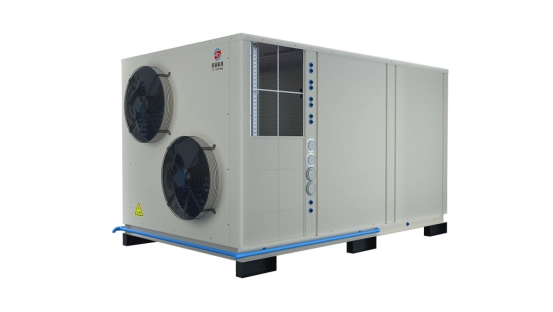
Match the Arrangement to Access, Airflow, and Service Space
An Air Source Heat Pump Drying Unit must fit the production area as well as the process. Compare the available arrangement, access for loading and unloading, air circulation path, maintenance clearance, drainage or condensate provisions, and the route to the next operation. The Air Source Heat Pump Drying Unit range provides the right product family for this project-specific discussion, but the final arrangement still depends on project layout and duty.
Compare Top-Mounted and Rear-Mounted Options by Site Constraints
Where the layout requires equipment above or beside the process area, compare the verified top-mounted drying-unit option with a rear-mounted drying-unit option. These labels describe arrangement choices, not a universal performance ranking. The buyer should ask the supplier to show how each option affects access, airflow, service work, and the connection boundary for operators.
Ask the Layout Questions That Change the Quotation
- Where are loading, unloading, inspection, and maintenance activities performed?
- Does the proposed arrangement preserve operator access and lifting space?
- How are air return, exhaust, condensate, and utility connections routed?
- What civil, electrical, ventilation, or support work is owner-supplied?
- Can the layout support cleaning, isolation, and a safe restart after a stop?
Match heat and airflow to quality risk
Drying performance depends on how heat and air reach the load, not heat input alone. Compare airflow distribution, trial loading, release criteria, and operating margin rather than an isolated rating.
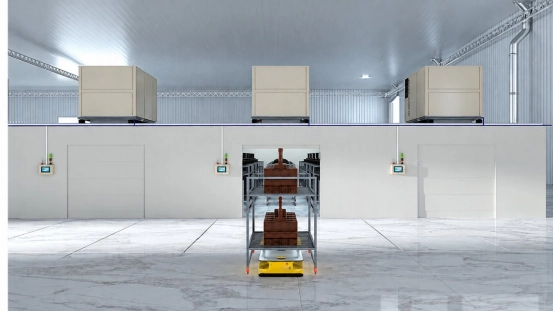
Evaluate Heat and Airflow Across the Complete Load
Drying quality depends on more than heat input. Air distribution, circulation, residence time, pattern geometry, coating properties, and loading density can create uneven results. A supplier discussion should therefore focus on the test load and the measurement method, not on an isolated energy or heater figure.
Use Representative Patterns to Define the Trial and Acceptance Criteria
Request a process-trial plan using representative patterns and the intended coating system. Define where observations will be taken, what counts as acceptable release, how loading is recorded, and what happens if one area dries differently from another. This turns “drying capacity” into a quality decision that production and quality teams can review together.
Choose Capacity From Validated Duty, Not Maximum Chamber Size
Do not assume that a larger chamber solves every problem. Excess volume can increase handling distance, warm-up time, or partial-load variation, while an undersized unit can create queues before molding or coating. The right choice is the smallest arrangement that meets the validated duty with a documented operating margin.
Record that margin beside the production case it protects. A named recovery or peak scenario is easier to review than an unexplained percentage.
Coordinate the dryer with coating and molding
The dryer is one stage in a timed sequence. Usable capacity depends on coating arrival, staging, inspection, and whether the next operation can receive the released load.
Balance Dryer Duty With Upstream Coating and Downstream Handling
The drying unit sits inside a sequence. If coating batches arrive irregularly, the dryer may be starved at one point and overloaded at another. If molding or handling cannot receive the dried patterns, extra drying capacity will not improve the line. Coordinate the duty table with the lost foam coating equipment planning and with the selected molding and handling sequence.
Use a Production Timeline to Expose Staging and Recovery Bottlenecks
Use a simple time line to show coating completion, transfer, drying, inspection, release, and the next process. Mark changeovers, cleaning, planned stops, and recovery. This identifies whether the controlling problem is dryer capacity, batch staging, handling, or downstream availability. It also gives the supplier a clearer basis for controls and alarms.
Define utilities, controls, and verification
Before offers are finalized, record site conditions, utilities, controls, installation work, and verification. This separates included equipment from owner work and trial-dependent results.
State the Utility Conditions and Owner-Supplied Work
Before quotation, provide the available electrical supply, installation environment, access constraints, drainage or condensate expectations, and any plant control interface. Do not fill in missing values with a generic assumption. The supplier should return the required conditions, included equipment, exclusions, and any site work needed to make the system operational.
Separate Equipment Function Checks From Process Verification
Verification should cover configuration, start-stop behavior, alarms, safe isolation, airflow or temperature control functions included in the order, and the agreed process trial. A factory demonstration can confirm equipment functions, but the installed site must still be checked under the utilities and layout that the equipment will actually use.
- Approve the duty table and representative test load.
- Confirm the arrangement, access, utility, drainage, and control interfaces.
- Agree the release condition and the method used to verify it.
- Record assumptions, exclusions, and owner responsibilities in the quotation.
- Run a documented trial or acceptance check before treating the process as stable.
- Define how recipe or environmental changes are reviewed after start-up.
Questions for an Air Source Heat Pump Drying Unit RFQ
A useful RFQ asks for a process response rather than only a model number. Require suppliers to explain the design basis and to identify what must be confirmed with trials. This lets procurement compare offers without mistaking an unverified catalogue value for a project guarantee.
- What pattern types, loading conditions, ambient range, and release condition were used?
- What arrangement is proposed, and what access or civil work does it require?
- Which utilities, controls, instruments, drainage, and documentation are included?
- How will airflow, temperature, residence time, or other agreed variables be checked?
- What happens during partial load, changeover, planned stop, or loss of a utility?
- Which performance points are provisional until a representative process trial?
- What training, maintenance information, and site support are included?
결론
The right Air Source Heat Pump Drying Unit is the one that fits the pattern duty, release condition, layout, utilities, and downstream rhythm. Begin with representative patterns and a time-based flow, define how quality will be verified, compare arrangement and interface boundaries, and make trial-dependent values visible in the quotation. That method protects the buyer from selecting a dryer that is large on paper but poorly matched to the real production sequence.
Planning or upgrading a lost foam pattern drying area? Send OC Technology your pattern types and sizes, coating information, production schedule, target release condition, ambient conditions, available layout, and utility data. 연락처 OC Technology to compare suitable Air Source Heat Pump Drying Unit arrangements and request a project-specific quotation.
자주 묻는 질문
Is an Air Source Heat Pump Drying Unit the same as a compressed-air dryer?
No. In this project context, the term refers to a drying unit used in the lost foam pattern process. It should not be confused with equipment that removes moisture from a compressed-air system. The buyer should use the full product name and describe the pattern, coating, airflow, environmental, and release requirements in the inquiry.
How should a buyer define drying capacity?
Define it from the pattern flow and validated release condition: pattern families, loading method, number per shift, peak campaign, residence or handling sequence, ambient range, and downstream availability. A heater rating or chamber volume alone does not establish usable production capacity.
Can the largest dryer reduce production risk?
Not automatically. An oversized unit can increase handling distance, partial-load variation, warm-up time, or installation cost, while an undersized unit can create queues. The safer choice is a configuration supported by representative trials, a documented operating margin, and a layout that operators can load, inspect, clean, and maintain.
What should be tested before final acceptance?
Test the agreed representative patterns and loading condition, then verify the defined release condition and the included control and alarm functions. Also check the installed utilities, access, drainage or condensate arrangements, and the handoff to the next process. Keep any trial-dependent value clearly separate from a guaranteed plant result.


 Korean
  English
  Arabic
  Hindi
Hindi  Indonesian
  Japanese
  Malay
Malay  Portuguese
  Spanish
  Thai
Thai  Vietnamese