
Two lost foam casting equipment quotations can look nearly identical and still lead to very different production results. A machine with lower installed power may require longer cycles, while a complete proposal may exclude the steam, compressed-air, drying, or vacuum demand created when several machines operate together. These gaps often surface after installation through unstable output, additional utility work, or higher operating costs than expected.
For foundry owners, project engineers, and procurement teams, the key question is not which machine has the most impressive specification sheet. It is which lost foam casting line can deliver accepted patterns consistently, match the factory’s actual utility conditions, remain practical to maintain, and support future production without unnecessary capacity.
This guide explains which technical parameters matter, how to compare supplier quotations, and what to verify before placing an order.
Why Energy Performance Matters More in 2026
Foundries are paying closer attention to real-time energy monitoring, peak-load control, predictive maintenance, and auxiliary-system consumption. The EU CBAM definitive regime also began in 2026 for selected iron, steel, and aluminum goods, although coverage depends on product classification. Equipment does not provide CBAM compliance, but reliable operating data is increasingly useful in export supply chains.
Steam, compressed air, vacuum, cooling, and drying affect cost and output. Low steam pressure can extend cycles, unstable vacuum can change cooling behavior, and an undersized drying room can hold back the white area. The practical target is stable accepted output under known utility conditions—not the lowest nameplate rating.
Is the Equipment Right for the Application?
Before setting energy targets, define what the equipment must produce. A high-volume repeat part needs a different arrangement from a plant handling several pattern sizes or frequent mold changes. Product mix shapes tooling, storage, drying load, vacuum demand, and sensible reserve capacity.
Match the Pattern Route to the Product Mix
Repeat parts may justify dedicated tooling and an EPS molding machine. Large patterns, prototypes, and lower-volume work may use EPS blocks followed by CNC cutting.
A high-mix foundry often gains more from stored recipes, practical mold access, and shorter changeovers than from the fastest theoretical cycle. A dedicated line may value repeatable cycles and automatic handling more.
Upgrade One Machine or Rebalance the Lost Foam Casting Line?
A faster molding machine will not solve an undersized drying room. A larger pre-expander will not raise accepted output when maturation storage is full. Extra molding capacity may also overload steam, compressed air, or vacuum supply.
Check where patterns wait, where defects appear, and which stage limits daily output. When several restrictions interact, lost foam casting production line sizing should cover the complete process rather than one machine at a time.
Establish One Production and Utility Baseline
Once the scope is clear, every supplier should receive the same operating case. Otherwise, quotations may use different molds, cycles, utility pressures, or shift patterns and become impossible to compare fairly.
Define the Real Production Load
The inquiry should include:
- Pattern dimensions, weight, and EPS density range
- Molded or CNC-cut pattern route
- Product mix and changeover frequency
- Accepted patterns required per shift
- Shifts and net productive hours
- Expected first-pass acceptance rate
- Planned future capacity
Accepted output matters more than total cycles. Rejected patterns still consume steam, air, vacuum capacity, labor, and drying time.
Confirm Factory Utilities Early
Record voltage, frequency, steam capacity, compressed-air pressure and flow, drainage, ambient conditions, and peak simultaneous demand.
In overseas projects, these details are sometimes checked too late. Equipment may be ready while cable size, steam supply, drainage, lifting access, or compressed-air capacity does not match the layout. Confirming them before manufacturing reduces site changes and commissioning delays.
What to Specify for Core White-Area Equipment
With the baseline in place, the specification can focus on measurable performance. A PLC or an “energy-saving” label has little value unless its effect on setup, utility use, maintenance, and accepted output is clear.
EPS Pre-Expander Machine
Ask for supported materials, density range, batch capacity, steam conditions, weighing method, recipe storage, discharge cycle, and remote-support scope.
OC Technology’s EPS Pre-Expander Machine combines electromagnetic and steam pre-expansion with PLC control, stored parameters, automatic operation, electronic weighing, and remote parameter functions.
Stored recipes reduce setup for repeat orders, while electronic weighing provides a batch-control point. Bead quality still depends on raw material, steam, maturation, and the selected recipe, so these conditions belong in the technical agreement.
EPS Molding Machine
Compare usable mold size, cycle conditions, steam and air demand, filling, cooling, process records, changeover time, and service access.
The OC Technology EPS Molding Machine uses PLC cycle control, parameter storage, remote functions, automatic pressure-controlled feeding, and vacuum-cooling energy recovery. Working-table sizes can be configured for special requirements.
Stored data makes process changes easier to review. Correct sizing also avoids unnecessary floor space, connected load, and purchase cost.
공기열원 히트펌프 건조기
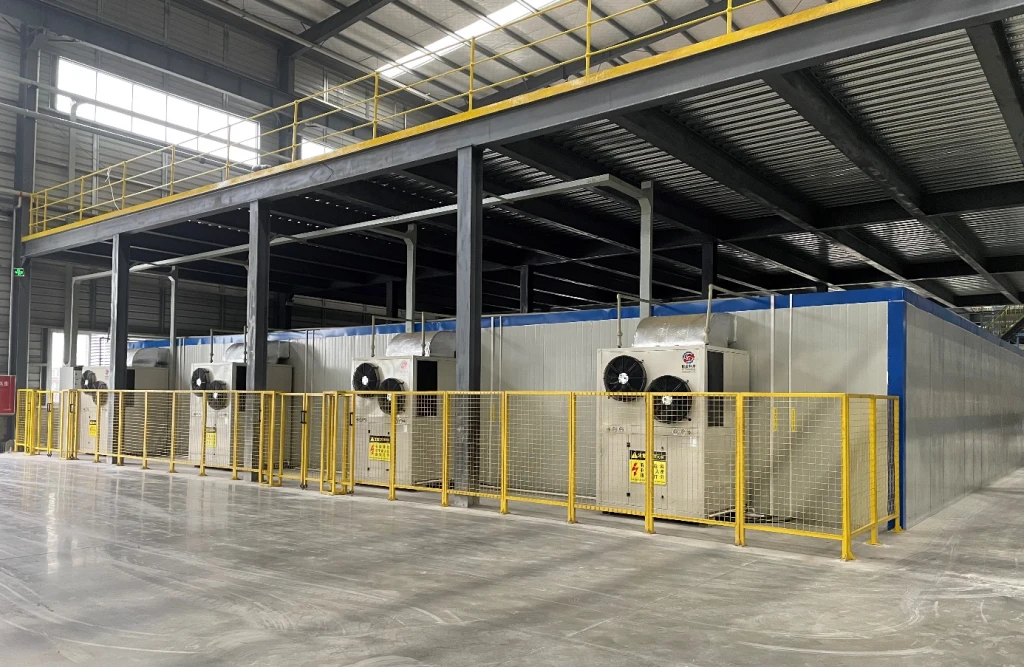
Drying capacity should follow room volume, pattern and coating load, moisture removal, airflow, climate, and target drying time.
OC Technology’s 공기열원 히트펌프 건조기 heats the air, condenses and removes moisture, and returns recovered heat to the drying room. The company’s air-dryer range includes indoor, top-mounted, and rear-mounted configurations for different workshop layouts.
When the unit matches the real moisture load, drying is easier to schedule and energy use is easier to track. Selecting only by room area or compressor rating can create queues or excessive light-load operation.
중앙 진공 시스템
The 중앙 진공 시스템 should be sized around connected machines, operating overlap, pipe length, pressure stability, condenser arrangement, and future additions.
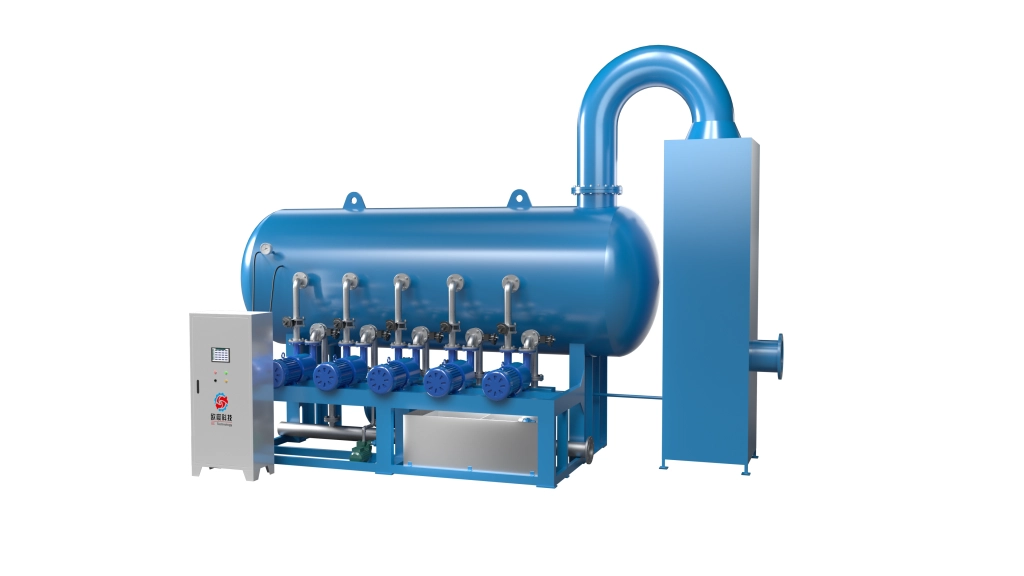
OC Technology uses PLC control, a closed-cycle tower condenser, variable-frequency pump control, and adaptive start-stop operation. Demand-based control can limit unnecessary running at partial load. The quotation needs to show how many machines may run together and where pressure will be measured.
Which Energy Figures Belong in the Quotation?
With the equipment scope defined, each quotation can be checked on the same basis. Installed power is needed for electrical planning, but it does not show normal consumption, standby losses, or shared auxiliary loads.
Separate Installed Power From Operating Use
| Data point | What it tells the buyer |
| Installed power | Electrical connection requirement |
| Peak demand | Highest expected plant load |
| Average operating load | Typical use under stated conditions |
| Standby consumption | Energy used between cycles |
| Energy per accepted pattern | Energy linked to saleable output |
Each figure needs a stated mold, batch size, cycle time, utility pressure, test duration, and auxiliary-equipment boundary.
Define the Measurement Boundary
Vacuum pumps, compressed air, drying, cooling, and material handling may serve several machines. If one proposal excludes these loads while another includes them, the comparison is not valid.
Agree on where metering starts and ends. Where practical, include operating conditions and measurement boundaries in FAT, SAT, or trial-production documents. Factory testing can confirm controls and basic functions; site testing reflects actual utilities more closely.
How to Compare Lost Foam Casting Equipment Suppliers
Price comparisons only work when project boundaries are the same. A lower offer may exclude installation support, training, commissioning, or critical spare parts. Those costs do not disappear; they move to the buyer.
Compare Functions, Service, and Project Scope
Compare each lost foam casting equipment supplier on the same product mix, accepted output, utilities, automation scope, energy-measurement basis, installation duties, training, warranty, spare parts, and acceptance conditions.
Recipe storage, pressure control, remote diagnostics, and service access are worth paying for when they solve a known problem. Maximum table size, the fastest theoretical cycle, the largest pump, and full-automation claims should not be judged alone. Some reserve capacity is sensible. Years of idle capacity are not.
For an overseas project, confirm English documentation, voltage and frequency compatibility, operator training, warranty exclusions, remote support, and replacement-part lead times.
How OC Technology Supports Project-Specific Selection
OC Technology manufactures intelligent white-area equipment for lost foam casting and provides turnkey support for new production lines, capacity expansions, and equipment replacement projects. Its scope covers pre-expansion, maturation, EPS molding, block molding, drying, central vacuum, and related process support.
A technical review starts with casting drawings, pattern dimensions, product mix, target output, shifts, utilities, workshop layout, and expansion plans. These inputs shape machine size, drying load, vacuum demand, automation, installation, commissioning, training, and spare-parts planning. Reviewing the stages together reduces the risk of mismatched capacity.
결론
Energy-efficient lost foam casting equipment should be evaluated through accepted output, real operating conditions, shared utility demand, maintenance needs, and measurable acceptance criteria. Installed power and broad savings claims are not enough.
Foundries planning a new lost foam casting line, white-area upgrade, or equipment replacement can 연락처 OC Technology with casting drawings, pattern dimensions, production targets, shift plans, utility conditions, and workshop layouts. The project team can prepare a preliminary equipment configuration, utility requirement list, project scope, and commercial quotation for review.
자주 묻는 질문
Q1: What energy data should a lost foam casting equipment supplier include in a quotation?
A: Installed power, peak demand, operating load, standby use, auxiliary consumption, measurement boundaries, and test conditions.
Q2: Why is installed power not enough to compare lost foam casting equipment?
A: Actual consumption changes with cycle time, production load, standby periods, utility pressure, control logic, and auxiliary equipment.
Q3: How do steam, compressed air, and vacuum capacity affect equipment performance?
A: Unstable steam can lengthen cycles, insufficient air can affect filling, and inadequate vacuum capacity can reduce cooling consistency.
Q4: How can a foundry verify energy performance before final acceptance?
A: Agree on the test product, duration, utilities, metering points, auxiliary loads, and accepted output. FAT can confirm controls; SAT or trial production checks site performance.
Q5: Should a foundry replace one machine or upgrade the complete lost foam casting line?
A: Replace one machine when the bottleneck is isolated. Consider a wider upgrade when molding, maturation, drying, vacuum, or utilities restrict one another.


 Korean
  English
  Arabic
  Hindi
Hindi  Indonesian
  Japanese
  Malay
Malay  Portuguese
  Spanish
  Thai
Thai  Vietnamese