
Lost foam casting, often called Evaporative Pattern Casting (EPC), ranks as a key near-net-shape metal shaping method in current foundry work. This approach lets manufacturers make detailed parts with good surface finish, fine size control, and little need for after-casting cutting or smoothing steps. When set against old sand casting ways, lost foam casting skips the step of pulling out a pattern before metal pour. As a result, it cuts down on split lines, lessens extra metal bits, and boosts overall making speed.
1. Fundamentals of the Lost Foam Casting Process
1.1 Pattern Creation and Cluster Assembly
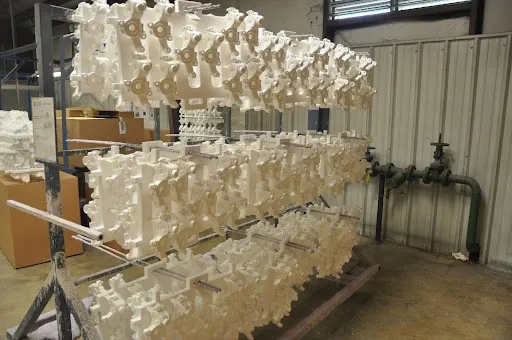
The full process starts with building an expanded polystyrene (EPS) foam pattern. Experts call it the “white mold” in the field. These patterns come from exact pre-foaming tools that manage bead swell density. Foam shaping tools then turn the beads into steady, matching forms. Once shaped, single pattern parts get stuck together with special glues to form full groups. Such groups hold the main part shape plus the full pouring setup, risers, and at times chills. All these form as one piece in the foam unit meant for single use.
1.2 Refractory Coating Application Stage
With the foam group put together, it goes through a key coating step. A water-based refractory mix — usually with zircon, alumina, silica, or other heat-proof stuff — gets put on by dipping, brushing, flow coating, or spraying. This coating makes a slim but firm ceramic cover over the foam pattern. The coating layer does several vital jobs:
- It mechanically protects the rather weak EPS foam during the next dry sand fill and pack step
- It gives heat barrier and hold against sharp heat hit when hot metal touches the pattern
- It keeps enough air flow to let the big gas amount from foam heat break (pyrolysis) escape without pressure flaws
The coat’s thickness, evenness, strength, and dry state rank as top factors that shape end casting quality and flaw levels.
2. Critical Role of Drying in EPC Quality Control
2.1 Why Proper Coating Drying Directly Impacts Casting Quality
After the refractory coating goes on, the layer holds a good deal of loose and tied-up water. If this wet part does not leave evenly and fully, many bad casting flaws can show up. These include:
- Surface cracks and peeling of the coating shell
- Gas porosity and blowholes caused by trapped water vapor
- Metal penetration into coating defects or cracks
- Rough surface finish and inclusion defects
- Carbon pickup or carbonaceous residue from incomplete foam evaporation
- Dimensional distortion due to uneven stress during drying
In bad cases, weak drying can cause mold fall or metal spill during pour.
2.2 Standard Drying Parameters in Modern EPC Foundries
To get steady good results, most forward lost foam casting setups aim for these drying settings:
- Adjustable temperature range: 35–60°C (most commonly 45–55°C for optimal balance between speed and coating integrity)
- Temperature variation within the drying chamber: ≤ ±5°C (ideally ±2–3°C in high-end systems)
- Final relative humidity inside the drying room: ≤ 15% (often 10–12% for critical applications)
- Controlled and uniform airflow to eliminate hot/cold spots and stagnant zones
Old drying tools — like steam heaters, electric coil warmers, or simple hot air fans — often miss these tight needs. They usually face high power use, weak evenness in heat and wet, long dry times (often 12–36 hours), big heat waste to outside, and extra smoke.
3. Introduction to Heat Pump Drying and Dehumidification Technology
3.1 Detailed Working Principle of Air-Source Heat Pump Dryers
Current heat pump drying and dehumidification integrated machines join air-source heat pump tech with forward wet-pull and multi-layer heat reuse setups. The work loop breaks down into these steps:
- The outdoor or ambient air unit extracts low-grade thermal energy from surrounding air
- Refrigerant is compressed to high temperature and pressure, releasing heat to generate hot air (delivered into the drying room via ducts or direct discharge)
- Humid air inside the drying chamber is drawn through the evaporator coil, where moisture condenses into liquid water and is drained away
- The latent heat released during condensation, together with sensible heat, is recovered and transferred back into the drying process through multiple heat exchange stages
- Only condensed water is discharged — virtually no heated air is vented to the atmosphere
This heat flow cycle often hits a Coefficient of Performance (COP) over 2.0. And it can reach 3.0–4.0 in good setups. That means the tool gives 2–4 units of heat for each unit of power used.
3.2 Major Technical and Economic Advantages
Set against regular drying ways, heat pump tools bring big gains:
- Energy savings of 50–70% (sometimes up to 80% in warm climates or well-insulated drying rooms)
- True zero-emission drying (no combustion, no exhaust gas)
- Temperature precision as tight as ±1°C in advanced models
- Strong dehumidification performance even at relatively low drying temperatures
- Residual heat recovery efficiency usually exceeding 70%
- Elimination of large-volume hot air exhaust, improving workshop environment
- Reduced thermal stress on coatings due to gentler, more uniform heating
4. Specialized Drying Equipment Configurations for EPC Production
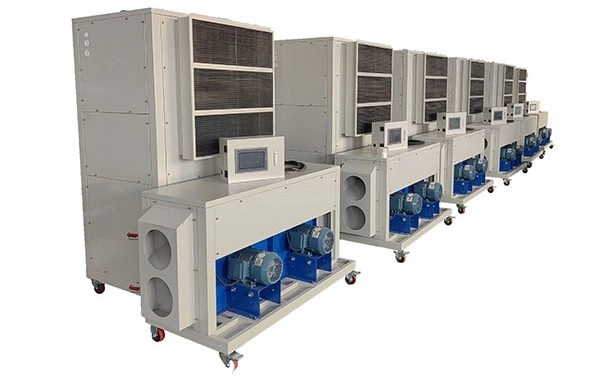
4.1 Indoor Integrated Heat Pump Drying Units
These small, full-package systems fit easy into current shops. They mix heating, wet removal, water drain, and waste heat reuse in one box. Thus, they suit small-to-medium dry spots or places with room limits.
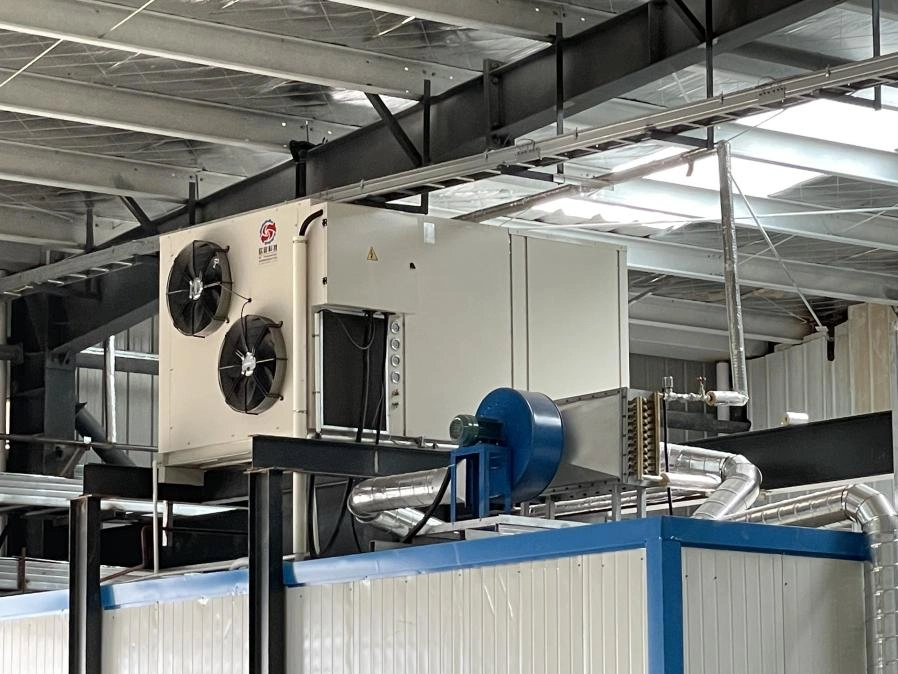
4.2 Top-Mounted Air Energy Drying Systems
Placed on the ceiling or roof over the dry chamber, these units bring a few main pluses:
- Complete elimination of floor space occupation inside the drying area
- Natural top-to-bottom hot air distribution for excellent uniformity
- Reduced risk of dust contamination from floor-level equipment
- Well-suited for medium to large drying rooms (typically 50–120 m²)
4.3 Rear-Mounted / External High-Capacity Units
These outside-set units have much bigger wet-pull parts and higher water-take rates. Common traits include:
- Applicable drying room sizes: 40–150 m² or larger
- Single or dual compressor configurations for redundancy and capacity flexibility
- Multiple air delivery options: direct discharge, flexible bellows ducts, or custom ducting systems
- Particularly suitable for high-throughput continuous production lines or very large clusters
5. Intelligent Control and Operational Benefits
5.1 Advanced Control and Monitoring Features
New dry units come with smart control setups. These often show:
- Large color LCD touchscreens displaying real-time temperature, humidity, compressor status, and fault information
- Multi-stage programmable drying curves (ramp-up, constant temperature, dehumidification intensification, cooling)
- Built-in IoT modules enabling remote monitoring and control via mobile apps or web platforms
- Automatic fault diagnosis, alarm notifications, and historical data logging
- Energy consumption tracking and optimization suggestions
5.2 Tangible Production and Economic Improvements
Putting in these forward dry systems brings clear gains:
- One operator can efficiently supervise multiple drying chambers simultaneously
- Drying cycle times frequently reduced by 20–50% compared to traditional methods
- Electricity cost per ton of finished casting significantly lowered
- Improved coating consistency leads to higher first-pass yield and fewer rejected castings
- Full compliance with increasingly stringent environmental regulations and carbon reduction targets
6. Conclusion: Selecting the Optimal Drying Technology for Modern EPC Foundries
In the current tough lost foam casting field, getting steady, power-saving, and good-quality dry of foam patterns and refractory coats has grown into a main edge over rivals. Heat pump dry and wet-pull joined systems now stand as the top tech pick for mid-size to big EPC foundries around the world.
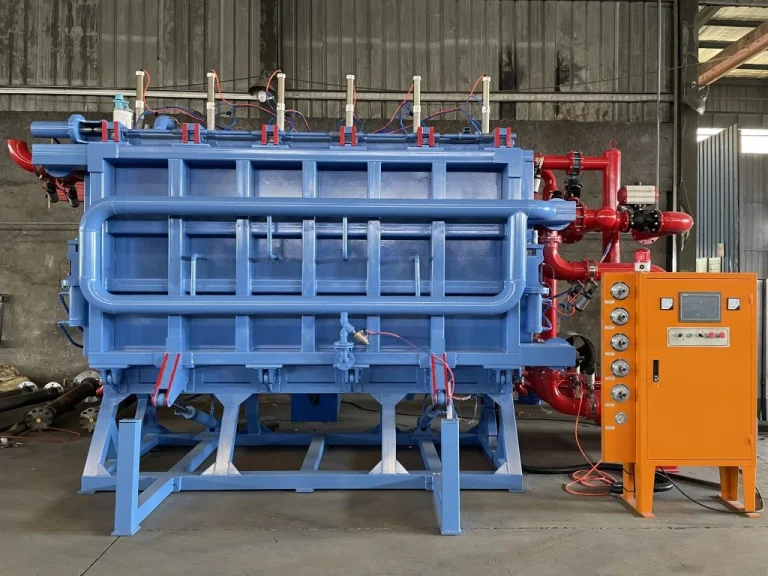
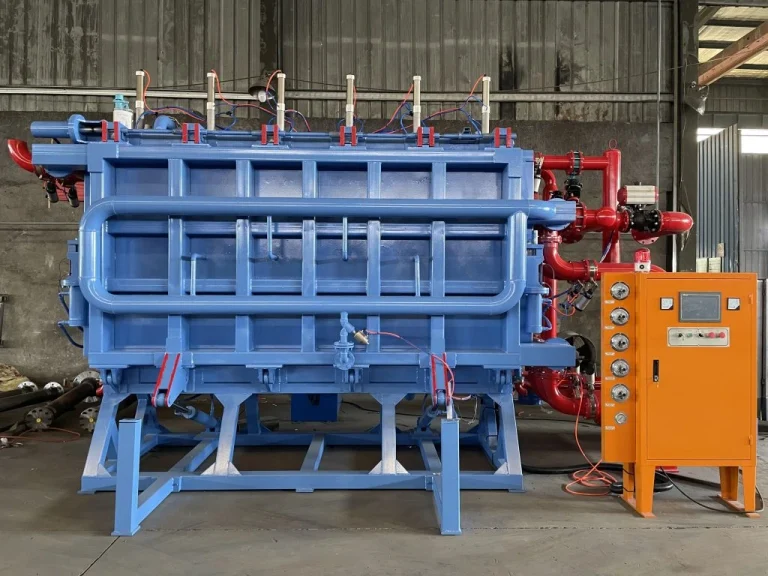
OC Technology is a specialized manufacturer and supplier dedicated to providing complete high-end intelligent lost foam casting equipment solutions. The product portfolio includes precision foam molding machines, efficient pre-foaming systems, and a comprehensive range of EPC-specific drying equipment — such as indoor integrated heat pump dryers, top-mounted air energy drying units, rear-mounted high-capacity dehumidification machines, and fully customized drying solutions tailored to individual foundry requirements.
FAQ
What temperature and humidity should be maintained when drying EPC coatings?
Usually 35–60°C with temperature uniformity ≤ ±5°C and final relative humidity ≤ 15%.
How much energy can heat pump drying save compared to traditional electric heating?
Typically 50–70% reduction in electricity consumption, depending on ambient conditions and system configuration.
What is the most important advantage of heat recovery in these drying systems?
Recovering >70% of the latent heat from evaporated moisture significantly lowers operating costs while maintaining drying performance.
Can one drying unit serve multiple drying rooms at the same time?
Yes — many models support centralized control and can manage several drying chambers simultaneously through proper ducting design.
Do these systems support remote monitoring and management?
Most advanced units include IoT modules, allowing operators to monitor temperature, humidity, alarms and drying progress via mobile phone or computer.
Connect with a Professional Lost Foam Casting Equipment Manufacturer & Supplier
Lost foam casting manufacturers, foundry engineers, and EPC project investors seeking to upgrade drying efficiency, substantially reduce energy costs, enhance coating quality, and achieve greener, more sustainable production are invited to contact OC Technology — a trusted factory and supplier of intelligent lost foam casting equipment and dedicated heat pump drying solutions.
Tel: +86 15988479417 Email: zyh@oc-epc.com Website: https://www.oc-epc.com/
Reach out today for in-depth technical consultation, equipment selection support, customized drying room design, and complete EPC production line solutions.

 English
  Arabic
  Hindi
Hindi  Indonesian
  Japanese
  Korean
  Malay
Malay  Portuguese
  Spanish
  Thai
Thai  Vietnamese