
Lost foam casting, often called evaporative pattern casting (EPC) or full mold casting, ranks among the most creative and flexible ways to shape metal in today’s manufacturing world. The method uses patterns made from expandable polystyrene (EPS) foam. These patterns vanish completely when hot metal touches them. Then the metal takes their exact shape with very good detail. Many foundries now choose lost foam casting to handle tough designs, cut down on wasted material, and skip a lot of extra machining work. It combines old sand casting ideas with modern evaporative methods. This gives better surface quality, closer dimensions, and more freedom in design than many older techniques can manage.
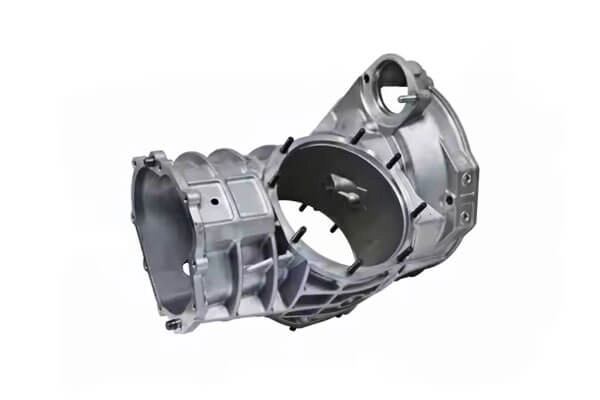
What Is Lost Foam Casting?
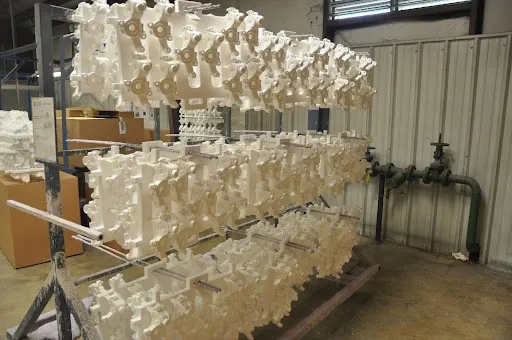
Lost foam casting starts with making a foam pattern that matches the final metal part exactly. Factories usually shape these patterns from dense EPS foam with special molding tools. After shaping, workers apply a refractory coating. This forms a thin but strong ceramic layer over the foam. Next, they place the coated pattern in loose, dry sand inside a casting flask. They use vibration to pack the sand firmly around the pattern for good support.
When pouring begins, molten metal flows in and turns the foam to vapor right away. The gases slip out through the permeable coating and sand. At the same time, the metal fills the empty space left by the foam. Once the metal cools and hardens, workers take the casting out of the sand. The sand can go back for reuse with almost no waste. This one-step process replaces the pattern directly. It removes the need for cores, draft angles, and parting lines that other casting ways often require.
The idea began in the mid-20th century. It saw wide use in industry starting in the 1980s, especially in cars and heavy equipment. Today’s versions focus on automation, saving energy, and tight process checks to meet high quality rules.
What Are the Steps of Lost Foam Casting?
The lost foam casting process includes several linked steps. Each one matters for steady, good results:
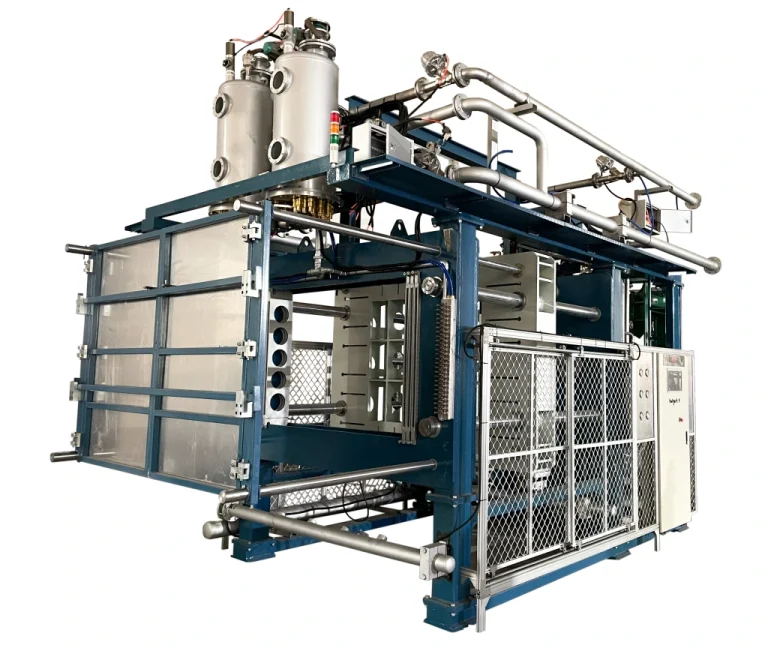
- Pattern production happens with EPS foam molding machines. These shape raw beads into precise patterns and gating systems.
- Assembly puts separate patterns together with runners and sprues. This creates full clusters or groups for batch work.
- Coating application dips or brushes the cluster in a special refractory slurry. It builds an even protective layer.
- Drying hardens the coating. Controlled air dryers help avoid cracks and keep thickness uniform.
- Flask filling sets the dried cluster into a sand container. Then dry, unbonded sand goes in.
- Compaction uses vibration tables to pack the sand tight around the pattern. This gives needed support during pouring.
- Pouring adds molten metal. It vaporizes the foam and shapes the casting in one smooth flow.
- Shakeout, cleaning, and sand reclamation finish the cycle. Castings get any needed final touches.
Automation matters a lot in modern plants. Integrated systems manage pattern molding, coating, drying, and material movement. This raises output and keeps things consistent.
What Are the Advantages of Lost Foam Casting?
Lost foam casting brings clear gains over traditional sand, investment, or die casting methods:
- Great design freedom lets you make complex internal channels, undercuts, and thin walls. No drafts or cores are needed.
- Near-net-shape results cut machining needs, material use, and total costs a lot.
- No parting lines or core prints mean smoother surfaces, fewer flaws, and better dimension control.
- Single-cluster setups cast several parts at once. This simplifies assembly and reduces labor.
- Flexible production works well for low-to-medium runs. Automation makes high-volume jobs economical too.
- EPS molds last longer than permanent molds in other processes.
- No core-making steps and less fettling time boost overall efficiency.
- Many setups use less energy thanks to simpler workflows and reusable sand.
- Environmental benefits come from lower waste, no chemical binders in sand, and controlled emissions.
These features make lost foam casting a top choice for companies that follow lean methods and need high-value parts.
What Metals and Alloys Can Be Cast by Lost Foam Casting Process?
The process works with many materials. It handles both ferrous and non-ferrous alloys well:
- Gray cast iron and ductile (nodular) cast iron suit structural and wear-resistant uses.
- Carbon steels in low, medium, and high types fit general engineering jobs.
- Alloy steels, from low-alloy to high-alloy and special grades, gain improved traits.
- Aluminum and aluminum-based alloys work for lightweight, rust-resistant components.
- Brass, bronze, and other copper alloys fit needs for conductivity or looks.
Pouring temperature, coating permeability, and pattern density must adjust carefully for each alloy. This helps get good fill and avoids issues like gas porosity or misruns.
What Industries Are Lost Foam Castings Used For?
Lost foam casting sees wide use in fields that need detailed, reliable parts:
- Heavy machinery and industrial equipment for strong structural pieces.
- Automotive sector for engine blocks, cylinder heads, transmission cases, and suspension components.
- Pump and valve making that requires exact internal paths and pressure-tight seals.
- Agricultural machinery such as tractor parts and implement frames.
- Aerospace and defense for some non-critical structural items with complex shapes.
The method shines with thick-walled, large parts or those with built-in features. These would otherwise need multiple steps or assemblies.
What Casting Tolerances Can Be Reached by Lost Foam Casting Process?
Dimensional accuracy in lost foam casting usually beats conventional green sand methods. Still, pattern precision, coating consistency, sand compaction, and metal traits all play a role. Typical tolerance levels include:
- Dimensional Casting Tolerance (DCT) grades from CT9 to CT13 for most industrial work.
- General Casting Tolerance (GCT) grades reach CT5 to CT8 in well-tuned, automated setups.
Tighter tolerances come possible with advanced pattern molding tools, careful coating thickness control, and smart process tracking. Linear tolerances often stay within ±0.5 mm to ±2 mm based on feature size and position. Angular tolerances and surface flatness improve thanks to no parting lines. Working with skilled equipment suppliers helps adjust controls to hit exact tolerance goals.
Lost foam casting keeps improving through better automation, new materials, and smart controls. These changes help foundries achieve higher consistency, shorter cycles, fewer defects, and better energy use. As manufacturing around the world focuses on sustainability and accuracy, this method provides a strong option for the future.
About OC Technology – Leading Lost Foam Casting Equipment Manufacturer
As a prominent manufacturer and supplier of lost foam casting equipment, OC Technology specializes in high-end intelligent white-area solutions. The company integrates advanced German EPS/EPP technology with numerous independent patents, focusing on automation, high efficiency, quality, and low energy consumption. Recognized as a National High-tech Enterprise, a Science and Technology Small and Medium-sized Enterprise in Zhejiang Province, and a key partner of the China Lost Foam Industry Association, OC Technology serves as a dedicated research and development base for white-area equipment.
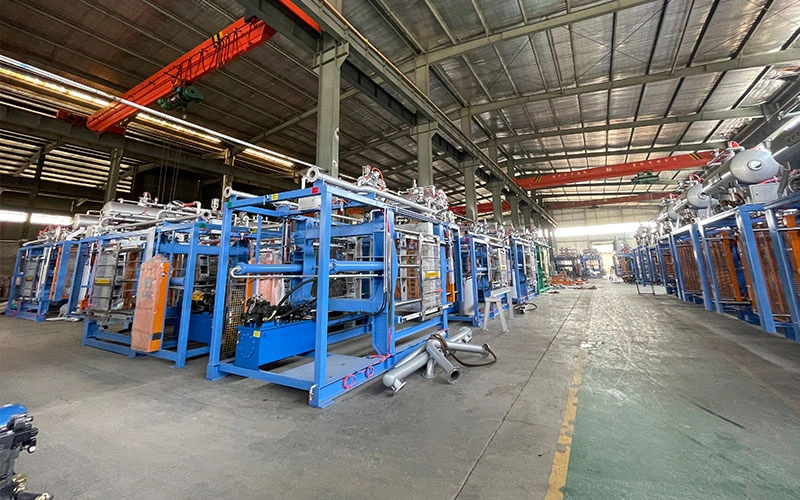
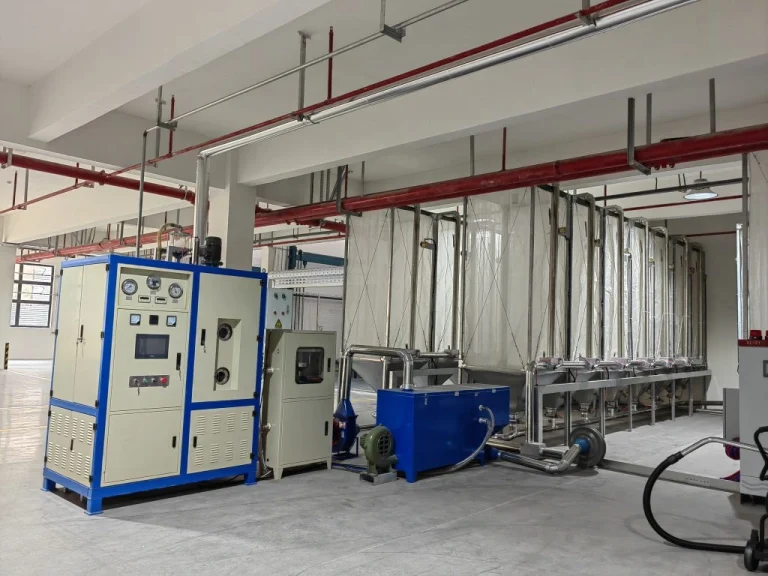
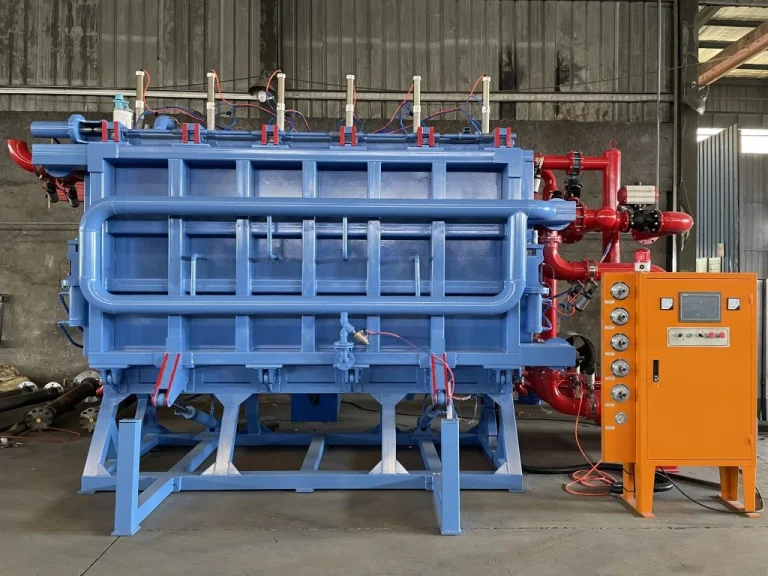
The product portfolio includes fully automatic EPS shape molding machines, foam sheet machines, horizontal and vertical PLC hydraulic forming machines, maturation silos with precise sensor controls, various air dryers (indoor, top-mounted, rear-mounted configurations), central vacuum systems featuring stainless steel piping and anti-static designs, lift-type paint mixers, and complete turnkey production lines encompassing both white-area and yellow-area processes. These systems support high-precision pattern production, energy-efficient drying, safe bead transport, and automated cluster assembly for demanding foundry operations.
Elevate Lost Foam Casting Operations with a Proven Equipment Manufacturer and Supplier
Manufacturers, foundries, and suppliers looking to improve lost foam casting benefit from working with an established factory and equipment provider like OC Technology. The company offers customized turnkey solutions, fully automated production lines, and dependable high-performance machinery built for precision, energy savings, and lasting performance. Contact the OC Technology team to talk about project needs, check equipment details, and set up advanced lost foam casting systems that boost productivity and quality. Reach out through the website or direct inquiry channels to start working together and build stronger manufacturing power.

 English
  Arabic
  Hindi
Hindi  Indonesian
  Japanese
  Korean
  Malay
Malay  Portuguese
  Spanish
  Thai
Thai  Vietnamese