
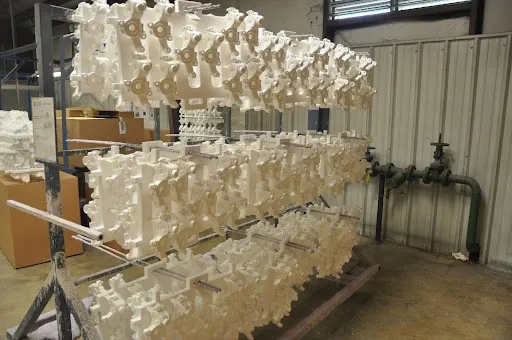
Lost foam casting technology involves bonding foam plastic models that match the exact dimensions and shape of the desired casting into clusters, coating them with refractory material, drying, and then embedding the clusters in dry quartz sand with vibration compaction. High-temperature molten metal is poured under specific conditions, vaporizing the foam model, occupying its space, and solidifying to form the required casting.
This process is known by various names worldwide. In China, it is commonly called “dry sand solid casting” or “negative pressure solid casting,” abbreviated as EPC casting. Internationally, terms include Lost Foam Process (U.S.A.) and Policast Process (Italy).
Lost foam casting offers numerous advantages that make it a preferred choice for modern foundries seeking precision, efficiency, and cost savings. As a leading lost foam casting equipment manufacturer and supplier, OC Technology provides advanced intelligent white area equipment to maximize these benefits.
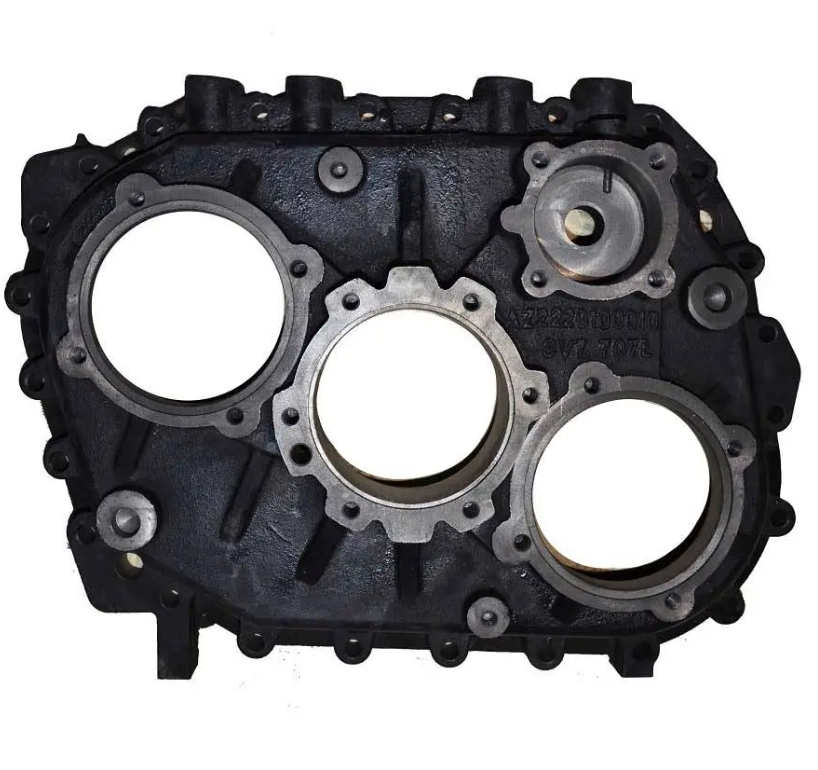
1. Precise Casting Dimensions and Shapes with Excellent Repeatability
Lost foam casting delivers castings with high dimensional accuracy and consistent repeatability, rivaling precision casting methods. The foam model directly translates into the final part, eliminating tolerances from parting lines or core shifts.
2. High Surface Finish Quality
Castings produced via lost foam exhibit superior surface smoothness. The refractory coating on the foam model creates a fine finish, reducing the need for extensive post-processing.
3. Elimination of Sand Cores and Core-Making Processes
By removing the need for sand cores and core production, lost foam casting eradicates defects and scrap related to core placement, floating, or misalignment.
4. Simplified Molding Without Parting or Draft
The process avoids traditional box assembly and model removal, streamlining operations and preventing defects from mismatching or extraction errors.
5. Use of Binder-Free, Moisture-Free Dry Sand
Dry quartz sand without binders, water, or additives eliminates porosity, gas holes, and other defects caused by moisture or chemical reactions in conventional sand casting.
6. Simplified Sand Handling and Full Reusability
Sand preparation and waste treatment sections are obsolete. All molding sand can be reused, minimizing material costs and environmental impact.
7. Easy Shakeout and Reduced Labor
Shakeout becomes effortless as the foam vaporizes completely, slashing cleanup time and physical effort in the foundry.
8. No Flash or Burrs, Cutting Cleaning Work by Over 50%
Castings emerge without fins or excess material, drastically reducing grinding and finishing operations.
9. Flexible Gating and Riser Placement
Gating systems can be positioned optimally without constraints from parting lines or draft angles, minimizing internal defects like shrinkage.
10. Negative Pressure Pouring for Better Fill and Feeding
Vacuum-assisted pouring enhances molten metal flow and feeding, increasing casting density and mechanical properties.
11. Cluster Pouring for Higher Yield and Productivity
Multiple parts can be poured in a single flask, boosting process yield and throughput significantly.
12. Reduced Machining Allowances
Tighter tolerances mean less material removal during machining, lowering overall production costs.
Scalable Automation and Flexible Production Lines
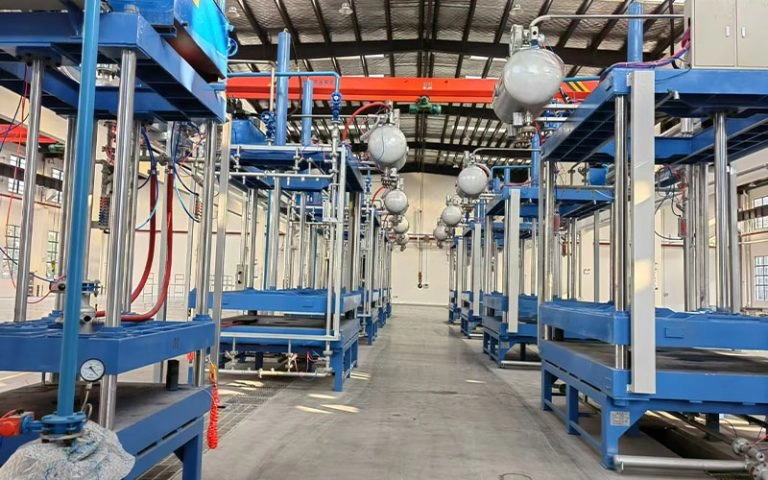
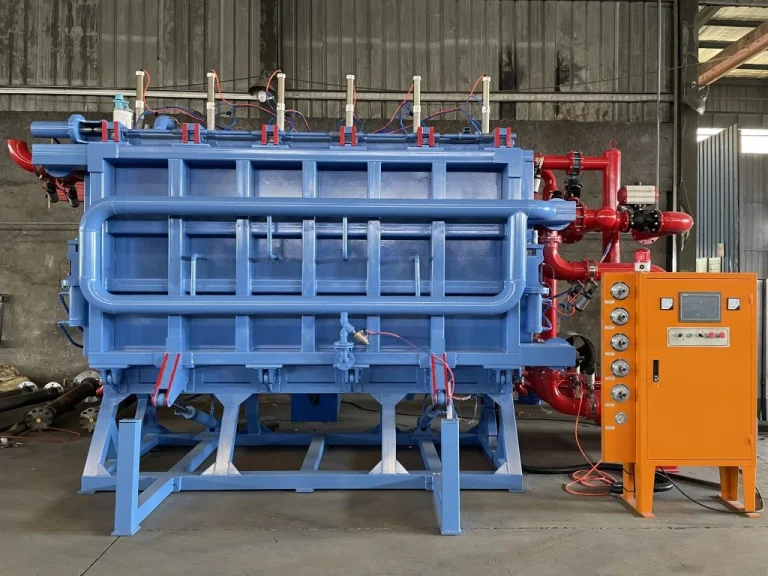
Lost foam supports mechanized assembly lines with high elasticity, allowing mixed production of different alloys, shapes, and sizes on the same line. OC Technology, a premier lost foam casting equipment manufacturer, offers fully automated white area systems integrating German EPS/EPP technology with proprietary patents for seamless operation.
14. Elimination of Draft Angles
Designers gain freedom without draft requirements, enabling complex geometries impossible in traditional methods.
15. Long-Life Metal Molds for Foam Patterns
Metal molds used to produce foam patterns last over 100,000 cycles, reducing maintenance and replacement expenses.
16. Improved Working Environment
Dust, smoke, and noise are minimized, transforming labor-intensive foundries into cleaner, safer workplaces. This shift supports workforce diversification.
17. Lower Skill Requirements for Operators
Simplified procedures reduce dependency on highly skilled labor, broadening accessibility to the technology.
18. Design Freedom for Optimal Part Performance
Mechanical engineers can prioritize performance over manufacturability constraints, resulting in lighter, stronger components.
19. Weight Reduction in Castings
Optimized designs and precise material placement enable lighter parts without sacrificing strength.
20. Overall Cost Reduction
From raw materials to labor and energy, lost foam drives down expenses across the production chain.
21. Lower Capital Investment and Factory Footprint
Fixed asset investment drops 30%-40%, floor space and building area decrease 30%-50%, and power consumption falls 10%-20%. OC Technology’s energy-efficient equipment, built on principles of high efficiency and low energy consumption, amplifies these savings.
22. Broad Material Compatibility
The process suits cast steel, iron, copper, aluminum, and more, offering versatility across industries.
23. Ideal for Complex Geometries
Multi-core, intricate shapes that challenge conventional casting become routine with lost foam.
24. Micro-Vibration Pouring for Specialized Microstructures
Controlled vibration during pouring promotes desired metallurgical structures, enhancing intrinsic quality.
25. Heat Treatment Using Residual Heat
Synchronous cooling in dry sand enables direct heat treatment, especially effective for high-manganese steel water toughening or heat-resistant steel solution treatment, saving energy and shortening cycles.
26. Unlimited Casting Size Based on Melting Capacity
Any scale of casting is achievable, limited only by furnace capacity.
FAQ
Q: What is lost foam casting? A: Lost foam casting uses evaporative foam patterns buried in dry sand, which vaporize upon molten metal pouring to form the casting.
Q: How does lost foam differ from traditional sand casting? A: It eliminates binders, cores, and parting lines, using dry sand and negative pressure for cleaner, more precise results.
Q: Which materials can be cast using lost foam? A: Cast iron, steel, aluminum, copper, and alloys are all compatible.
Q: What industries benefit most from lost foam casting? A: Automotive, pump and valve, machinery, and aerospace sectors gain from complex, high-quality parts.
Q: How long do foam pattern molds last? A: Metal molds typically endure over 100,000 cycles.
Q: Does lost foam reduce environmental impact? A: Yes, through reusable sand, lower energy use, and reduced emissions.
Partner with OC Technology – Premier Lost Foam Casting Equipment Manufacturer & Supplier
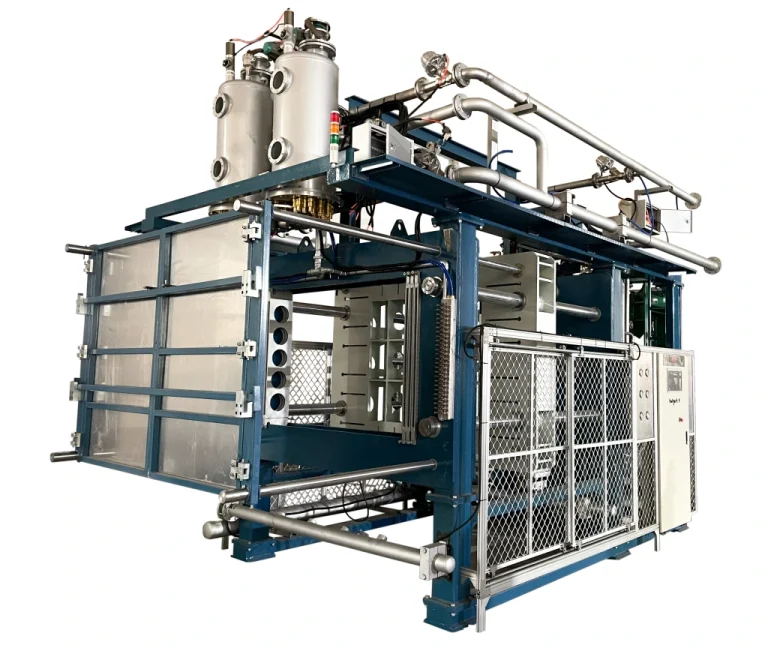
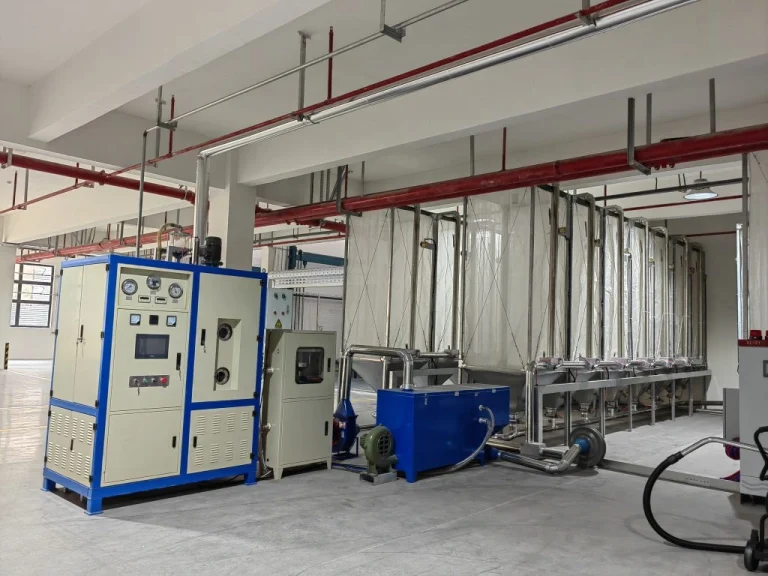
Elevate foundry operations with cutting-edge white area automation from OC Technology. As a trusted lost foam casting equipment manufacturer and supplier, OC delivers German-engineered EPS/EPP systems fused with patented innovations for unmatched efficiency and quality.
Contact the experts today: 📞 +86 15988479417 📧 zyh@oc-epc.com
Visit oc-epc.com to explore solutions tailored for industrial-scale lost foam production. Secure a consultation and transform casting capabilities now.
 English
  Arabic
  Hindi
Hindi  Indonesian
  Japanese
  Korean
  Malay
Malay  Portuguese
  Spanish
  Thai
Thai  Vietnamese