
การหล่อโฟมที่หายไป is also called evaporative pattern casting (EPC) or full mold process. It is a modern casting technique. The method gives high precision and efficiency. This method uses a foam pattern that vaporizes during pouring. Molten metal then fills the exact space. It forms the final casting.
History and Development of Lost Foam Casting Technology
The lost foam casting process began in 1958. H.F. Shroyer in the United States created the basic idea. Later work in Germany, Japan, and Italy improved the technology a lot. By the 1980s, it saw wide use around the world. China started using it in the same decade. This caused quick growth at home. Schools like Tsinghua University and Huazhong University of Science and Technology did much research and made it better.
Today, lost foam casting is a top choice for complex metal components. It uses minimal machining allowances of 1.5–2 mm. This brings big savings in post-processing. Traditional sand casting needs 40–50% more material removal for its allowances.
Working Principle of Lost Foam Casting
In lost foam casting, a foam or wax pattern matches the final casting dimensions. Workers coat it with refractory material and embed it in dry sand. Under vacuum or vibration, molten metal is poured. The pattern gasifies fast. The metal replaces the pattern. It solidifies and forms the casting after cooling.
This method eliminates pattern removal from molds. It avoids parting lines and cores. So it reduces defects like flash, burrs, and draft angles. Dimensional accuracy gets better. Fewer assembly errors from cores and flasks cause this.
Lost Foam Casting Process Flow: White Area and Black Area
The lost foam casting workflow has two main sections. The white area handles pattern production. The black area covers molding and pouring.
White Area Process: Foam Pattern Manufacturing
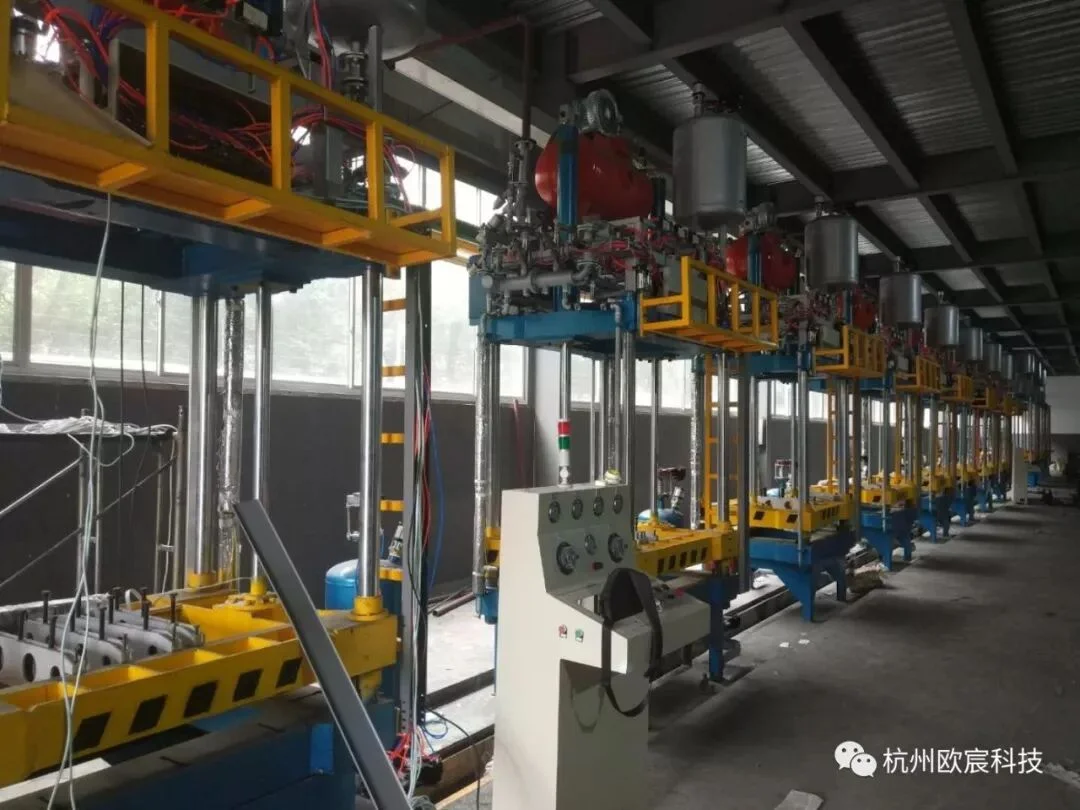
The white area makes high-quality foam patterns. It starts by choosing pre-expanded beads for casting wall thickness and material. Beads get pre-expansion in an intermittent pre-foamer based on density and strength. After drying in a fluidized bed, they mature in a conditioning silo.
Matured beads enter a mold. They expand and fuse with steam. Water cools them for structural integrity. Final drying readies the white pattern for cluster assembly with gating systems.
Black Area Process: Molding, Coating, and Pouring
In the black area, workers place a flask on a compaction table. Dry quartz sand (typically 20–40 mesh) layers at the bottom about 100 mm thick and gets compacted. The coated foam cluster positions there. It connects to gating and risers. Additional sand surrounds it. Vibration packs it dense. A plastic film seals the top. Vacuum stabilizes the mold.
Molten metal pours through the gating system and vaporizes the foam. After solidification and cooling under vacuum, the flask dumps to retrieve the casting. This dry sand process simplifies reclamation and reduces waste.
Importance of Refractory Coatings in Lost Foam Casting
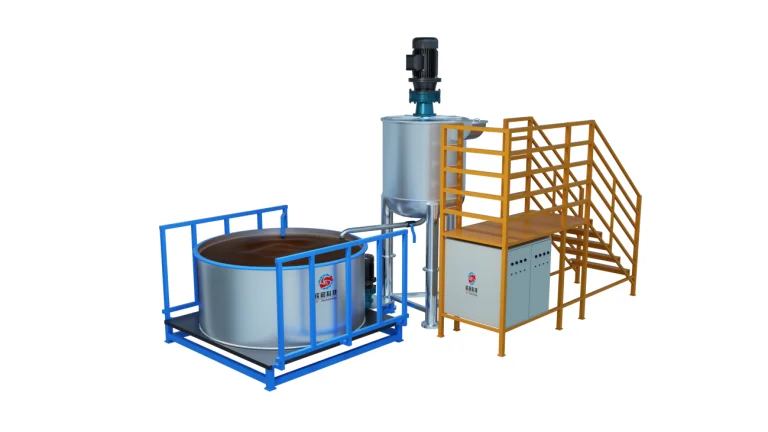
Refractory coatings on foam patterns are one of three key success factors in lost foam casting. The coating creates a barrier between sand and molten metal.
Working Principles of Refractory Coatings
Dry sand has spherical particles that create point contacts and micro-voids. Without coating, molten metal penetrates gaps under vacuum. This leads to defects like metal penetration. Coatings solve this by:
Enhancing pattern strength and rigidity in handling and compaction to stop deformation.
Separating molten metal from sand to prevent reactions, sand burn-on, and mold collapse.
Allowing escape of decomposition gases and residues to reduce carbon defects, porosity, and inclusions.
Composition of Lost Foam Refractory Coatings
Refractory coatings usually include:
Refractory Aggregates: The main component (over 50% by weight) provides insulation, anti-burn-on properties, and surface smoothness. Materials include zircon powder, bauxite, talc, brown corundum, quartz, mullite, and mica. Particle shape affects permeability. Spherical ones help gas evacuation. Selection depends on casting alloy to balance anti-sand burn and permeability.
Carriers (Solvents): Water or alcohol. Water-based coatings are better for lower gas, easy application, drying, lower cost, and adjustable suspension/thixotropy.
Binders and Additives: They improve coating strength, adhesion, suspension, and foam compatibility without bad reactions.
Proper formulation and application are essential for defect-free castings.
ข้อดีของเทคโนโลยีหล่อโฟมสูญหาย
การหล่อโฟมที่หายไป offers many benefits over conventional methods:
Design Flexibility and Precision: Complex geometries, internal passages, and near-net shapes work without cores or drafts. High dimensional accuracy reduces machining needs.
Reduced Labor and Environmental Impact: Lightweight foam patterns ease handling. Dry sand eliminates mixing equipment, cuts noise and dust, and simplifies reclamation. Fewer CO and CO2 emissions occur and vacuum manages them.
Simplified Process: No core making or parting lines. Automated white area production works. Cleaning is easy as coatings peel off.
Cost Efficiency: Lower material waste, reduced machining (up to 40-50%), and high yield for intricate parts.
These features support sustainable manufacturing goals by cutting pollution and energy use.
Common Defects in Lost Foam Casting and Mitigation Strategies
Lost foam casting can still have specific defects if parameters are not controlled well.
Sand Burn-On
Sand Burn-On: It often comes from low vacuum or poor coating permeability.
Cold Shuts
Cold Shuts: Low pouring temperatures or incomplete filling cause them. They lead to cracks and oxide inclusions.
Slag Inclusions
Slag Inclusions: Metal oxides, furnace slag, or refractory debris create irregular pores (black or white by source).
Mitigation uses optimized negative pressure, precise temperature control, high-quality coatings, and clean melt practices. Advanced equipment improves stability.
Industrial Applications and Future Outlook
Lost foam casting does well in automotive, agricultural machinery, aerospace, and general engineering. It produces components like engine blocks, manifolds, brackets, and housings. Its complex high-precision parts aid lightweighting and part consolidation.
Industries seek more efficiency and sustainability. So lost foam casting keeps growing. Innovations in automation, pattern materials (e.g., STMMA alternatives to EPS), and controls promise better quality and productivity.
คำถามที่พบบ่อย
What is the difference between lost foam casting and traditional sand casting?
Lost foam casting uses a vaporizable foam pattern and dry sand without cores or parting lines. It offers better dimensional accuracy and reduced machining than traditional methods that need cores and higher allowances.
What are the main advantages of lost foam casting?
Key benefits include design freedom for complex shapes, minimal machining, lower labor intensity, reduced environmental impact, and no flash and draft angles.
Why is refractory coating critical in lost foam casting?
The coating strengthens the pattern, stops metal penetration into sand, and lets gas escape. It impacts surface quality and defect rates directly.
วัสดุอะไรเหมาะสำหรับการหล่อโฟมที่หายไป?
It works with various alloys like gray iron, ductile iron, steel, and aluminum. This depends on pattern and coating selection.
How does the white area differ from the black area in lost foam processing?
The white area produces foam patterns by pre-expansion, molding, and drying. The black area does sand compaction, coating, vacuum molding, pouring, and casting extraction.
คู่ค้ากับผู้ผลิตและซัพพลายเออร์อุปกรณ์หล่อโฟมสูญหายชั้นนํา
For foundries and industrial manufacturers seeking to upgrade production lines with reliable, high-end lost foam casting equipment, เทคโนโลยี OC stands as a professional manufacturer, supplier, and factory specializing in advanced white area and full process solutions. Their offerings include automated molding machines, central vacuum systems, lift-type paint mixers, drying units, and turnkey production lines proven in projects for aluminum, tractor parts, agricultural equipment, and more across global clients. ติดต่อ OC Technology to enhance casting precision, efficiency, and sustainability in operations. Contact OC Technology today to discuss your project requirements and get a customized lost foam casting equipment solution for your production line.


 Thai
Thai  English
  Arabic
  Hindi
Hindi  Indonesian
  Japanese
  Korean
  Malay
Malay  Portuguese
  Spanish
  Vietnamese