
An EPS molding machine problem does not automatically mean the machine itself is failing. Incomplete filling, weak fusion, pattern deformation, and unstable cycle times can also result from bead condition, mold venting, steam supply, compressed air, vacuum performance, or changed process settings. Replacing parts before confirming the cause may increase downtime, waste good material, and leave the original production problem unresolved.
For production managers, maintenance engineers, and procurement teams, the immediate goal is to restore stable, accepted output. The longer-term decision is whether the existing equipment still matches the mold range, utility conditions, maintenance capability, and production target. Before approving a repair, retrofit, or replacement purchase, the foundry needs a clear troubleshooting process that separates machine faults from process and utility limitations.
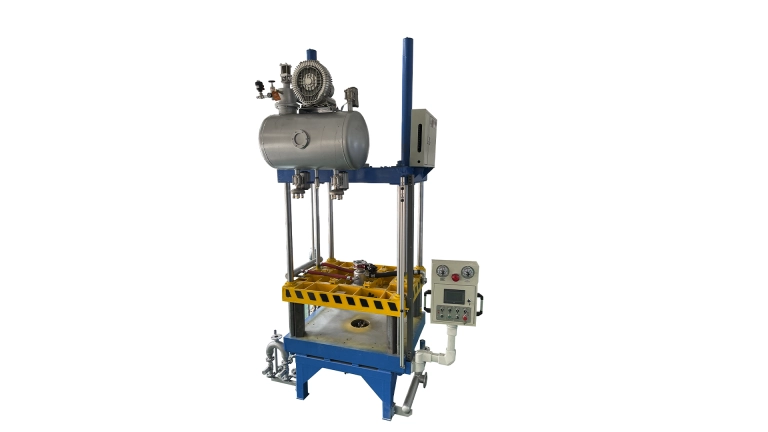
Why EPS Molding Machine Troubleshooting Comes Before Repair or Replacement
A repair made too early can solve the visible symptom while leaving the production problem unchanged. The same applies when a foundry buys a larger machine before checking steam, compressed air, vacuum, mold venting, or bead preparation. Start by comparing the abnormal run with the last stable production condition.
Downtime Spreads Through the White Area
A molding stop can disrupt mold schedules, reduce drying-room loading, and leave assembly or coating work waiting. If weak patterns move downstream, more labor is tied up in material that may not be usable.
Track accepted patterns per shift, not only uptime. A cycling machine can still produce unstable output.
Record the Fault Before Changing the Process
Record the mold, EPS density, recipe, cycle stage, steam condition, compressed-air pressure, vacuum response, alarms, and recent maintenance. Compare several normal and abnormal cycles, then change one variable at a time.
Several adjustments made together may restore production briefly, but they rarely reveal the cause. Clear records also improve shift handovers and remote reviews.
Start With the Symptom, Not the Machine
Effective EPS molding machine troubleshooting separates bead condition, mold design, factory utilities, and machine condition. The EPS shape molding process links pre-expansion, maturation, filling, steam heating, cooling, and demolding, so an early-stage problem may only appear after molding. Before maintenance, qualified personnel need to isolate the relevant energy sources and follow the plant’s safety procedure.
Incomplete Filling or Uneven Pattern Density
Start with bead flow, maturation, filling pressure, compressed-air stability, filling guns, mold vents, cavity geometry, and stored settings. Clean restricted feeding and venting paths before raising pressure.
If the problem appears across several molds, review the feeding system and plant air supply. If it stays in one cavity area, inspect the local fill route and venting first. This avoids replacing machine parts when the issue sits in the mold or utilities.
Weak Fusion or Rough Pattern Surfaces
Check bead condition, maturation time, steam pressure, condensate drainage, mold temperature, heating time, and the recipe. Longer steaming is not automatically the right correction.
Các EPS Pre-Expander Machine from OC Technology uses PLC control, stored process parameters, automatic operation, electronic weighing, and remote parameter debugging. These functions provide a repeatable basis for comparing batches, but bead condition still depends on raw material, steam, maturation, and the selected recipe.
Pattern Deformation or Difficult Demolding
Check cooling time, vacuum response, mold temperature, ejector condition, cavity surfaces, and pattern rigidity at release. If deformation increases when several machines operate together, measure vacuum performance during actual overlap.
The restriction may sit in the mold, forming machine, pipework, or shared Hệ thống chân không trung tâm. OC Technology’s system uses PLC control, a closed-cycle tower condenser, variable-frequency pump control, and adaptive start-stop operation. System sizing should be based on the connected machines, simultaneous demand, pipework layout, condenser arrangement, and required vacuum stability.
Slow or Unstable Molding Cycles
Break the cycle into filling, heating, cooling, mold movement, and ejection. Compare several cycles. Valve response, sensors, hydraulics, steam, vacuum, or recipe settings may affect total cycle time.
A larger EPS molding machine will not correct undersized utilities. Fix the limiting condition first. If variation remains, inspect the controls and components in sequence.
Once the fault pattern is clear, the next question is whether the machine is still worth repairing.
Repair, Upgrade, or Replace the Machine?
Base the decision on downtime frequency, lost production, spare-parts lead time, machine safety, mold range, control condition, and required output. Machine age alone is a poor guide. An older unit may still fit, while a newer one may be unsuitable if its table size or utility demand is wrong.
Repair an Isolated Fault
Repair usually makes sense when the problem is limited to a valve, seal, sensor, filling component, blocked passage, vacuum connection, or calibration point. The machine should still match the required molds and output target, and parts should be available within an acceptable lead time.
Confirm why the component failed. Repairing visible damage alone may lead to another shutdown.
Upgrade a Serviceable Machine
An upgrade may be practical when the structure, mold range, and utilities remain suitable, but feeding control, process records, vacuum cooling, or the operator interface restrict production.
A clear retrofit proposal identifies the retained components, planned changes, acceptance method, and expected shutdown. It also covers local modifications, commissioning, training, and compatible spare parts.
Replace When Limitations Become Structural
Replacement becomes more practical when controls are obsolete, critical parts are difficult to source, downtime affects delivery, molds exceed the working range, or required output cannot be reached under realistic utility conditions.
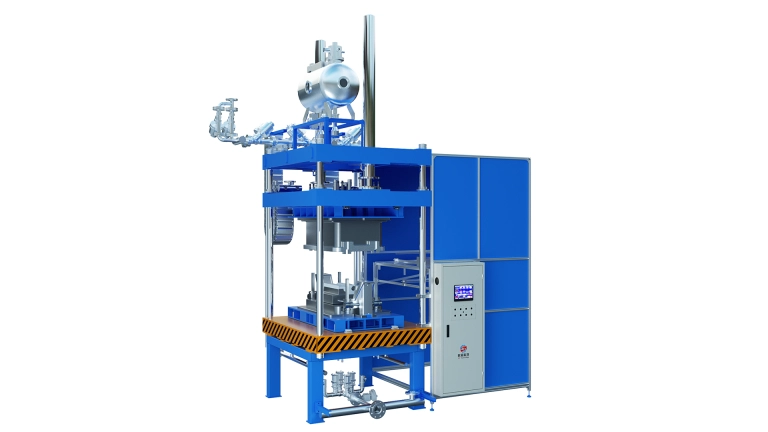
OC Technology’s Máy tạo hình thủy lực PLC dọc range includes several working-table sizes, with customization available for special requirements. Selecting around the mold envelope avoids paying for unused capacity, extra floor space, and unnecessary connected load.
The largest machine is not automatically the best purchase. The better choice fits the mold range, utilities, maintenance capability, and expected product changes.
Which Machine Functions Add Practical Value?
A machine feature earns its cost only when it solves a real production or maintenance problem. OC Technology’s vertical forming machine combines PLC control, parameter storage, remote system upgrade and parameter debugging, pressure-controlled feeding, grouped filling, active exhaust, mold-cavity overpressure protection, and vacuum cooling with energy recovery.
Parameter Storage and Remote Parameter Support
Stored recipes make repeat orders easier to restart and provide a reference when a stable process changes. They also support cleaner shift handovers and a traceable record of adjustments.
Remote parameter debugging may shorten the initial review. Service hours, network requirements, response responsibilities, and on-site work still need to be defined.
Controlled Filling and Mold Protection
A pressurized feeding tank with proportional pressure control supports more repeatable feeding. Multi-point or grouped filling can suit larger or complex cavities, while active exhaust supports air removal during filling. Mold-cavity overpressure protection adds a safeguard when pressure moves outside the intended range.
These controls cannot correct unsuitable beads, blocked vents, or poor mold design. The feeding arrangement still needs to match the cavity and production route.
Vacuum Cooling and Correct Machine Size
Vacuum cooling can support cycle control when the machine, vacuum source, pipework, condenser arrangement, and simultaneous demand are matched. A table much larger than the normal mold range may add cost and utility demand without improving accepted output.
Correct sizing gives the foundry a machine that fits real production instead of the largest possible future scenario.
How to Compare an EPS Molding Machine Supplier
Give every EPS molding machine supplier the same operating information so repair, retrofit, and replacement proposals can be compared fairly.
Prepare a Clear Technical Inquiry
Include:
- Machine model, age, and maintenance history
- Pattern and mold drawings
- EPS material and density range
- Fault photos, full-cycle videos, alarms, and cycle records
- Steam, compressed air, water, and vacuum conditions
- Accepted-output target and shift plan
- Workshop layout and installation limits
For an initial remote review, a full-cycle video, the last stable recipe, utility readings, and alarm history usually provide more useful information than a close-up image of one defective pattern.
Compare Project and After-Sales Scope
Review machine size, utilities, retrofit boundaries, site preparation, installation, commissioning, trial production, training, warranty, remote parameter support, acceptance tests, and critical spare parts.
The quotation needs to state who handles utility connections, lifting, local labor, mold trials, and spare-parts planning. It should separate design, manufacturing or retrofit work, installation, commissioning, training, and trial production.
Công nghệ OC focuses on intelligent white-area equipment for lost foam casting. For a relevant technical proposal, provide mold drawings, pattern range, target output, factory utilities, and available workshop space.
Phần kết luận
Effective EPS molding machine troubleshooting follows a consistent sequence: define the symptom, compare it with the last stable run, separate bead, mold, utility, and machine factors, then change one variable at a time. An isolated sensor, valve, seal, or filling fault may justify repair. Repeated control problems, obsolete parts, an unsuitable mold range, or utility limits may point to an upgrade or replacement.
The right decision restores accepted output without shifting the bottleneck. Foundries can liên hệ với công nghệ OC with machine details, mold drawings, full-cycle videos, fault records, utility conditions, and output targets. These details provide the basis for a technical review, suitable equipment configuration, and commercial quotation.
Câu hỏi thường gặp
Q1: What commonly causes incomplete filling in an EPS molding machine?
A: Poor bead flow, insufficient maturation, unstable compressed air, blocked feeding paths, restricted mold vents, cavity geometry, or unsuitable settings. Check feeding restrictions and mold vents before increasing pressure.
Q2: Can EPS pattern defects come from processes outside the molding machine?
A: Yes. Pre-expansion, maturation, raw material, steam, mold design, vacuum performance, cooling, and handling can affect the finished pattern.
Q3: When should an EPS molding machine be repaired instead of replaced?
A: Repair suits an isolated fault when parts are available and the machine still matches the current molds, utilities, and output target.
Q4: Can an older EPS molding machine be upgraded instead of replaced?
A: An upgrade may be practical when the frame, clamping system, mold range, and main utilities remain suitable. Controls, feeding, vacuum cooling, and process records can then be reviewed separately.
Q5: What after-sales support should an EPS molding machine supplier provide?
A: Check English documents, installation responsibilities, training, remote parameter support, warranty terms, response procedures, a critical-spares list, and replacement-part lead times.


 Vietnamese
  English
  Arabic
  Hindi
Hindi  Indonesian
  Japanese
  Korean
  Malay
Malay  Portuguese
  Spanish
  Thai
Thai