
a 失われた泡の鋳造の生産ライン usually misses its output target because one process becomes a bottleneck, not because every machine lacks capacity. The pre-expander may produce beads faster than the silos can mature them. Molding machines may sit idle while waiting for usable material. In another plant, coated pattern clusters may pile up outside an undersized drying room.
Production data should come before machine selection. Product mix, pattern dimensions, peak demand, shift schedules, utility capacity, factory space, and future expansion all affect the final configuration.
On a balanced EPC line, bead preparation, pattern molding, assembly, coating, drying, sand handling, and pouring run at compatible rates. When one stage falls behind, adding capacity somewhere else rarely fixes the problem.
Start With Real Production Requirements
Define the Product Mix and Peak Demand
Annual casting tonnage is useful, but it cannot size a 失われた泡の鋳造の生産ライン on its own. Two foundries with the same yearly output may require completely different equipment arrangements.
A dedicated line producing one tractor housing can repeat the same recipe and mold throughout a shift. A high-mix plant may alternate among automotive, agricultural, and heavy-machinery patterns with different densities, dimensions, and cycle times. That plant needs more allowance for mold changes, separate material storage, and flexible scheduling.
Before equipment sizing begins, the project team needs:
- Casting material and part family
- Maximum pattern and cluster dimensions
- Number of patterns required per casting
- Daily and peak production targets
- Number of shifts
- Net productive hours
- Product-change frequency
- Available factory space
- Steam, power, compressed-air, and ventilation capacity
A casting drawing tells part of the story. Production rhythm tells the rest.
Convert Casting Demand Into Molding Cycles
Capacity planning works backward from finished castings to clusters, individual foam patterns, molding cycles, bead consumption, maturation volume, and drying load.
Required usable patterns per hour = daily usable-pattern demand ÷ net productive hours
Take a foundry that requires 2,400 usable patterns per day. After mold changes, cleaning, inspections, and routine stops, the plant has 14 net productive hours. Required output is about 171 patterns per hour.
If one mold produces two patterns every 90 seconds, theoretical output is 80 patterns per hour. After a 15% allowance for normal interruptions, practical output drops to about 68 patterns per hour. Three molding machines would be needed to cover the target.
That number still needs to be checked against the actual mold, steam cycle, cooling conditions, pattern acceptance rate, and proven machine output. A calculation based only on nameplate capacity can look neat and still fail on the shop floor.
Configure White-Area Equipment as One System
Match Pre-Expansion With Molding Demand
「 The EPSプレエキスパンダーマシン should be selected from actual bead consumption rather than a standalone kilograms-per-hour rating.
Density range, recipe changes, steam conditions, drying time, and downstream molding demand all affect the choice. Batch and continuous systems serve different production needs, so the decision comes down to recipe changes, daily bead demand, and the molding schedule.
A high-mix plant may benefit from smaller, flexible batches. A dedicated production line may place more value on steady output and fewer recipe changes.
The pre-expander should not produce material faster than the rest of the white area can use it. Excess output simply moves the bottleneck into storage.
Use Maturation Silos as a Production Buffer
Maturation silos connect pre-expansion with molding. Their capacity should reflect:
- Required aging time
- Daily bead consumption
- Number of density grades
- Pre-expander output
- Peak molding demand
- Material-separation requirements
Too little silo capacity leaves molding machines waiting. Too much inventory takes up floor space and makes material control harder.
Several density grades may also require separate storage paths. A full silo is not useful when it contains the wrong material for the next production order.
Select Molding Machines Around Pattern Geometry
アン EPS Molding Machine should not be selected only by maximum mold dimensions. Pattern geometry, mold opening direction, steam demand, cooling time, filling behavior, and mold-change frequency all influence practical output.
OC テクノロジー supplies vertical PLC hydraulic forming machines and horizontal forming machines. Machine orientation should follow mold handling, part geometry, loading method, and available floor space.
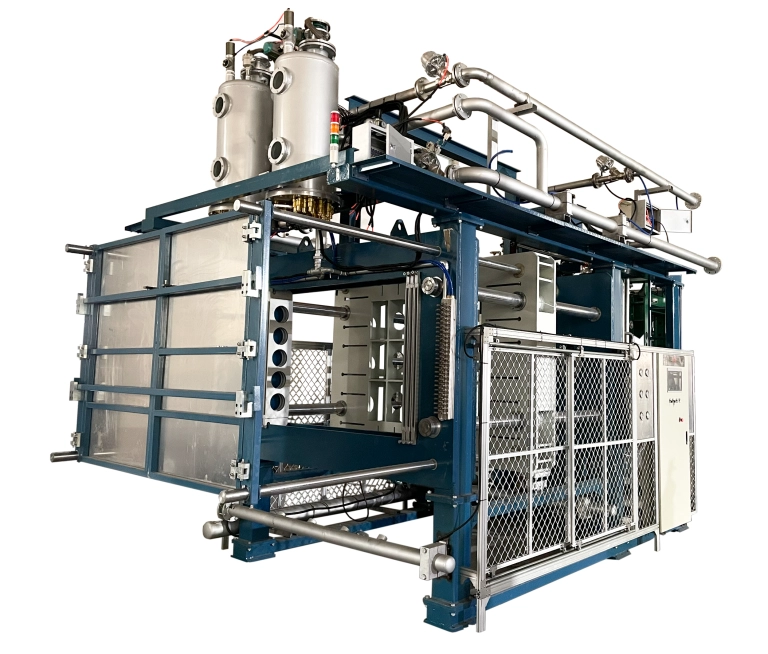
アン EPS Block Molding Machine may be required when patterns are cut from foam blocks for large components, prototypes, or lower-volume products. Block dimensions, cutting frequency, material use, and processing space should support the investment.
A spare machine can look reassuring on a factory layout. Idle capacity still costs money, though. Each unit should have a clear role in the production schedule.
Size Drying and Vacuum Systems for Simultaneous Load
Drying is a common production constraint because molded patterns and coated clusters may both require controlled moisture removal.
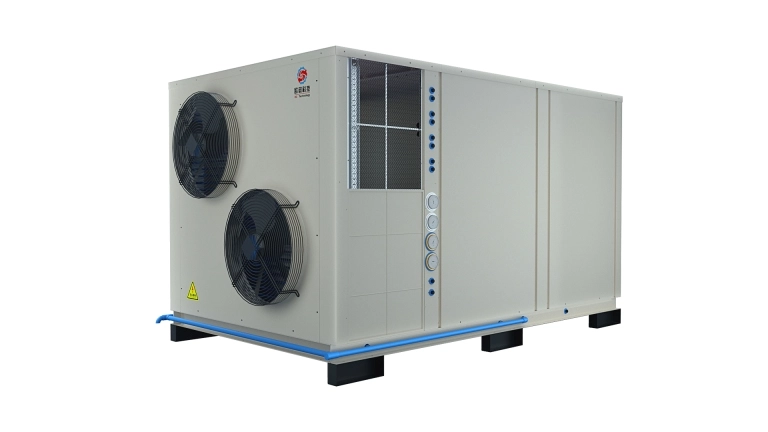
アン 空気源ヒートポンプ乾燥ユニット should be configured according to:
- Drying-room volume
- Pattern quantity and dimensions
- Coating moisture load
- Required drying time
- Batch turnover
- Local temperature and humidity
- Maintenance access
OC Technology provides indoor, top-mounted, and rear-mounted drying arrangements for different room layouts. The final choice should follow air circulation, handling routes, installation space, and service access.
The Central Vacuum System also needs a simultaneous-demand calculation. Connected machines, operating overlap, pipeline length, pressure stability, and future additions all affect performance.
A vacuum pump may appear large enough on paper yet struggle when several machines run at once through a long or poorly arranged pipe network.
Match White-Area Output With Foundry Operations
Keep Assembly, Coating, and Drying in Balance
Higher pattern output provides little value when assembly, coating, or coated-pattern drying cannot keep pace.
Cluster dimensions affect workstation space and handling time. Coating viscosity, dipping method, rack capacity, and drying-room turnover influence daily output. Large clusters may also require wider aisles and more careful handling. Foam patterns are light, but damage happens easily during rushed transfers.
Intermediate buffers can absorb short differences between processes. They should not become permanent storage for unfinished work.
Check Sand Handling, Pouring, and Shakeout Capacity
A complete lost foam casting line extends beyond pattern production, and each stage requires a coordinated lost foam casting equipment configuration.
Sand preparation and circulation, flask handling, vibration compaction, negative-pressure casting, pouring, cooling, shakeout, and post-processing must support the planned throughput.
White-area and foundry-area capacities do not need identical hourly ratings, but their buffers and shift schedules must remain compatible.
A white area operating two shifts may support a foundry area running one longer casting shift. That arrangement can work when pattern storage, coating condition, and production sequencing are planned together. Without that coordination, extra pattern capacity only moves the bottleneck downstream.
Verify Utilities, Layout, and Expansion Capacity
Confirm Peak Utility Demand
消失型鋳造設備 depends on stable steam, electrical power, compressed air, cooling, ventilation, and drainage.
Utility capacity should be checked under peak simultaneous demand, not average use. An EPS Molding Machine may have enough rated capacity, yet unstable steam pressure can lengthen cycles and affect pattern consistency.
Similar problems occur with undersized compressed-air lines, poor ventilation, or restricted drainage. Utility routes should also allow maintenance without shutting down the entire line.
A reliable 失われた泡の鋳造の生産ライン needs enough utility capacity for the busiest operating period, including overlapping molding, drying, vacuum, and material-handling loads.
Build a Direct Material Flow
A practical white-area sequence is:
- Raw bead handling
- プレディフュージョン
- Maturation
- Pattern molding
- Pattern assembly
- Coating and drying
- Transfer to foundry operations
Cross-traffic adds labor and raises the risk of pattern damage. Clean foam-processing areas should remain separated from sand, dust, and molten-metal operations.
Maintenance access matters too. A machine placed tightly against a wall may save floor space during installation and create years of service problems afterward.
Reserve Space for Expansion
Future capacity should be considered during the first layout.
Useful provisions may include:
- Spare silo connections
- Additional vacuum capacity
- Electrical and steam allowance
- Space for another molding machine
- Extra drying-room capacity
- Control interfaces for later automation
These provisions are usually less expensive during initial construction than during a rushed expansion.
Production-Line Configuration Checklist
| Project Input | Main Configuration Decision |
| Annual and peak output | Required line throughput |
| Pattern dimensions | Molding machine type and quantity |
| Product variety | Changeover and buffer capacity |
| EPS density recipes | Pre-expander mode and silo separation |
| Pattern and coating load | Drying-room capacity |
| Simultaneous machine demand | Central vacuum capacity |
| Factory dimensions | Equipment layout and material flow |
| Expansion plan | Reserved space and utility allowance |
These inputs provide the basis for preliminary sizing. Final configuration still depends on mold data, production trials, utility conditions, and downstream capacity.
Project-Based Configuration With OC Technology
As a 失われた泡失われた失われた泡失われ失われ失われ失われ失失われた泡失われ失われ失われ失われ失われ, OC Technology develops intelligent white-area machinery and EPC turnkey solutions for new production lines, capacity expansions, and equipment replacement projects.
Its equipment range covers bead preparation, maturation, pattern molding, block molding, drying, vacuum supply, and coating support. Each system has to keep pace with the process before and after it.
A new plant, an expansion project, and an equipment replacement program rarely need the same arrangement. Casting drawings, pattern dimensions, target output, factory utilities, and available space provide the basis for a project-specific EPC casting equipment proposal.
結論
A well-sized lost foam casting production line starts with verified production data. Pre-expansion, maturation, molding, drying, utilities, and downstream foundry operations must work as one connected system.
Practical output depends on net productive hours, mold changes, process buffers, simultaneous demand, and the slowest stage in the line.
OC Technology provides lost foam casting equipment and customized EPC production systems for new plants and capacity upgrades.Foundries planning a new line or capacity upgrade can お問い合わせ OC Technology with casting drawings, target output, pattern dimensions, product mix, utility information, and factory layout to receive a project-specific equipment configuration, capacity review, and quotation.
よくある質問
Q1: How is lost foam casting line capacity calculated?
A: Capacity is calculated from daily usable-pattern demand, net productive hours, patterns produced per molding cycle, actual cycle time, mold-change losses, maintenance time, and the capacity of downstream processes.
Q2: Which process usually limits the capacity of a lost foam casting production line?
A: The bottleneck varies by project. Common limits include molding cycles, maturation storage, coated-pattern drying, vacuum demand, and downstream sand-handling capacity.
Q3: How should an EPS Pre Expander Machine match molding capacity?
A: Pre-expansion output should follow bead consumption, density recipes, maturation time, silo volume, and the combined operating schedule of all molding machines.
Q4: How many EPS Molding Machines are required?
A: Required molding cycles per hour should be compared with proven net machine output after mold changes, routine stops, maintenance time, and actual cooling conditions.
Q5: Can EPC casting equipment be configured for future expansion?
A: Yes. A scalable plan can reserve floor space, steam and electrical capacity, vacuum capacity, silo connections, and control interfaces for additional equipment.


 Japanese
  English
  Arabic
  Hindi
Hindi  Indonesian
  Korean
  Malay
Malay  Portuguese
  Spanish
  Thai
Thai  Vietnamese