
In lost foam casting production, casting quality is not only determined during pouring. The condition of the foam pattern before it enters the foundry process has a direct influence on the final casting result.
Many foundries review pouring temperature, coating materials, vacuum conditions, or sand performance when casting defects appear. These factors are important, but the EPS pattern production stage is often the first place where quality variation begins.
Foam density inconsistency, pattern deformation, poor bead fusion, and unstable molding conditions can create problems that become visible only after casting. Once these issues reach the final product, correction becomes more difficult and costly.
The performance of lost foam casting equipment plays an important role in controlling foam pattern consistency. Stable EPS processing helps improve pattern accuracy, surface quality, and production repeatability.
As a lost foam casting equipment manufacturer, OC Technology provides EPS equipment and EPC turnkey solutions, including EPS Pre Expander Machine and EPS Molding Machine systems for foundries requiring reliable foam pattern production and stable casting performance.
Why EPS Equipment Is Important for Lost Foam Casting Quality
Foam Pattern Quality Determines Casting Consistency
The foam pattern is the foundation of the lost foam casting process. During pouring, the EPS pattern is replaced by molten metal, which means the final casting follows the original pattern structure.
Because of this relationship, pattern quality directly affects:
- Dimensional accuracy
- Pattern strength
- Coating application
- Gas generation behavior
- Casting surface condition
For complex components, small changes in foam density or pattern dimensions can create production problems. This is especially important for foundries producing parts with strict tolerance requirements or complicated geometries.
A complete lost foam casting line requires stable coordination between EPS preparation, molding, coating, drying, sand handling, and pouring operations. During EPC turnkey projects, engineers usually review foam processing conditions together with casting requirements because pattern quality has a direct connection with final production stability.
Common Quality Problems Related to EPS Processing
In real production environments, casting defects rarely come from one single cause. Quality teams normally review multiple stages of the process, and EPS equipment performance is one of the important areas to evaluate.
| Quality Issue | Possible EPS Equipment Cause | Potential Casting Impact |
| Uneven foam density | Unstable pre-expansion conditions | Pattern weight variation and casting inconsistency |
| Pattern deformation | Poor molding control or insufficient cooling | Dimensional deviation |
| Poor bead fusion | Unstable molding parameters | Surface quality problems |
| Excess moisture | Improper drying conditions | Higher gas-related risks |
Uneven Foam Density
Foam density affects pattern weight, strength, and gasification behavior during casting.
When EPS beads are expanded inconsistently, different areas of the foam pattern may have different structures. This can influence coating performance and the way molten metal replaces the pattern.
Stable density control starts with reliable material preparation.
Pattern Dimensional Variation
Lost foam casting is widely used because it allows foundries to produce complex parts while reducing machining requirements. However, this advantage depends on maintaining accurate foam patterns.
Pattern accuracy can be affected by:
- Inconsistent EPS bead expansion
- Unstable molding cycles
- Incorrect cooling conditions
- Pattern shrinkage variation
A reliable EPS Molding Machine helps maintain repeatable forming conditions and supports consistent pattern dimensions.
Surface Quality Problems
The foam pattern surface affects coating performance before casting.
An unstable pattern surface may result in:
- Uneven coating thickness
- Poor coating coverage
- Increased surface defect risks
The EPS pattern is not the only factor influencing casting surface finish, but it creates the foundation for the following processes.
How EPS Pre Expander Machine Affects Foam Density Control
Pre-Expansion Creates the Material Foundation
The EPS Pre Expander Machine is one of the first quality control points in the foam production process.
During pre-expansion, raw EPS beads are expanded to the required density before entering maturation and molding stages. The condition of the expanded beads influences later pattern quality.
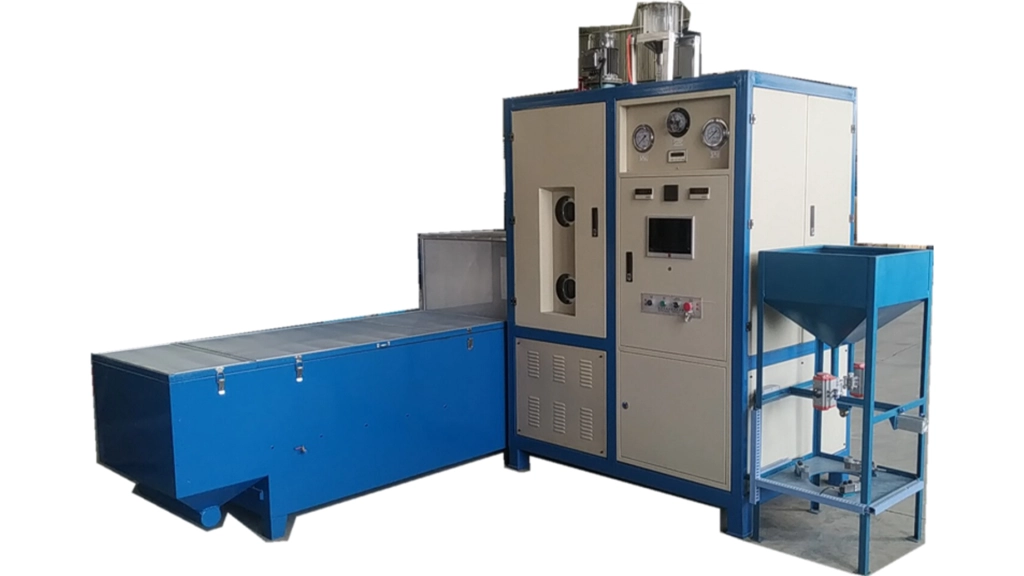
Key considerations include:
- Expansion consistency
- Material weighing accuracy
- Steam stability
- Drying performance
- Bead aging preparation
In many foundries, production teams initially focus on machine output capacity. However, maximum output does not always create the best casting results. Stable material characteristics are often more important for long-term production.
OC Technology’s EPS Pre Expander Machine is designed for automated EPS processing, helping maintain consistent material preparation for downstream pattern production.
Equipment Stability Influences Production Repeatability
For technical buyers, equipment repeatability is often more valuable than short-term peak output.
Stable pre-expansion helps maintain:
- Consistent bead characteristics
- More predictable molding performance
- Reduced variation between production batches
This becomes especially important for foundries producing multiple components with different pattern requirements.
A production line that creates stable foam material from the beginning is easier to manage, troubleshoot, and scale.
How EPS Molding Machine Influences Pattern Accuracy
Stable Molding Parameters Create Consistent Foam Patterns
After EPS beads are prepared and matured, the molding process determines how accurately the foam pattern follows the mold design.
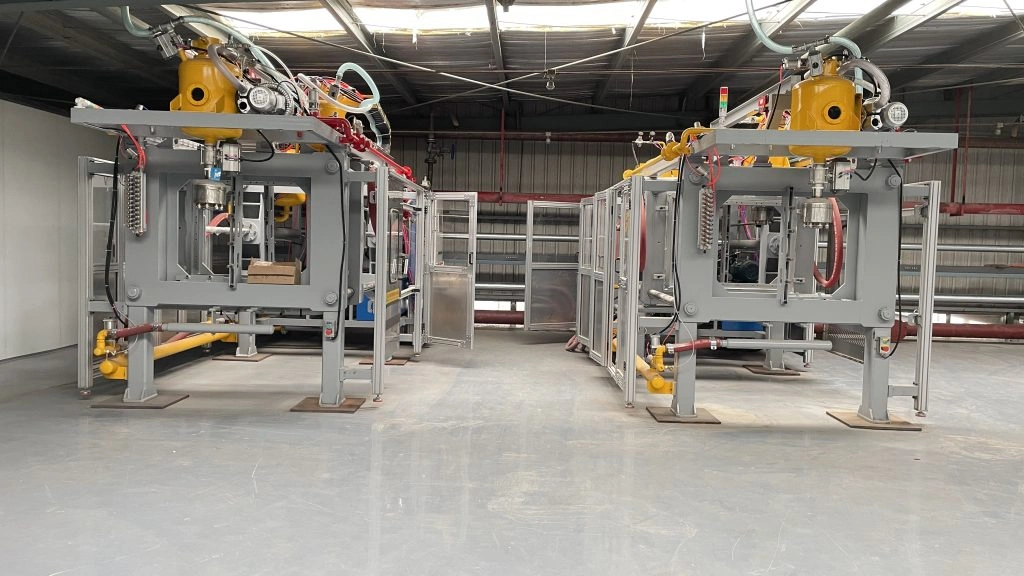
An EPS Molding Machine directly influences:
- Bead fusion quality
- Pattern density distribution
- Dimensional repeatability
- Surface condition
During molding, engineers usually pay attention to:
- Steam distribution
- Mold filling performance
- Vacuum cooling
- Cooling time
- Mold precision
If molding conditions fluctuate, patterns may show differences that affect coating, assembly, and final casting quality.
Key EPS Molding Factors for Stable Pattern Quality
When selecting EPS molding equipment, foundries should consider more than production speed.
Technical evaluation normally includes:
- Pattern size and complexity
- Mold structure
- Required cycle time
- Cooling performance
- Factory layout
- Future expansion requirements
For larger foam components or special applications, an EPS Block Molding Machine may be used to produce foam blocks for further processing.
OC Technology provides customized EPS molding solutions based on production requirements instead of applying one standard configuration to every project.
How EPS Equipment Helps Reduce Lost Foam Casting Defects
Connecting Equipment Performance With Casting Results
EPS equipment is an important part of the complete EPC casting process. Coating quality, sand preparation, vacuum conditions, metal quality, and pouring parameters also affect final casting performance.
However, stable foam production can reduce unnecessary process variation.
For foundries evaluating EPC casting equipment, foam pattern stability should be included in the overall quality control plan.
| Equipment Factor | Pattern Effect | Possible Casting Result |
| Unstable foam density | Different pattern weight and strength | Casting variation |
| Poor bead fusion | Weak pattern structure | Surface quality issues |
| Pattern deformation | Dimensional inaccuracy | Machining and fitting problems |
| Excess moisture | Increased gas generation | Defect risks |
Equipment stability cannot replace proper casting practices, but it provides a more predictable production foundation.
Selecting EPS Equipment for Stable Casting Production
Key Factors Before Purchasing EPS Equipment
When purchasing lost foam foundry equipment, technical teams should evaluate quality requirements together with production targets.
Important considerations include:
- Required casting accuracy
- Pattern complexity
- Foam density requirements
- Production volume
- Automation level
- Integration with existing EPC casting production line
- Future expansion plans
For technical buyers, the right equipment choice is not only about rated capacity. Production repeatability, maintenance convenience, and long-term stability are equally important.
A suitable equipment configuration should support the complete manufacturing process.
For example, increasing molding capacity without matching pre-expansion and material handling capacity may simply move the bottleneck to another stage. Similarly, improving EPS processing alone cannot replace proper control of coating and pouring conditions.
OC Technology: Lost Foam Casting Equipment Manufacturer and EPC Solution Provider
OC Technology specializes in lost foam casting equipment and provides EPC turnkey solutions for new foundries, production expansion projects, and equipment upgrades.
The company supplies equipment including:
- EPS Pre Expander Machine
- EPS Molding Machine
- EPS Block Molding Machine
- Air Source Heat Pump Drying Unit
- EPC casting equipment solutions
As a lost foam casting solution provider, OC Technology focuses on connecting individual machines with complete production requirements.
Each project requires evaluation of different factors, including:
- Casting product requirements
- Foam pattern design
- Production capacity
- Factory conditions
- Existing process challenges
- Future development plans
A complete lost foam casting line should not only achieve production targets but also maintain stable quality throughout daily operation.
Conclusion
EPS equipment has a direct influence on lost foam casting quality. Foam density, pattern accuracy, surface condition, and production repeatability all begin with stable EPS processing.
The EPS Pre Expander Machine provides the foundation for consistent foam material preparation, while the EPS Molding Machine determines pattern quality and dimensional stability.
For foundries planning new EPC projects or upgrading existing systems, OC Technology provides customized lost foam casting equipment and EPC turnkey solutions based on casting requirements, pattern characteristics, production goals, and factory conditions.
Casting drawings, production targets, existing process challenges, and technical requirements can be submitted through contact OC Technology to receive professional equipment recommendations and EPC casting production line support.
FAQs
Q1: How does EPS equipment affect lost foam casting quality?
A: EPS equipment affects foam density, pattern accuracy, surface condition, and production consistency. Stable pre-expansion and molding processes help create more reliable foam patterns for lost foam casting.
Q2: Why is foam density important in lost foam casting?
A: Foam density influences pattern strength, weight consistency, gas generation behavior, and casting stability. Consistent density helps reduce variation during the casting process.
Q3: What should be considered when selecting an EPS Pre Expander Machine?
A: Foundries should evaluate density requirements, production capacity, automation level, steam control, drying performance, and compatibility with the complete lost foam casting line.
Q4: How does an EPS Molding Machine improve pattern accuracy?
A: An EPS Molding Machine improves pattern accuracy through stable mold filling, controlled steam distribution, vacuum cooling, and repeatable molding cycles.
Q5: What causes unstable foam patterns in lost foam casting?
A: Unstable foam patterns may result from inconsistent EPS density, unsuitable molding conditions, poor cooling control, material variation, or improper process settings. Equipment stability is an important factor in maintaining consistent pattern quality.


 English
  Arabic
  Hindi
Hindi  Indonesian
  Japanese
  Korean
  Malay
Malay  Portuguese
  Spanish
  Thai
Thai  Vietnamese