
Why Complex Part Manufacturing Is Becoming More Challenging
Manufacturers in automotive, agricultural machinery, pumps, valves, and industrial equipment industries are facing increasing pressure to produce more complex components while maintaining production efficiency and cost control.
Modern components are no longer designed only for basic functionality. Many parts now require:
- Integrated structures to reduce assembly processes
- Complex internal passages
- Lightweight designs
- Improved material utilization
- More flexible production capability
For foundries, these requirements create new challenges. Producing complex parts is not only about achieving the final casting shape. It also requires a stable manufacturing system that can control production consistency, reduce unnecessary processes, and support future product changes.
Traditional casting methods can become more complicated when parts require multiple cores, complex tooling, or extensive machining operations. These additional steps may increase production preparation time and reduce manufacturing flexibility.
This is why more manufacturers are considering Lost Foam Casting Equipment as part of their casting technology upgrade. By using EPS pattern manufacturing and integrated EPC casting processes, lost foam solutions provide a practical approach for producing complex components with fewer process limitations.
As a professional Lost Foam Casting Equipment Manufacturer, OC Technology provides EPC casting solutions for manufacturers looking to build new production systems or improve existing foundry capabilities.
Why Complex Parts Create Challenges for Traditional Casting Processes
Increasing Demand for Integrated and Complex Components
Across many industries, component designs are becoming more integrated.
For example, manufacturers of pumps, valves, machinery parts, and automotive components often require castings with:
- Internal cavities
- Irregular shapes
- Reduced assembly requirements
- Higher functional integration
These designs can create difficulties during traditional molding and casting processes.
When complex cores are required, manufacturers may need additional preparation steps, specialized tooling, and more production coordination. This can increase manufacturing complexity, especially for companies producing different product models or managing frequent design changes.
For modern foundries, production flexibility has become an important factor when selecting casting equipment.
Reducing Core Complexity and Machining Requirements
Core-making is one of the key considerations when evaluating casting processes for complex components.
Additional core requirements may lead to:
- More tooling investment
- Longer production preparation
- Higher labor involvement
- More complicated process control
Lost foam casting uses an EPS pattern that represents the final component geometry. Complex structures can be included during pattern production, reducing the dependence on complicated core systems.
Another important advantage is near-net-shape production. By achieving closer dimensional accuracy during casting, manufacturers can reduce unnecessary machining operations.
For industrial production, reducing secondary processing can help improve:
- Manufacturing efficiency
- Material utilization
- Production flexibility
For manufacturers evaluating this technology for the first time, understanding the complete lost foam casting process is an important step before selecting the right production solution.
How Lost Foam Casting Equipment Supports Complex Part Production
Producing Complex Designs Through EPS Pattern Manufacturing
One of the main advantages of lost foam technology is its ability to support complex part designs through EPS pattern production.
The EPS pattern acts as the model for the final casting geometry. This allows manufacturers to create detailed shapes that may be difficult to achieve through some conventional processes.
The EPS Molding Machine plays an important role in this stage by producing foam patterns according to specific component requirements.
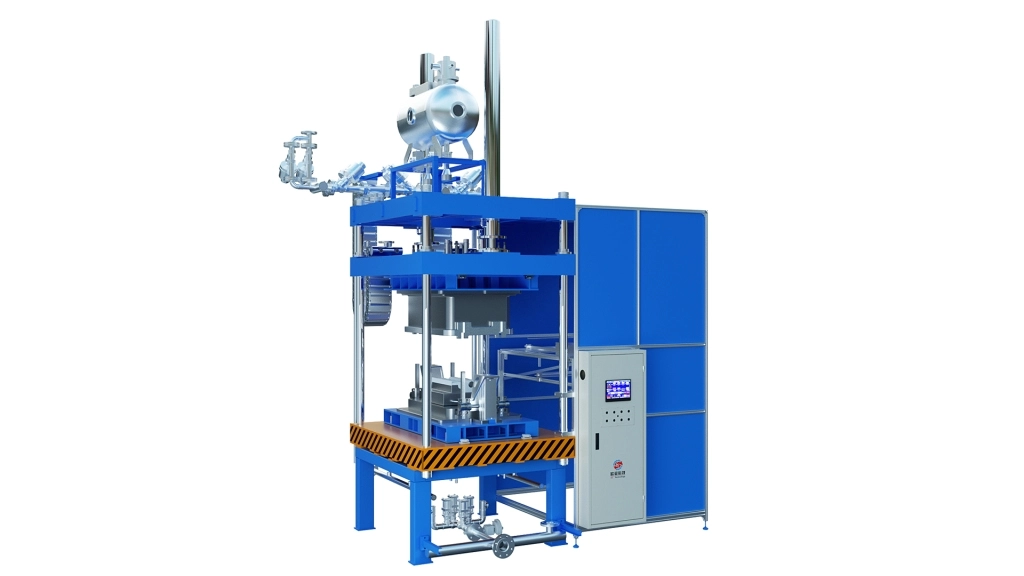
For manufacturers, consistent EPS pattern production helps establish a stable foundation for the complete casting process.
When evaluating a Lost Foam Casting Equipment Supplier, companies should consider not only individual machine performance but also how the equipment works as part of the entire production system.
Building a Complete Lost Foam Casting Production System
A successful casting project requires coordinated equipment rather than isolated machines.
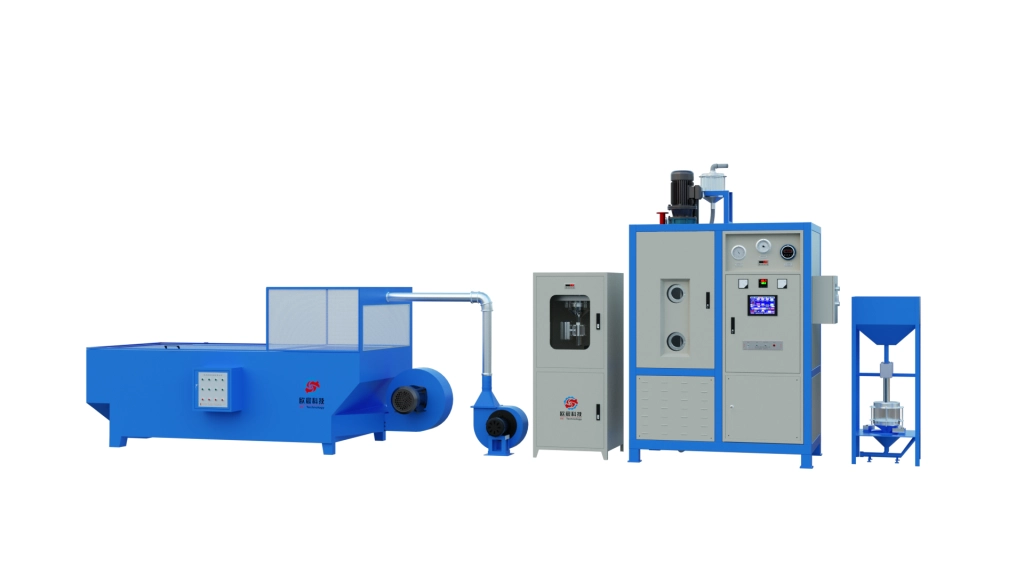
A complete Lost Foam Casting Line may include:
| Equipment | Function |
| EPS Pre Expander Machine | Prepares EPS material before pattern molding |
| EPS Molding Machine | Produces foam patterns based on part designs |
| Air Source Heat Pump Drying Unit | Supports controlled drying conditions |
| Central Vacuum System | Supports EPC casting operations |
The EPS Pre Expander Machine prepares EPS beads with controlled expansion characteristics before molding. Stable material preparation is an important step in maintaining production consistency.
The Air Source Heat Pump Drying Unit supports controlled drying conditions after pattern production. Proper drying management helps maintain stable processing conditions before casting.
For manufacturers planning a complete Lost Foam Casting Production Line, equipment matching and process integration are important factors that influence long-term production performance.
Key Factors Before Investing in Lost Foam Casting Equipment
Matching Equipment Configuration with Production Requirements
Selecting suitable equipment requires a clear understanding of production goals.
Before purchasing Lost Foam Foundry Equipment, manufacturers should evaluate:
- Part size and complexity
- Casting material requirements
- Annual production volume
- Required automation level
- Factory space and layout
- Future production expansion plans
A casting system designed for small-batch production may be different from a high-volume manufacturing line.
A professional Lost Foam Casting Equipment Supplier should evaluate these factors before recommending a suitable configuration.
How OC Technology Evaluates a Lost Foam Casting Project
A complete EPC project usually starts with understanding the customer’s actual production requirements.
OC Technology evaluates factors such as:
Part Information
Including:
- Part drawings
- Component structure
- Casting requirements
Production Requirements
Including:
- Expected output
- Production flexibility
- Automation expectations
Factory Conditions
Including:
- Available space
- Existing production processes
- Equipment integration requirements
Based on these factors, OC Technology develops suitable equipment configurations and EPC casting solutions.
This project-based approach helps manufacturers select equipment based on actual production needs instead of choosing machines without considering the complete process.
Why Choose OC Technology as a Lost Foam Casting Equipment Manufacturer
Choosing the right supplier is an important decision for companies investing in new casting capabilities.
A reliable Lost Foam Casting Equipment Manufacturer should provide more than equipment supply. Manufacturers also need engineering support, system planning capability, and long-term technical assistance.
OC Technology focuses on:
- Lost Foam Casting Equipment manufacturing
- Lost Foam Casting Line solutions
- EPS pattern production systems
- EPC Casting Production Line projects
- Customized turnkey solutions
As an EPC Turnkey Solution Provider, OC Technology supports manufacturers with integrated solutions from equipment selection to complete production system planning.
The company’s solutions are applied in industrial casting fields including machinery components, aluminum products, and other complex casting applications.
For manufacturers searching for reliable Lost Foam Casting Equipment Suppliers, working with a company that understands both equipment and production processes can help reduce project risks and improve long-term operational stability.
Conclusion
Complex part manufacturing requires casting solutions that can balance design flexibility, production efficiency, and cost control.
Lost Foam Casting Equipment provides manufacturers with an effective approach for producing complex components through EPS pattern manufacturing, reduced core requirements, and integrated casting systems.
From EPS Pre Expander Machine and EPS Molding Machine solutions to complete Lost Foam Casting Production Line projects, OC Technology provides customized EPC solutions for manufacturers planning new foundry projects or upgrading existing facilities.
Manufacturers can share part drawings, production requirements, and factory information with OC Technology to receive a customized casting system recommendation and professional EPC project support.
FAQs
Q1: What industries can use Lost Foam Casting Equipment?
A: Lost Foam Casting Equipment is commonly used in industries including automotive components, agricultural machinery, pumps, valves, aluminum products, and industrial equipment. It is suitable for manufacturers producing complex parts with demanding design requirements.
Q2: What equipment is included in a complete Lost Foam Casting Line?
A: A complete Lost Foam Casting Line may include an EPS Pre Expander Machine, EPS Molding Machine, Air Source Heat Pump Drying Unit, Central Vacuum System, and other supporting equipment. The final configuration depends on part requirements, production capacity, and factory conditions.
Q3: How should manufacturers choose a Lost Foam Casting Equipment Supplier?
A: Manufacturers should evaluate supplier experience, equipment capability, EPC project support, customization ability, installation guidance, and technical service. A supplier with complete project experience can provide better support for building a stable casting production system.
Q4: What information is needed before requesting a Lost Foam Casting solution?
A: Manufacturers should provide information such as part drawings, casting materials, production targets, automation requirements, and factory conditions. These details help suppliers recommend suitable equipment configurations and EPC solutions.
Q5: What factors affect the cost of a Lost Foam Casting Production Line?
A: The cost depends on factors including production capacity, automation level, equipment configuration, part complexity, factory layout, and customization requirements. A professional supplier normally evaluates project details before providing a suitable solution.


 English
  Arabic
  Hindi
Hindi  Indonesian
  Japanese
  Korean
  Malay
Malay  Portuguese
  Spanish
  Thai
Thai  Vietnamese