
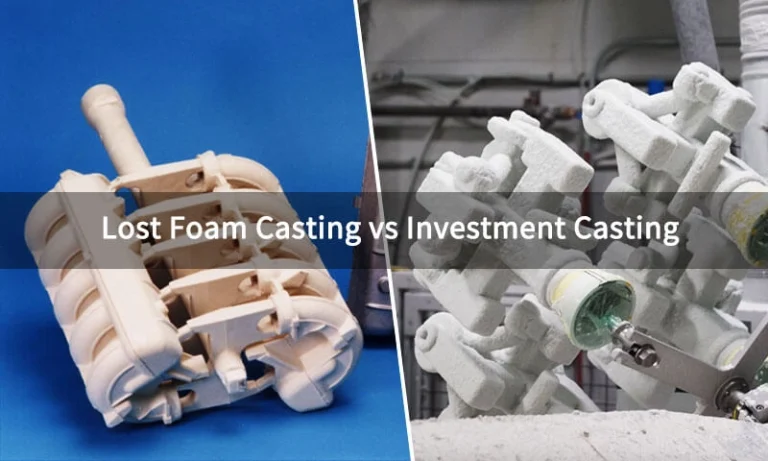
Mất bọt đúc is an evaporative pattern casting process that makes use of foam patterns to produce a variety of metal parts. Typically the pattern is made from expanded polystyrene, the first step in the process is to cover the pattern in a layer of refractory material. This covered pattern is then buried in dry sand. When the molten metal is poured into the mold it displaces the pattern which evaporates.
The pattern disappears in the mold so that no parting lines, cores or machining tolerances are needed. As a result the process is particularly suitable for a large number of complex cast parts.
Material selection is a key step in lost foam casting. Different metals react in different ways during pouring, solidification, gas removal, shrinkage control, heat treatment, and final machining. Aluminum alloys, steel, cast iron, and copper alloys are common material groups used in lost foam casting applications.
What Are the Key Advantages of Aluminum in Lost Foam Casting?
Lightweight and Corrosion-Resistant Properties
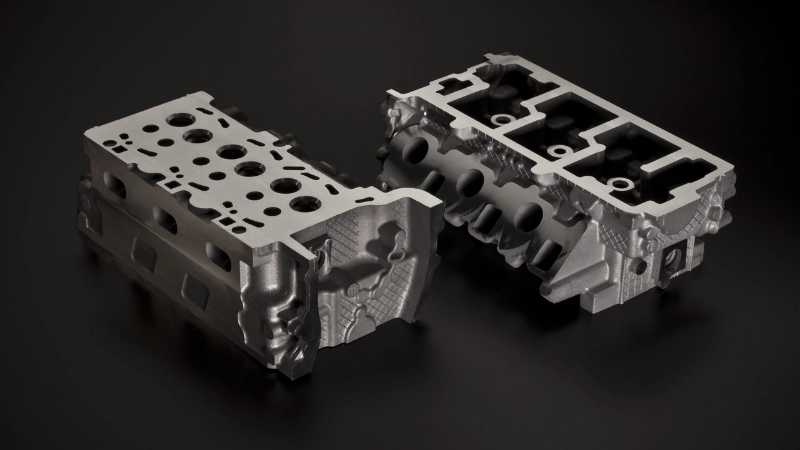
Aluminum is widely used in lost foam casting. It offers low weight and useful corrosion resistance. These properties make aluminum suitable for automotive parts, machinery housings, pump components, heat-transfer parts, and lightweight structural castings.
Cast complex aluminum parts with Lost foam casting. Make parts with thin walls and curved channels. Mount points and near-net-shape designs can also be created. In mass production this results in less machining time and less material waste then with secondary operations.
High Thermal Conductivity and Electrical Properties
Aluminum has good thermal conductivity and is used in products that require heat dissipation, such as the cooling housing for an air compressor, a heat exchanger, a motor housing, and many parts used in electronic equipment.
Patterns for lost foam casting can be made of foam with internal passages and even complicated external surfaces. The aluminum cast using such a pattern will have light weight and good heat transfer, thus is ideal for electrical and mechanical assemblies which require a good balance of conductivity, machinability and cost.
Versatility and Cost-Effectiveness
Most of the aluminum alloys have a wide range of physical and mechanical properties. While some have better casting fluidity others have better strength, wear resistance or corrosion resistance. This means that there are alloys that can suit every application, and can help foundries select the most suitable material for the components to be casted, based on the application they will be used for.
Aluminum lost foam casting is cost-effective for high-volume production. This casting process supports integrated part design. Rather than several welded, bolted, or machined parts, these can be designed as one single casting. This facilitates assembly and also can improve the dimensional consistency of the parts.
How Does Steel Perform in Lost Foam Casting Applications?
Strength and Durability Characteristics
Steel is chosen for parts that require a high level of strength, capacity to bear loads, impact resistance, or service life. With lost foam casting steel parts can have complex geometries which would be difficult to produce using conventional methods.
Steel castings are generally used for making of heavy machinery, engineering equipment, agricultural equipment, wear parts and other structural components. Steel castings have good toughness and mechanical properties, so they can be very good material for their applications.
Dimensional Accuracy and Surface Finish
Lost foam casting can help to achieve good dimensional accuracy for steel castings. As the actual component geometry is defined by the foam pattern, there is no need for traditional parting line surfaces, which reduces the risk of flash and mismatch.
Control of process parameters is important for the casting of steel by lost foam casting. Factors such as the pouring temperature, coating permeability, the quality of the vacuum, the density of the casting sand and the quality of the foam pattern all affect the quality of the casting. If the gas does not escape from the foam in a smooth manner then defects will be introduced into the casting. Such defects can be porosity, increased carbon content or surface defects.
Metallurgical Properties and Heat Treatment
Steel castings often need heat treatment. This step helps the casting reach the required hardness, toughness, or wear resistance. Lost foam casting can be combined with post-casting processes such as normalizing, annealing, quenching, and tempering.
The end use properties of a cast component are largely determined by the alloy, casting and heat treatment processes. For engineering applications it is normal practice to test material and prove process prior to commencing full production.
What Makes Copper Alloys Suitable for Lost Foam Casting?
Excellent Thermal and Electrical Conductivity
Copper alloys are used for parts with high thermal or electrical conductivity. Copper alloys are used for electrical connectors, heat-transfer parts, valve bodies, pump parts, and many other industrial-type fittings.
Lost foam casting is particularly suited for producing copper alloy castings with complex geometry, smooth transitions and detailing. This type of casting is often not suitable for traditional machining as large amounts of stock would need to be removed, or the part could require several set-ups to complete.
Corrosion Resistance and Service Stability
A wide variety of copper alloys have corrosion resistant properties, which are especially valuable for use where they will be exposed to water, in marine environments, for control of fluids, and for industrial use. Brass and Bronze castings are commonly used for valve bodies, bushings, impellers and fittings, requiring at once corrosion resistance and mechanical properties.
The lost foam casting process is suitable for the production of copper castings with detailed geometries. However, process control is crucial for all castings, particularly for castings from copper alloys as they have their own pour behavior and shrinkage behavior. Thus, the gating system, the coating and the casting temperature have to be designed carefully.
Aesthetic Appeal and Finishing Options
Copper alloys have an attractive appearance. Depending on the alloy in question and the processing method, cast parts can have a warm metallic color, a highly polished surface or even an antique look. The surface can also have a decorative texture.
Copper alloy castings can be created by the lost foam process to provide both function and architectural visual interest. Items that would be suitable for this process include architectural hardware, decorative machinery parts and other components where industrial components can be visible. Many of these castings can be finished by polishing, coating, plating or even surface aging.
Other Metals Used in Lost Foam Casting
Cast Iron
One of the most practical materials for lost foam casting is cast iron. It has a number of favorable properties such as fluidity, damping, wear resistance and cost effectiveness. Gray cast iron and ductile cast iron are typically used to produce items such as engine blocks, pump housings, machine bases, pipe fittings as well as parts for agricultural machinery.
The Lost foam casting process is well suited to the casting of cast iron as it easily creates complex cavities and detailed integrated features. For high volume production of cast iron components Lost foam casting can offer significant advantages particularly with regard to the reduction of assembly work on sand patterns and subsequent machining of cast components.
Stainless Steel
Stainless steel is used when there is a need for corrosion resistance, for clean and hygienic conditions, for high temperatures or for chemical resistance. Stainless steel is commonly used for food processing machinery, for containers for fluids, for parts for pumps and for other industrial parts that come into contact with aggressive media.
Stainless steel lost foam casting requires more control than Aluminum or Cast Iron, in terms of the process parameters such as the pouring temperature, the decomposition of the foam and the permeability of the coating. It is a workable process, but requires great attention in terms of gass removal and solidification.
Nickel Alloys and Special Alloys
In cases of very high temperature use, for situations of severe corrosion, or for very high performance applications nickel alloys, and other special alloys are available. These metals are very expensive and typically require very strict process controls to achieve desired properties.
Special alloy lost foam casting is generally reserved for parts that will be subjected to unusually severe service conditions. The decision to use special alloy lost foam casting involves a trade-off between the cost of the alloy, the capability of the equipment to handle the lost foam casting process, the inspection standards to which the foundry is willing to operate, and the anticipated production volume.
Partner with a Lost Foam Casting Equipment Manufacturer, Supplier, and Factory
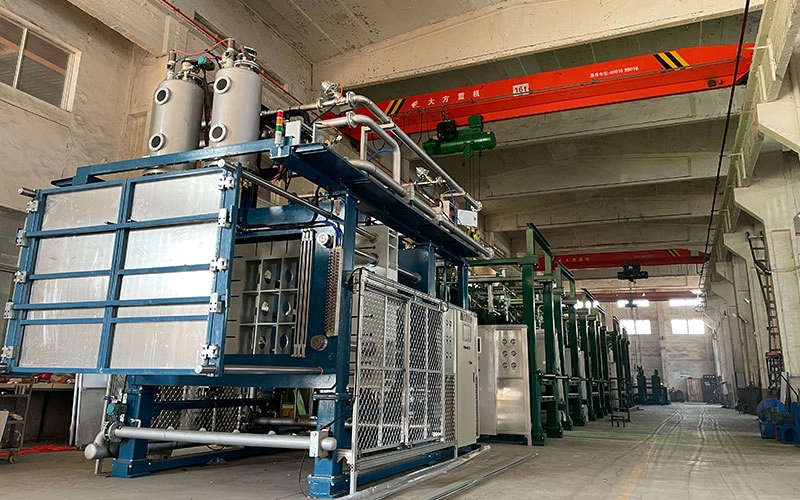
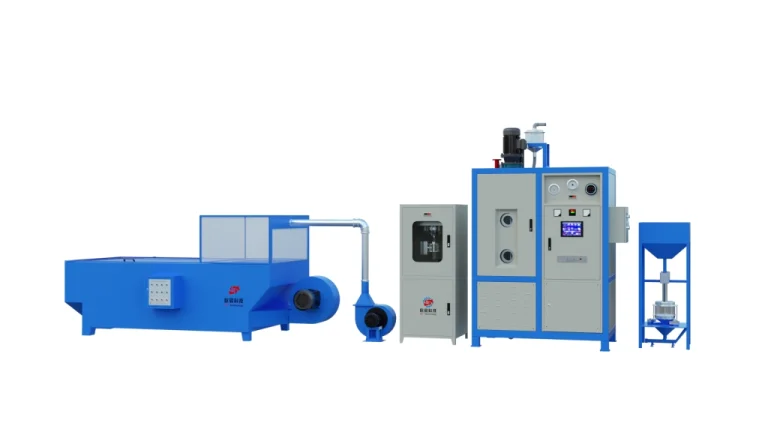
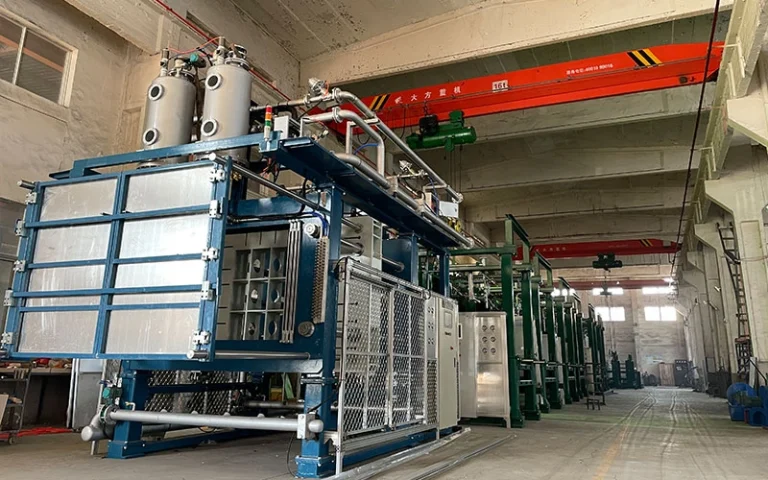
Công nghệ OC is the manufacturer, supplier and factory of high-end intelligent lost foam white-area casting equipment. All kinds of casting equipment are provided, including foam sheet making machine, Máy tạo tiền trước, pre-mature silo, lost foam casting mold, vertical type casting mold, horizontal type casting mold, casting air dryer, central type vacuum casting equipment and castings paint mixer etc. The equipment can be used to set up an automated lost foam casting production line. Liên hệ với OC Technology hôm nay.
 Vietnamese
  English
  Arabic
  Hindi
Hindi  Indonesian
  Japanese
  Korean
  Malay
Malay  Portuguese
  Spanish
  Thai
Thai