
Machinery ordered in 2026 may first be placed on the EU market or put into service after January 20, 2027, when Machinery Regulation (EU) 2023/1230 begins to apply. For foundries purchasing peralatan casting busa yang hilang, this makes the RFQ stage more important than usual. Regulatory timing, supply scope, documentation, and machine interfaces should be clarified before the project moves into final design.
The key issue is not CE marking alone. Buyers also need to define the required declarations, technical documents, safety-related controls, and FAT/SAT responsibilities for the actual equipment scope. Teknologi OC supports lost foam casting equipment and EPC projects based on production requirements, equipment interfaces, and destination-market needs.
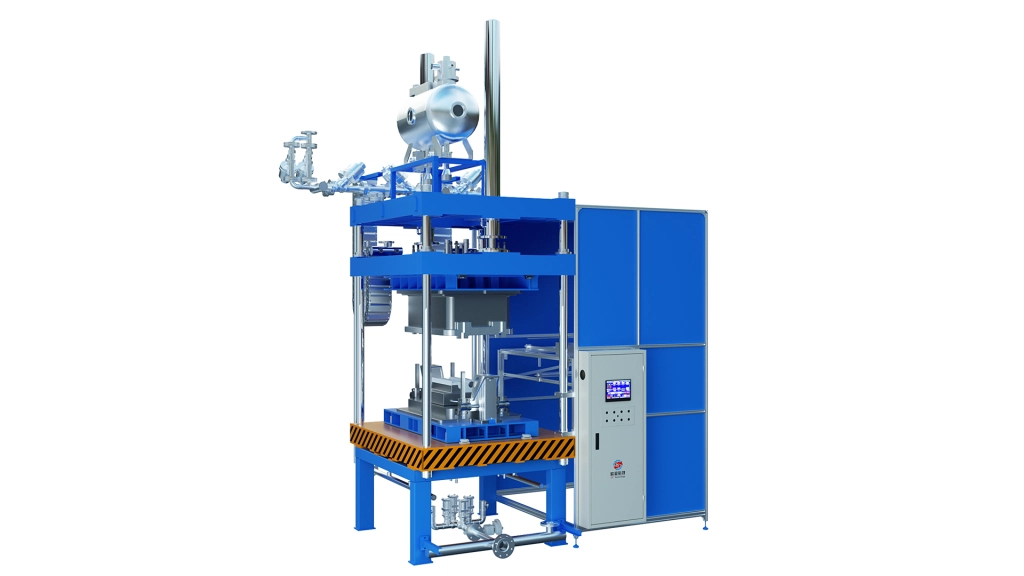
Plan Equipment Procurement for the 2027 EU Machinery Regulation Transition
Design approval, FAT, shipment, installation, and commissioning can span many months. When a project crosses January 2027, the supplier, importer, integrator, and buyer need the same regulatory timeline. A late change can affect documents, controls, machine identification, or acceptance. Defining the timing in the RFQ is a small task; resolving it after design approval is not.
Confirm the Application Date and Project Milestones
Machinery Regulation (EU) 2023/1230 applies from January 20, 2027. For projects close to the transition, identify when the machinery is expected to be placed on the EU market or put into service, together with the delivery and commissioning schedule, then confirm the applicable framework for the actual project.
The purchase-order date alone should not be treated as the deciding point.
Align the Timeline With the Technical RFQ
State the destination EU country, expected delivery period, installation window, and any buyer-defined EU machinery compliance requirements. If the schedule is still moving, state that as well.
The goal is practical: give the equipment manufacturer enough information to prepare the supplied scope and agreed documentation without late rework.
Define the Machinery Supply Boundary and Integration Scope
Once the timeline is clear, define exactly what is being purchased. A standalone machine, several coordinated machines, and a complete EPC casting production line create different integration responsibilities. The supply boundary affects controls, safety interfaces, technical documentation, and acceptance. Buyers should settle the functional scope before discussing declarations or CE marking; the regulatory route should follow the actual supplied system.
Distinguish Standalone Machinery From an Integrated EPC Casting Line
A lost foam project may include an EPS Pre-Expander Machine, maturation equipment, EPS molding equipment, drying systems, vacuum equipment, or a wider white-area package.
For an integrated project, the technical agreement should identify where the supplier’s responsibility begins and ends, which machines exchange control signals, which utilities are local, and which equipment comes from third parties.
Determine Whether the Supply Includes Partly Completed Machinery
Machinery Regulation (EU) 2023/1230 distinguishes partly completed machinery from complete machinery. Partly completed machinery follows a different documentation route, including an EU Declaration of Incorporation and assembly instructions.
Classification should follow the real function and integration status of the supply. A machine is not automatically partly completed machinery simply because it connects to a production line.
Define Regulatory and Documentation Deliverables in the Technical RFQ
Once the supply boundary is agreed, turn it into written purchasing requirements. “CE required” is too broad for a serious equipment order. The RFQ should identify the expected declarations, instructions, equipment identification, language, and document responsibilities. This gives the pabrikan peralatan pengecoran busa hilang a clearer quotation basis and gives the buyer a better way to compare proposals.
Specify the Required Documentation Scope
A practical RFQ section can define:
- the required declaration for the agreed scope;
- operating or assembly instructions;
- machinery and model identification;
- document language and delivery format;
- agreed technical-document responsibilities;
- drawing, software, and document revision control.
The exact package depends on the machinery and project structure. Define it during technical quotation review, not at shipment.
Verify CE Marking and Declaration Requirements
For machinery and related products within the scope of the Regulation, CE marking requirements for machinery, the applicable conformity-assessment process, the EU Declaration of Conformity, and required technical documentation should be treated as one package.
EU importers also have obligations before placing covered machinery on the market, including checks related to conformity assessment, technical documentation, CE marking where applicable, and required accompanying documents.
Documentation alone is not enough; the machine configuration and safety-related controls must also match the agreed scope.
Review Safety-Related Controls and EPC Line Interfaces
Modern foundry equipment commonly uses PLCs, interlocks, sensors, parameter storage, and remote-support functions. The 2027 Regulation also addresses cyber-safety where software data or safety-control systems can affect machinery safety. For an EPC project, the buyer needs clear answers on which functions are safety-related, who can change them, and who owns each interface between machines.

Define Safety Functions, PLC Access, and Remote Support
Sebuah EPS Molding Machine from OC Technology uses PLC control with process-parameter storage and supports remote parameter debugging. Where remote support is included in an EU project, it should be reviewed as part of the final control-system scope.
The technical agreement should distinguish normal production settings from safety-related functions and define relevant permissions, interlocks, alarms, guarding signals, and remote-support boundaries.
Assign Machine-to-Machine Safety Interface Responsibilities
Integrated EPC casting equipment can require defined emergency-stop interfaces, guarding boundaries, control handshakes, and upstream/downstream interlocks.
These are practical project controls. One unresolved boundary between two suppliers can delay commissioning even when both machines work correctly. Responsibility should therefore be assigned by interface, not left under a general phrase such as “buyer connection.”
Integrate Compliance Deliverables Into FAT, SAT, and Final Proposal
FAT and SAT connect the RFQ with the equipment actually delivered and installed. They do not replace any required conformity-assessment process. Instead, they create agreed checkpoints for documents, identification, testable functions, and line interfaces. For an EPC casting production line, they also separate factory-verifiable items from checks that depend on the final site configuration.
Verify Documents and Testable Functions During FAT
FAT can cover equipment identification, drawing revisions, document availability, alarms, interlocks, and agreed functions that can reasonably be tested before shipment. The protocol should also record which interfaces remain open until site installation.
Teknologi OC’ s ITFCO lost foam casting project is a published reference for a 10,000-ton/year automated white-area line, providing relevant project experience in coordinating multiple lost foam production stages.
Verify Installed Interfaces and Final Configuration During SAT
SAT should focus on the installed system: site connections, integrated controls, safety interfaces, alarms, and functions that depend on the final plant arrangement.
| Check Before PO | Procurement Purpose |
| Supply boundary defined | Clarifies integration responsibility |
| Regulatory timeline confirmed | Reduces late project changes |
| Required declarations specified | Clarifies documentation scope |
| Instructions and language agreed | Supports installation and operation |
| Control interfaces assigned | Reduces line-integration gaps |
| FAT and SAT scope defined | Creates measurable acceptance points |
The final proposal should also state what remains outside the supplier’s scope.
Prepare the Technical RFQ Data for an EU Equipment Proposal
A regulatory checklist cannot replace engineering data. The machinery still has to match the casting program, target capacity, utilities, and workshop conditions. The strongest RFQ combines production data with destination-market requirements, allowing the supplier to prepare a project-specific equipment and documentation scope instead of filling gaps with assumptions.
Provide Production, Site, and Destination-Market Requirements
Provide casting drawings, product range, target output, workshop conditions, available utilities, destination EU country, expected delivery schedule, and intended supply boundary. Add buyer-specific machinery safety, documentation, and plant-interface requirements where already defined.
This also makes competing proposals easier to compare on the same technical basis.
Request a Project-Specific Equipment and Documentation Scope
The final proposal should identify supplied equipment, excluded plant systems, utility and control interfaces, and the documentation included with delivery.
For a new lost foam project or EU EPC casting equipment requirement, request an EU Project Equipment & Documentation Review from OC Technology with the production data, destination, project schedule, and required supply boundary.
Kesimpulan
yang EU Machinery Regulation 2027 makes 2026 an important planning year for foundries buying machinery for projects extending into 2027. Start with a defined supply boundary, project timeline, documentation package, control responsibility, and acceptance plan.
For peralatan casting busa yang hilang, putting these points into the RFQ early gives both sides a clearer basis for equipment selection, EPC integration, FAT, SAT, and commissioning.
PERTANYAAN YANG SERING DIAJUKAN
Q1: When does Machinery Regulation (EU) 2023/1230 apply?
A: It applies from January 20, 2027. Projects close to the transition should confirm the applicable framework against the actual project schedule and market-placement scenario.
Q2: Does machinery supplied to an EU foundry need CE marking?
A: Machinery and related products within the Regulation’s scope follow the applicable conformity-assessment and CE-marking requirements. Partly completed machinery follows a different documentation route, including an EU Declaration of Incorporation and assembly instructions.
Q3: What documents should be checked when buying lost foam casting equipment for the EU?
A: Check the applicable declaration, machinery identification, operating or assembly instructions, document language, technical-document responsibilities, and installation or line-interface documentation required for the supplied scope.
Q4: Who is responsible for CE documentation on an integrated EPC casting production line?
A: Legal responsibility follows the role defined under the applicable EU legislation and the actual machinery or assembly being placed on the market. The contract should separately define integration work, line interfaces, document delivery, and acceptance responsibilities; contractual allocation does not replace statutory obligations.
Q5: Can machinery instructions and conformity documents be supplied digitally under the 2027 Regulation?
A: The Regulation allows digital instructions and digital access to the EU Declaration of Conformity under specified conditions. Accessibility, availability, language, and paper-copy requirements should be addressed in the procurement specification.


 Indonesian
  English
  Arabic
  Hindi
Hindi  Japanese
  Korean
  Malay
Malay  Portuguese
  Spanish
  Thai
Thai  Vietnamese