
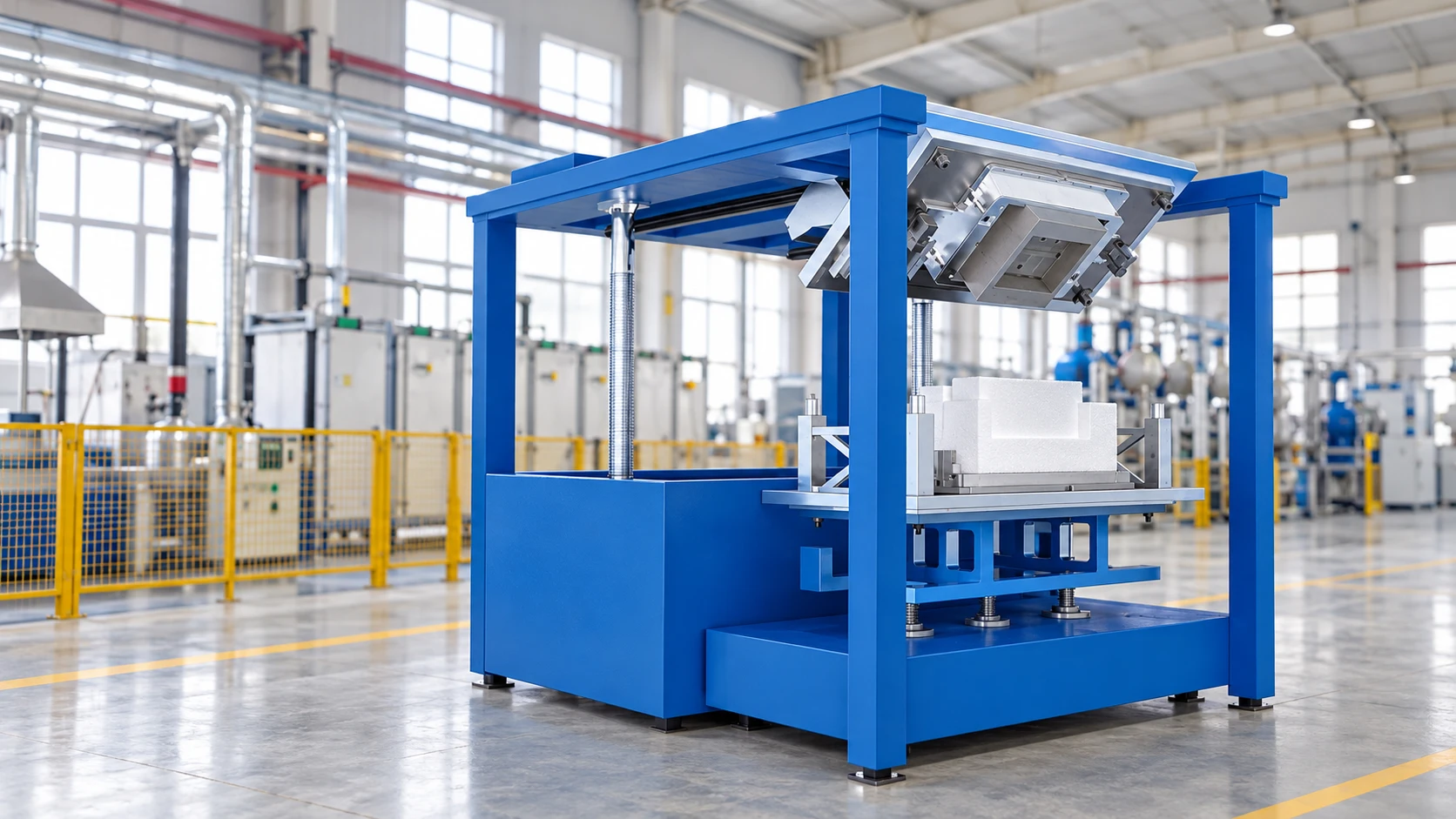
An automatic hot-melt foam pattern bonding machine, also listed as EPS pattern bonding equipment, should be chosen from the pattern requirements rather than the catalog label. The decisive inputs are the largest and smallest pattern assemblies, joint geometry, required output, allowed positional error, product mix, and the way the cell must exchange parts with upstream molding and downstream coating operations. A lost foam casting bonding machine is suitable only when it can hold the real pattern without damage, deposit the approved adhesive consistently, complete the joint within takt time, and change over without creating a second bottleneck.
Define the Pattern Envelope and Joint Before Comparing Machines
A supplier cannot size a bonding cell from casting weight alone. Provide the foam assembly length, width, height, mass, center of gravity, number of pieces, and joint surface area. Mark which surfaces are cosmetic or dimensionally critical. A long, light pattern may need more support than a compact, heavier one because it can sag between locators or twist during transfer.
The joint itself determines the application method. Record whether the machine will join two molded halves, attach bosses or runners, or assemble a multi-piece cluster. Flat joints can often use a platen or controlled contact surface. Curved or interrupted joints may need a nozzle path, dedicated nest, or compliant tooling. If several joint types share one cell, each must be represented in the trial plan.
Match Working Area and Fixturing to Model Size
The working envelope must include more than the finished pattern dimensions. Allow space for fixtures, guards, loading motion, adhesive hardware, and part removal. Confirm the usable opening and travel in every axis, not just the advertised platen size. Ask the supplier to show the pattern in the proposed fixture layout and identify all possible interference points.
Fixturing should locate the parts from stable datums without crushing the EPS. Broad supports, adjustable stops, and controlled clamping are usually safer than concentrated force. The design should also let operators remove a bonded pattern without pulling across a fresh joint. For families of similar parts, modular nests may reduce cost; highly dissimilar parts may justify dedicated fixtures.
Convert Production Takt Into Cell Capacity
A quoted bonding cycle is useful only when it includes loading, adhesive application, alignment, pressing or holding, unloading, and routine cleaning. Compare that complete cycle with the required takt time. If the machine has two stations or permits loading while another part is bonding, evaluate the overlap with a realistic operator sequence rather than using the shortest isolated machine motion.
Calculate capacity for the planned shift pattern and include normal losses for changeovers, warm-up, adhesive replenishment, inspection, and minor stops. Then check the upstream and downstream rates. A fast bonding cell can still starve when patterns arrive irregularly, while excessive output ahead of coating can create unsupported work-in-process and handling damage.
- Required good assemblies per hour and per shift
- Number of joints and adhesive paths per assembly
- Expected uptime, staffing plan, and planned cleaning time
- Buffer capacity before and after the bonding operation
Specify Alignment and Adhesive Control Separately
Positioning accuracy and adhesive repeatability solve different risks. The fixture, sensors, and motion system control part alignment. The melt unit, temperature control, pump or metering method, and applicator control the adhesive bead or film. Ask for acceptance limits for both. A machine that repeats its motion can still produce variable joints when adhesive temperature, pressure, or nozzle condition drifts.
The adhesive must be compatible with the foam, required open time, joint area, and casting process. Its application temperature must not distort the pattern. Its behavior during metal filling also matters: low thermal degradation hot-melt adhesive research shows why a glue joint can obstruct the metal front when the adhesive degrades more slowly than the EPS. Confirm the approved adhesive with process trials rather than substituting a general packaging hot melt.
Evaluate Changeover for the Actual Product Mix
High mix production changes the economics of automation. Record how often the line changes patterns, how many fixture sets are required, and whether adhesive settings vary by product. A practical changeover should define the tooling swap, recipe selection, warm-up or stabilization time, first-piece inspection, and the method for preventing a wrong fixture or program from running.
Ask whether recipe parameters are access-controlled and traceable. Simple mechanical features, such as keyed fixtures and clear reference marks, can reduce setup errors. If the machine needs a long purge whenever the adhesive changes, include lost adhesive and cleaning labor in the comparison. For frequent changeovers, repeatable setup may matter more than peak cycle speed.
Plan Material Flow and Line Interfaces
The bonding cell sits between pattern production and later cluster handling, coating, or drying. Define how parts arrive, their orientation, the maximum safe accumulation, and how bonded assemblies leave the cell. Confirm whether transfer is manual, conveyor-based, or robotic. Where patterns are fragile, the interface should minimize regripping and unsupported travel.
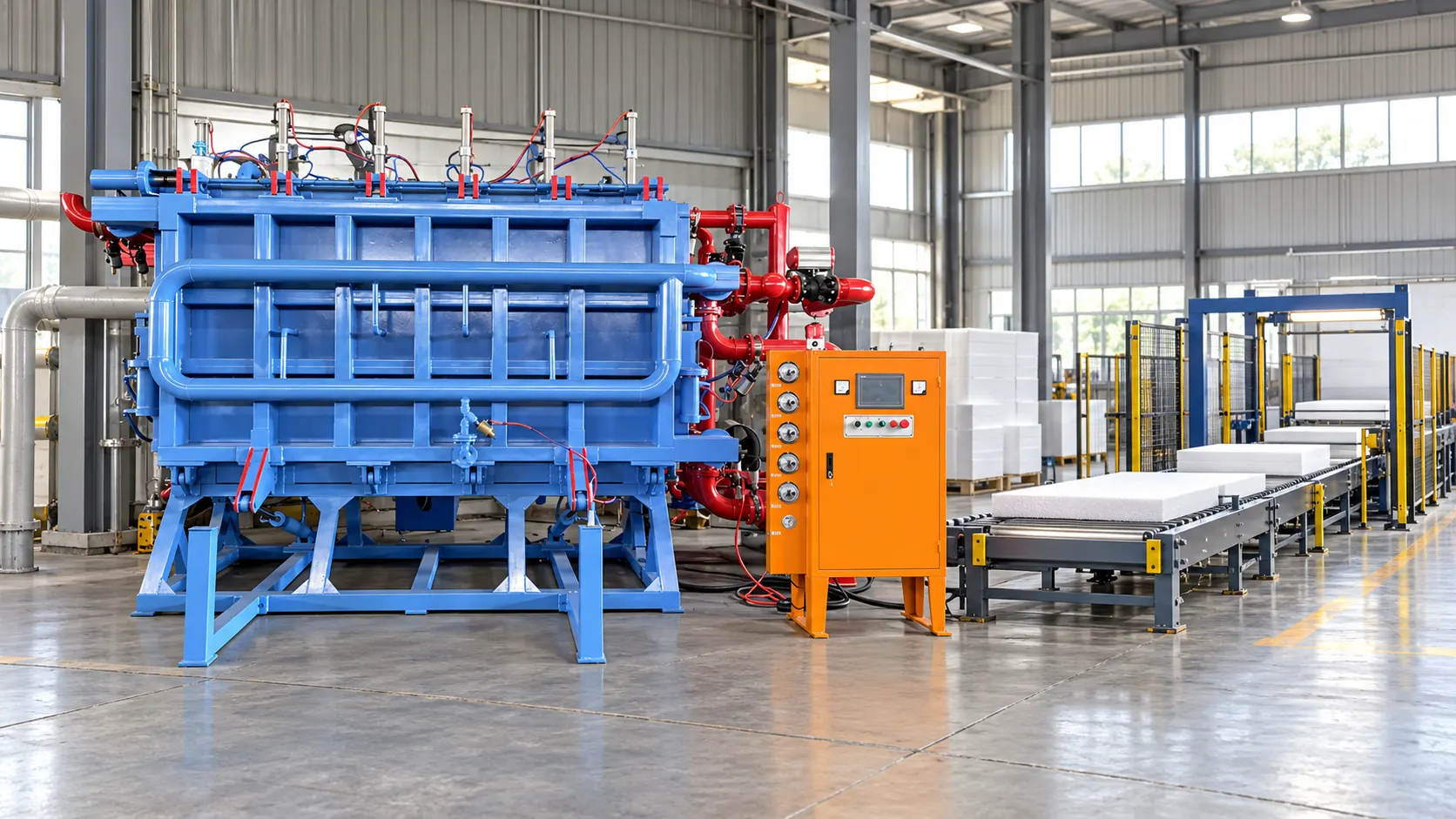
List the required electrical supply, compressed air, ventilation, exhaust, guarding, network signals, and floor space. Specify handshake signals for any conveyor or robot, including ready, cycle complete, fault, and bypass states. Ouchen’s lost foam casting equipment portfolio can help project teams place the bonding operation in the wider white-area equipment flow, while the guide to equipment selection across each process step provides context for adjacent operations.
Verify Performance With a Representative Sample Trial
A trial should use production-intent foam, adhesive, fixtures, and pattern geometry. Include both the easiest and most difficult joints. Run enough consecutive cycles to expose temperature recovery, nozzle contamination, part variation, and operator interaction. A single successful sample does not establish a stable process.
- Measure joint offset and gap at defined inspection points.
- Record adhesive mass or another agreed application indicator.
- Check pattern distortion immediately and after the specified cooling time.
- Challenge the cell with minimum and maximum pattern sizes.
- Verify fault recovery, recipe change, cleaning, and safe manual access.
Agree on the acceptance method before the trial. If casting validation is required, keep joint locations traceable through coating, compaction, pouring, and final inspection. This connects a visible bonding condition with any downstream defect instead of relying on general impressions.
Prepare a Complete RFQ Package
A useful quotation package includes 2D drawings or 3D files, model dimensions and mass, photographs of the joint, foam material and density range, approved adhesive data, required takt, shift pattern, positioning tolerance, changeover frequency, utilities, and automation interface. State whether the request covers a stand-alone machine, operator loading, conveyors, robots, fixtures, melt equipment, or full line integration.
Also request a clear scope boundary, proposed trial procedure, consumable list, maintenance access, spare-parts recommendation, and training plan. The article on criteria for evaluating a lost foam equipment supplier offers additional supplier checks. Hangzhou Ouchen Technology can review the information as part of a wider lost foam line discussion, but the final machine configuration should be confirmed against the application.
結論
The right automatic foam pattern bonding machine is the one that proves control over the real joint at the required rate. Size the working area around the fixture, separate alignment limits from adhesive limits, calculate complete cycle capacity, and test changeovers and interfaces. A disciplined sample trial should confirm joint geometry, adhesive application, pattern stability, fault recovery, and downstream traceability before purchase.
よくある質問
What information is most important for initial machine sizing
Provide maximum and minimum assembly dimensions, part mass, joint geometry, number of joints, required takt, loading method, and fixture concept. Drawings and sample patterns are more useful than casting weight alone.
How should a foundry define bonding accuracy
Define measurable offset and gap limits at named points on the joint. Also state when the measurement is taken, because a pattern may move during cooling, handling, or adhesive curing.
When does automatic bonding make sense for high mix production
Automation can be justified when repeatability, ergonomics, traceability, or throughput offsets fixture and changeover cost. Compare total changeover time and recurring setup risk, not only the fastest cycle.
What should a sample trial prove before an order
It should prove stable alignment, controlled adhesive application, no unacceptable foam distortion, repeatable cycle time, practical cleaning, safe fault recovery, and compatibility with downstream handling.
To review a specific application, request an application fit check from Hangzhou Ouchen Technology and provide pattern drawings, joint photos, adhesive information, target output, utilities, and the required line interface.


 Japanese
 English
 Arabic
 Hindi
 Indonesian
 Korean
 Malay
 Portuguese
 Spanish
 Thai
 Vietnamese