
Expanding an operating foundry is very different from building a new plant. Furnaces, cranes, utilities, operators, workshop space, and production schedules are already in place. New อุปกรณ์หล่อโฟมที่หายไป has to fit that environment without creating another bottleneck somewhere else.
For foundries planning capacity expansion or an equipment retrofit, the first decision is not which machine to buy. It is what can remain in service, what needs modification, and where additional EPC capacity is actually required.
เทคโนโลยี OC supplies individual white-area equipment as well as coordinated lost foam casting production-line solutions, with equipment configuration based on casting requirements, plant layout, utilities, and target output.
Assess Existing Foundry Assets and Define the Retrofit Boundary
A retrofit should start with the existing production system. Replacing useful equipment adds unnecessary cost, but keeping an undersized utility or poorly positioned process can create bigger problems after installation.
Defining the retrofit boundary early gives engineering and purchasing teams a common basis for layout work, supplier comparison, and project responsibility. It also helps answer a basic question: is the problem limited to one process stage, or does the existing lost foam casting line need a broader capacity upgrade?
Classify Existing Assets for Reuse, Modification, or Replacement
Review each asset against the proposed production load rather than current output alone.
| Existing asset | Possible decision | Main engineering check |
| Melting and pouring equipment | Reuse where suitable | Alloy, capacity, pouring rhythm |
| Crane and lifting system | Reuse or modify | Load, travel path, clear height |
| Electrical supply | Reuse or expand | Voltage, frequency, spare capacity |
| Compressed air | Reuse or expand | Pressure and peak flow |
| Drying room | Review or modify | Volume, airflow, humidity load |
| Vacuum supply | Verify separately | Flow and simultaneous demand |
Floor area is only one part of the layout. Columns, crane travel, pipe routes, maintenance clearance, and operator access can create installation conflicts even when a machine fits on the drawing.
Separate a Local Bottleneck From a System Constraint
One slow process does not automatically justify a full-line replacement. A foundry may only need more pattern capacity, improved drying, or additional vacuum supply.
If several stages are already close to their limits, though, changing one machine can simply move waiting time downstream. That distinction should be made before final specifications are issued.
Define the White-Area Equipment Scope and Capacity Interfaces
Once reusable assets are clear, the new white-area scope can be matched to actual production. Pattern size, product mix, shifts, mold changes, drying demand, and downstream capacity all affect equipment selection. The goal is not to install the largest machine at every stage. The goal is stable material flow between stages while staying within the limits of the existing workshop.
Match Pre-Expansion, Maturation, and EPS Molding Capacity
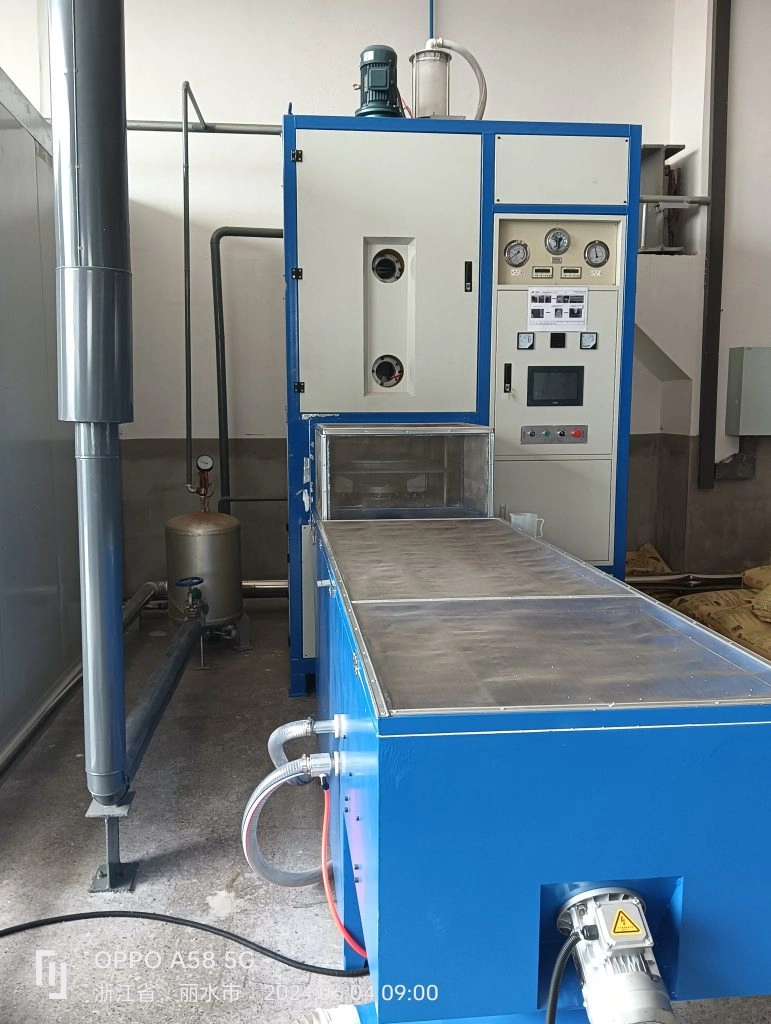
Bead preparation sets the starting condition for pattern production. An EPS Pre-Expander Machine should therefore be selected together with maturation storage, steam supply, and molding demand rather than by batch capacity alone.
OC Technology’s system uses PLC-controlled operation, stored process parameters, and quantitative weighing. The listed ±1 g figure applies to the pre-weighing point; it should not be treated as a final expanded-bead density guarantee.
After pre-expansion, enough maturation capacity is needed to feed molding without excessive work-in-process. For shape molding, machine selection should follow the mold envelope, filling conditions, cooling demand, pattern family, and expected changeover frequency.
Choose Between Shape Molding and EPS Block Molding
Not every pattern needs the same production route. Repeating parts generally favor dedicated molds and an EPS Molding Machine, while some large patterns, prototypes, or lower-volume parts may be produced from molded EPS blocks followed by CNC cutting.
That choice affects tooling, floor space, handling, and production planning. Buyers should decide the pattern-production route first, then configure the related EPC casting equipment around it.
Verify Utility Capacity, Workshop Constraints, and Process Interfaces
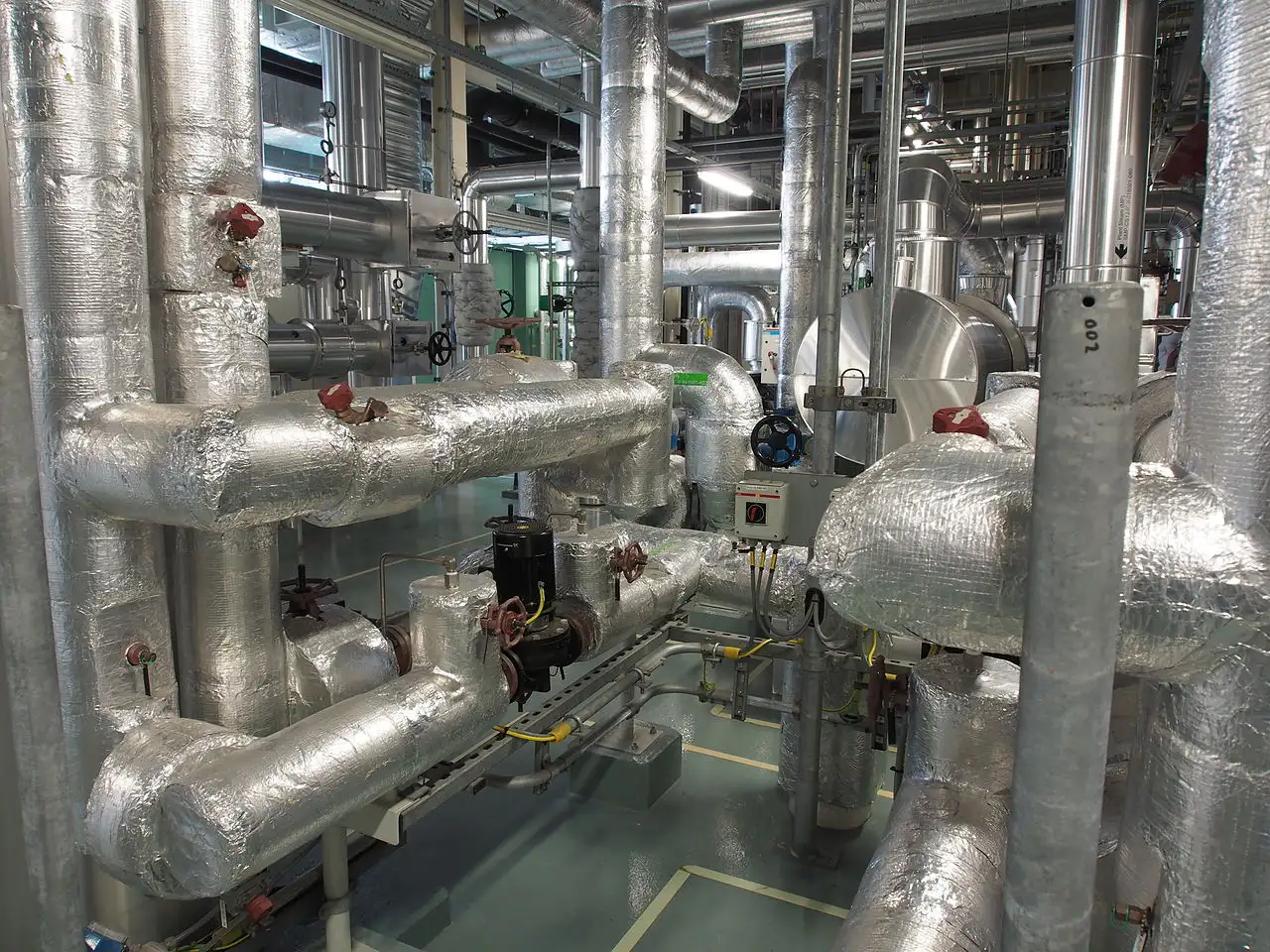
Once the white-area scope is defined, the next question is whether the plant can actually support it. Steam, compressed air, electrical load, cooling, drainage, ventilation, and vacuum demand may limit practical output long before machine nameplate capacity does. In an existing foundry, simultaneous demand matters more than average consumption because several systems may call for utilities at the same time.
Calculate Simultaneous Peak Demand and Check Material Flow
Walk through the process in sequence:
Raw EPS → Pre-Expansion → Maturation → Pattern Molding → Pattern Preparation → Downstream Coating and Casting Stages
Then check what happens when operating cycles overlap. Steam pressure can fall, compressed-air demand can spike, or a shared vacuum system can be asked to support several machines at once.
Material flow deserves the same attention. Long conveying routes, forklift crossings, restricted crane access, or poor maintenance clearance can create recurring handling conflicts during normal production.
Check Interstage, Drying, and Shared Vacuum Capacity
The usable output of lost foam foundry equipment depends on how well adjacent stages work together.
If molding capacity increases while maturation storage or drying turnover stays unchanged, the plant may not gain the same amount of saleable output. The same applies to shared vacuum capacity and downstream production.
อัน EPS Molding Machine should therefore be evaluated together with mold dimensions, steam supply, cooling, changeovers, and surrounding process capacity.
Drying should be checked in the same way. An เครื่องอบแห้งแบบปั๊มความร้อนจากแหล่งอากาศ can provide heating, dehumidification, and heat recovery, but final sizing still depends on pattern load, coating moisture, airflow, local climate, and required drying time.
For retrofit planning, interstage capacity is usually more useful than comparing theoretical machine output on its own.
Select the EPC Delivery Scope and Commissioning Strategy
When the technical interfaces are clear, the next decision is how much of the project should be handled as one coordinated scope. A single-machine replacement may need limited integration work. A project involving pre-expansion, maturation, molding, drying, vacuum, controls, and utility changes has far more interfaces. In that case, coordination becomes part of the equipment purchase rather than something to sort out after delivery.
Compare Standalone, Integrated White-Area, and Full-Line Options
Standalone equipment works when the bottleneck is clearly isolated and surrounding processes have enough reserve capacity.
An integrated white-area upgrade is more suitable when several connected stages need to change together. A full EPC Casting Production Line becomes more practical when the existing workshop lacks utility headroom, expansion space, or a workable process route.
A turnkey scope brings the most value when equipment stages, utility interfaces, controls, installation activities, and commissioning tasks need coordinated delivery.
Define EPC Contractor Responsibilities
For a multi-stage project, the buyer should know exactly what the lost foam casting equipment contractor will handle. Depending on the agreed scope, responsibilities may include equipment configuration, layout coordination, utility interface requirements, controls, equipment manufacture, installation support, commissioning, operator training, and technical documentation.
Civil work, lifting, plant piping, electrical connections, or local labor may remain with the buyer or a local contractor. The responsibility split should be agreed before the purchase order.
OC Technology’s project references include a 10,000-ton/year automated white-area line for ITFCO Iran Tractor Group and a 10,000-ton/year white- and yellow-area turnkey project for Xinjiang Tianshan Aluminum. The latter included planning, equipment manufacturing, installation, and final debugging. These projects involved coordinated delivery across multiple production stages, while the final equipment scope was defined for each production case.
Plan Installation, FAT, and SAT
Control interfaces should be defined before shipment, including PLC signals, interlocks, alarms, parameter access, and agreed remote-support boundaries.
Foundations, pipe routes, cables, and utility connections can often be prepared before final equipment tie-in, reducing unnecessary disruption to normal production.
FAT verifies agreed machine functions before shipment. For an existing foundry upgrade, SAT should focus on the installed system: utilities, conveying interfaces, controls, vacuum demand, drying performance, alarms, and trial production under site conditions.
Prepare the Technical RFQ for an Existing Foundry Upgrade
A useful quotation starts with useful production data. Annual tonnage alone cannot define an equipment retrofit. Two foundries with similar output may need very different solutions because one is limited by molding capacity while another is constrained by drying, utilities, or workshop layout. A technical RFQ helps a ผู้ผลิตอุปกรณ์หล่อโฟมที่หายไป separate reusable assets from new equipment and build the proposal around the actual production issue.
Provide Production and Site Data
A practical RFQ should include:
- casting drawings, alloy, and part weight;
- pattern dimensions and production method;
- annual and peak output requirements;
- product mix, shifts, and changeover frequency;
- existing equipment and current production bottleneck;
- workshop layout and available utilities;
- installation window and future expansion plan.
Workshop photos or short videos can also help clarify crane access, pipe routing, columns, and existing equipment that may not appear clearly on drawings.
Move From Equipment Request to Project-Specific Proposal
The final proposal should identify which equipment is being added, which systems remain in service, what interface or utility changes are required, and where supplier and buyer responsibilities begin and end.
For an equipment retrofit, capacity expansion, or new EPC casting production line, request a Brownfield Equipment & EPC Project Review from OC Technology with your casting data, workshop layout, existing equipment, current bottleneck, and available utilities.
บทสรุป
A successful existing-foundry upgrade improves the complete production flow rather than simply adding installed capacity. Start with the plant that is already there, define the retrofit boundary, check utility and interstage capacity, and then select อุปกรณ์หล่อโฟมที่หายไป around the real production constraint.
When several stages change together, equipment interfaces, EPC responsibilities, installation planning, and site acceptance become just as important as individual machine specifications. A well-defined scope gives the buyer a clearer quotation, a more workable installation plan, and a stronger basis for future capacity expansion.
คำถามที่พบบ่อย
Q1: What equipment do I need to add lost foam casting to an existing foundry?
A: The scope may include an EPS Pre-Expander Machine, maturation capacity, EPS Molding Machine or EPS Block Molding Machine, drying equipment, and shared vacuum capacity. The actual requirement depends on the existing plant, pattern-production route, output target, and current bottleneck.
Q2: Can existing foundry equipment be reused in a lost foam casting line?
A: Yes. Melting and pouring equipment, cranes, electrical infrastructure, compressed air, and some material-handling systems may remain in service if their capacity and interfaces fit the new EPC process.
Q3: What should an EPC contractor handle during an existing foundry upgrade?
A: Depending on the contract, a lost foam casting equipment contractor may handle equipment configuration, layout coordination, utility interfaces, controls, installation support, commissioning, training, and technical documentation. Buyer and local-contractor responsibilities should be defined separately.
Q4: Can lost foam casting equipment be customized for an existing plant layout?
A: Yes. Custom lost foam casting equipment may be configured around working dimensions, access direction, discharge height, electrical standards, conveying routes, controls, and existing utility interfaces. Customization should address a specific site or production requirement.
Q5: When is a new EPC Casting Production Line more practical than an equipment retrofit?
A: A new line may be the better option when the existing plant has insufficient utility capacity, limited expansion space, an inefficient material-flow route, or several legacy systems that require major modification. The decision should follow the complete project scope and future production plan.


 Thai
Thai  English
  Arabic
  Hindi
Hindi  Indonesian
  Japanese
  Korean
  Malay
Malay  Portuguese
  Spanish
  Vietnamese