
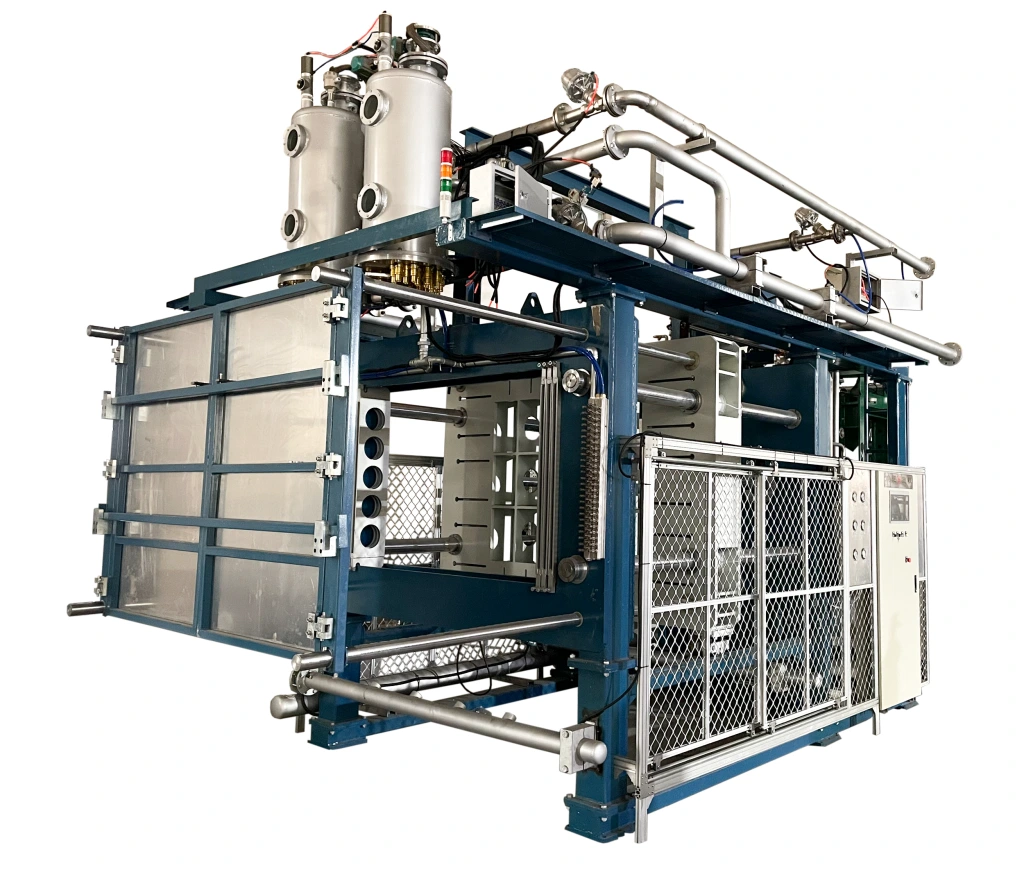
กระบวนการปั้น EPS มีบทบาทสำคัญในการหล่อโฟมที่สูญเสีย มันช่วยสร้างรูปแบบโฟมที่แม่นยำและรายละเอียด รูปแบบเหล่านี้ต่อมาสร้างชิ้นส่วนโลหะที่แข็งแกร่ง เครื่องปั้น EPS ที่ทันสมัย ได้ปรับปรุงมาก ตอนนี้มันรวมถึงอัตโนมัติ ระบบที่ประหยัดพลังงาน การควบคุมที่แม่นยำ และวิธีการไฮบริดใหม่ การเปลี่ยนแปลงทั้งหมดนี้ทำให้กระบวนการดีขึ้น บทความนี้ดูวิธีการทำงานของกระบวนการปั้น EPS กับเครื่องปั้น EPS ในปัจจุบัน มันครอบคลุมขั้นตอนหลัก คุณสมบัติทางเทคโนโลยี ปัญหาปกติ และข้อดีสําหรับการใช้งานหล่อโฟมที่หายไป
แนะนำการปั้น EPS ในการหล่อโฟมสูญหาย
การหล่อโฟมที่สูญหายหรือเรียกว่าการหล่อแบบระเหย ใช้รูปแบบโฟมโพลีสไตรีนที่ขยาย (EPS) รูปแบบเปลี่ยนเป็นก๊าซเมื่อโลหะร้อนเทเหนือมัน นี้ทิ้งพื้นที่ว่างเปล่า โลหะเติมพื้นที่นั้น เพื่อสร้างชิ้นสุดท้าย วิธีการทำงานได้ดีสำหรับรูปร่างที่ซับซ้อน มันไม่ต้องการแกน ดังนั้นมันจึงลดความบกพร่อง เช่น เส้นแยก หรือการเปลี่ยนแปลงหลัก มันยังลดการทำเครื่องจักรเพิ่มเติมหลังจากหล่อเมื่อเทียบกับวิธีหล่อทรายเก่า
กระบวนการปั้น EPS สร้างรูปแบบเหล่านี้ในวิธีที่แม่นยำและมั่นคง ลูกปัดโพลีสไตรีนที่สามารถขยายได้ดิบผ่านการขยายก่อน, การสูงอายุ, และการขึ้นรูปสุดท้ายในเครื่องขึ้นรูป EPS พิเศษ สิ่งนี้สร้างรูปแบบโฟมเบาแต่แข็งแกร่งที่มีความหนาแน่นเท่านั้น (โดยปกติแล้ว 15-30 กรัม / ลิตรสำหรับโฟมที่สูญเสีย) เครื่องจักรที่ทันสมัยช่วยเพิ่มความแม่นยำ พวกเขาช่วยลดเวลารอบ พวกเขาลดการใช้พลังงาน พวกเขายังเพิ่มคุณภาพรูปแบบ เพราะนี้ เครื่องจักรมีความสำคัญมากสําหรับการหล่อโฟมที่สูญเสียได้อย่างราบรื่นในด้านเช่น บล็อกเครื่องยนต์รถยนต์, ตู้เครื่องจักร และชิ้นส่วนโครงสร้างรายละเอ
ขั้นตอนหลักในการผลิตรูปแบบ EPS สำหรับการหล่อโฟมที่สูญหาย
การผลิตรูปแบบ EPS มีหลายขั้นตอนที่เชื่อมโยงกัน เครื่องจักรที่ก้าวหน้าปรับปรุงแต่ละเครื่อง นี้รับประกันว่าสำเนาโฟมที่ดีพร้อมสำหรับการหล่อ
ก่อนการขยายลูกปัด EPS
ทั้งหมดเริ่มต้นด้วยลูกปัด EPS ดิบ ที่ถือสารเป่าเช่นเปนตัน ในเครื่องขยายก่อนไอน้ำที่ประมาณ 100-110 ° C สัมผัสลูกปัด สิ่งนี้ทําให้เกิดการเติบโตอย่างต่อเนื่อง มักจะใหญ่กว่าก่อนหน้า 20-60 เท่า ผลลัพธ์คือลูกปัดที่มีความหนาแน่นต่ำ ที่สมบูรณ์แบบสําหรับความต้องการของโฟมที่สูญเสีย
แม้แต่การเติบโตก็สำคัญมาก มันหยุดความแตกต่างในความหนาแน่น ที่อาจทําให้เกิดข้อบกพร่องในรูปแบบสุดท้าย เครื่องขยายก่อนใหม่ เช่น ประเภทไฟฟ้าแม่เหล็กและไอน้ำแบบไฮบริด โดยใช้เทคโนโลยีที่แม่นยำมาก ให้ขนาดลูกปัดที่คงที่ พวกเขารักษาความชื้นต่ำ และมีผลผลิตสูง สิ่งเช่นความดันไอน้ำ อุณหภูมิ และเวลาในเครื่อง อยู่ภายใต้การดูแลอย่างแข็งแกร่ง นี่ต้านความหนาแน่นเป้าหมายที่มีจํากัดที่ต่ำกว่า±2.5%
ลูกปัดผู้ใหญ่ (ปรับปรุง) เฟส
หลังจากขยายก่อนลูกปัดแห้ง จากนั้นพวกมันย้ายไปยังไซโลส์ที่เติบโตเพื่อให้มั่นคง ขั้นตอนปรับปรุงที่สำคัญนี้ใช้เวลา 4-48 ชั่วโมง (ส่วนใหญ่เป็น 8-24 ชั่วโมงสำหรับโฟม EPS ที่สูญหาย) ในเวลานี้ ความดันจากก๊าซเปนตันภายในสมดุล ความชื้นจะหายไป ลูกปัดกลับยืดได้โดยไม่มีการเปลี่ยนขนาดเพิ่มเติม
ขั้นตอนหยุดปัญหาเช่นการเติบโตเพิ่มเติมในการปั้น การหด หรือการเข้าร่วมที่อ่อนแอ การเป็นผู้ใหญ่ไม่เพียงพอ นําไปสู่รูปแบบที่ไม่มั่นคง ความหนาแน่นที่ไม่สม่ำเสมอ และความผิดพลาดในการหล่อ ระบบใหม่ตรวจสอบความชื้นและอุณหภูมิ นี่จะทำให้แน่ใจว่าลูกปัดจะติดตั้งอย่างดีสําหรับผลการขึ้นรูปที่คงที่และขนาดที่แม่นยำ
การเตรียมแม่พิมพ์และการบรรจุลูกปัด
ลูกปัดที่ผ่านมาไปยังระบบการบรรจุของเครื่องปั้น EPS ถังความดันใช้การป้อนอัตโนมัติ, วาล์วอากาศสัดส่วน, และความปลอดภัยต่อความดันมากเกินไป. พวกเขาทำให้ความดันมั่นคง เครื่องใหม่ใช้การบรรจุหลายจุดแนวตั้งหรือโซนด้านบน นี่แพร่กระจายลูกปัดเท่าเทียมกัน มันตัดความหนาแน่นที่ไม่สม่ำเสมอ และจุดว่าง
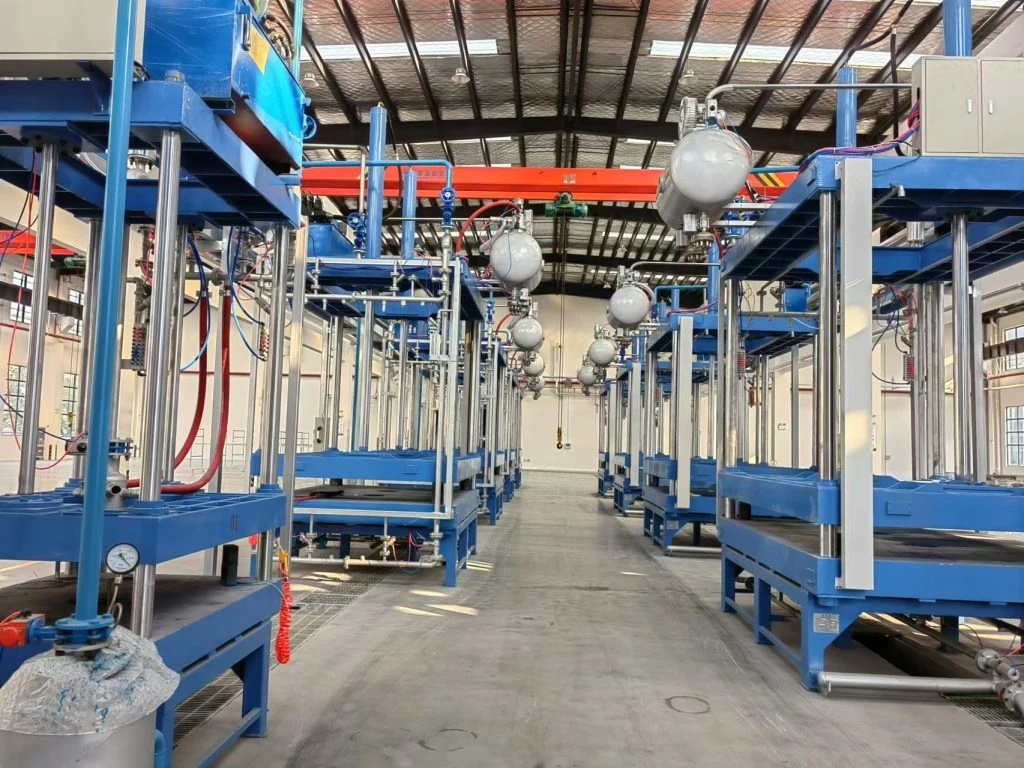
สําหรับรูปแบบโฟมที่สูญหายที่มีรูปร่างที่ซับซ้อน การตั้งค่าการปั้นแนวตั้งให้มีตัวเลือกมากขึ้น พวกเขาจัดการกับการออกแบบแม่พิมพ์รายละเอียดดี พวกมันยังทำให้การถอดง่ายกว่าที่แนวนอน
การขยายและฟิวชั่นลูกปัดสุดท้าย (ขั้นตอนการปั้น)
ไอน้ำทำให้แม่พิมพ์อลูมิเนียมปิดอุ่น นี่ทำให้ลูกปัดเติบโตมากขึ้น พวกเขาเติมพื้นที่ว่างเปล่า และเข้าร่วมเป็นรูปแบบที่แข็งแกร่งเดียว การควบคุมความดันไอน้ำ อุณหภูมิ และเวลาอย่างระมัดระวังให้การเชื่อมต่อที่แข็งแกร่งและพื้นผิวที่สะอาด
เครื่องปั้น EPS ที่ทันสมัยใช้การตั้งค่าท่อบายพาส เหล่านี้ปรับปรุงการแพร่กระจายไอน้ำ พวกเขาช่วยลดเวลาในวงจรและประหยัดพลังงาน วาล์วสัดส่วนดิจิตอลไฟฟ้า เซนเซอร์ตำแหน่งเส้นตรง และเซนเซอร์ความดันดิจิตอลช่วยให้ความดันช่องสม่ำเสมอ นี่เอาชนะวิธีการอนาล็อกเก่า มันให้ความร้อนคงที่และข้อบกพร่องน้อยมาก เช่น พื้นผิวหยาบหรือภายในจุดว่าง
การระบายความร้อนและการเสถียรภาพรูปแบบ
หลังจากเข้าร่วมการระบายความร้อนจะทำให้รูปแบบแข็ง มันทำให้ขนาดถูกต้อง การระบายความร้อนด้วยสูญญากาศด้วยการฟื้นฟูพลังงาน ดึงความร้อนออกได้ดี มักจะจับคู่กับน้ำท่วมเพื่อลดลงอย่างรวดเร็ว ความคิดการถอดที่อุณหภูมิสูง (เช่น 84-90 ° C) ทําให้การถอดเกิดขึ้นโดยไม่ต้องเย็นมากเกินไป นี่ข้ามขั้นตอนที่ทำความร้อนล่วงหน้า และประหยัดพลังงานไอน้ำ
แม่พิมพ์มาจากแผ่นเหล็ก Q325 ที่ได้รับการรักษา (เชื่อม, รักษาความร้อนที่ 600 ° C, ยิงระเบิด, ชุบสังกะสีจุ่มร้อน, และทาสี) พวกเขายืนต่อการดัดและสนิมผ่านวงจรร้อนเย็นหลาย
การถอดถอดและการเสร็จสิ้นรูปแบบ
รูปแบบแข็งออกมาจากแม่พิมพ์ รูปแบบรายละเอียดอาจต้องมีมือหรือหุ่นยนต์ช่วยในการถอด ระบบเปลี่ยนแม่พิมพ์อย่างรวดเร็ว - ด้วยรางนำ, ชั้นวางที่เปลี่ยนได้อย่างรวดเร็ว, และการวางที่แม่นยำ - ลดเวลารอย การเปลี่ยนแปลงปกติใช้เวลา 20-30 นาที ระบบอัตโนมัติแบบสัมผัสเดียวทำได้ในเวลาประมาณ 5 นาที
หลังจากการถอด รูปแบบจะได้รับการตรวจสอบ พวกเขาเข้าร่วมด้วยกาวสําหรับกลุ่มหลายส่วน จากนั้นมันจะติดกับระบบประตู ก่อนที่การเคลือบทนไฟจะดําเนินการ
ระบบควบคุมและอัตโนมัติขั้นสูง
เครื่องปั้น EPS ในปัจจุบันใช้การควบคุมที่สมาร์ทที่ใช้ Siemens PLC พร้อมหน้าจอ Windows การตรวจสอบระยะไกล การเก็บข้อมูลสำหรับการตั้งค่า การปรับปรุงอัตโนมัติ และการดูสดช่วยให้ติดตามกระบวนการ การตั้งค่าที่ดีขึ้น และเวลาหยุดน้อย การตั้งค่าเหล่านี้จัดการงานการให้อาหาร การทำความร้อน การทำความเย็น และสูญญากาศอย่างแม่นยำ นี่นําไปสู่รูปแบบที่ซ้ำซ้ำได้ดี และยังคงมีคุณภาพสูง
ข้อบกพร่องทั่วไปในรูปแบบ EPS และกลยุทธ์ป้องกัน
แม้ว่าจะมีเทคโนโลยีใหม่ รูปแบบ EPS อาจแสดงข้อบกพร่องที่ทำร้ายผลการหล่อ
ความหนาแน่นและช่องว่าง
การแพร่กระจายของลูกปัดที่ไม่สม่ำเสมอหรือการเติบโตที่ไม่ดีทําให้เกิดการเปลี่ยนแปลงความหนาแน่น นี่นําไปสู่การดัดหรือจุดว่าง เพื่อหยุดมัน ใช้วิธีการบรรจุที่ดีกว่า แม้กระทั่งก่อนการขยาย และการเติบโตที่แม่นยำ
ปัญหาฟิวชั่นและข้อบกพร่องพื้นผิว
การเชื่อมลูกปัดที่อ่อนแอทําให้รูปแบบแตกง่ายหรือให้รูปลักษณ์หยาบหยาบ การตั้งค่าไอน้ำที่คงที่, วาล์วสัดส่วน, และลูกปัดที่ดีช่วยให้การเชื่อมต่อที่แข็งแกร่ง.
ความเสี่ยงของริ้วรอยและความรูพรุนในการหล่อดาวนสตรีม
เหล่านี้ส่วนใหญ่มาจากการหล่อ แต่ความไม่สม่ำเสมอของรูปแบบ (เช่นจุดความหนาแน่นสูง) เพิ่มริ้วรอยจากการเผาไหม้ที่ไม่ดีหรือความรูพรุนจากก๊าซที่จับ EPS ความหนาแน่นต่ำ การเปลี่ยนการตั้งค่าการเท และการเคลือบที่ปล่อยให้อากาศผ่านลดความเสี่ยงเหล่านี้
เครื่องจักรที่ทันสมัยลดปัญหาเหล่านี้ ด้วยการควบคุมและออกแบบที่แม่นยำที่ประหยัดพลังงาน
ข้อดีทางเทคนิคของเครื่องปั้น EPS ที่ทันสมัย
อุปกรณ์ที่ทันสมัยนําผลประโยชน์มาก:
- ความแม่นยำและคุณภาพที่เพิ่มขึ้น แม้กระจายลูกปัดและการเชื่อมต่อช่องว่าง, พับ, และข้อบกพร่องของพื้นผิว นี่ให้รูปแบบที่มีความอดทนที่ใกล้ชิดและรูปลักษณ์ที่สะอาด
- ประสิทธิภาพพลังงาน การแยกไอน้ำจากน้ำ การกู้คืนพลังงานสูญญากาศ การทำความร้อนบายพาส และการถอนไอน้ำที่มีอุณหภูมิสูงใช้ไอน้ำมาก
- เพิ่มประสิทธิภาพ การเติมอัตโนมัติ การเปลี่ยนแปลงแม่พิมพ์อย่างรวดเร็ว และการทำงานด้วยมือน้อยลงช่วยให้มีผลผลิตมาก
- ความยั่งยืน การใช้พลังงานที่ต่ำกว่า ทรายที่ทำงานอีกครั้ง และการเผาไหม้ EPS ที่สะอาดช่วยลดอันตรายต่อธรรมชาติ
- ความยืดหยุ่น ขนาดที่ปรับและการตั้งค่าแนวตั้ง/แนวนอนให้เหมาะกับความต้องการที่แตกต่างกัน
การเปลี่ยนแปลงเหล่านี้ช่วยให้รูปแบบใกล้กับรูปร่างสุดท้าย พวกเขาลดการทำเครื่องจักร การเสีย และเวลารอย
ประโยชน์สำหรับการใช้งานหล่อโฟมสูญหาย
การปั้น EPS ที่ดีขึ้นทำให้รูปแบบโฟมที่แม่นยำ เหล่านี้กลายเป็นหล่อที่มีรูปลักษณ์พื้นผิวที่ดี ความแม่นยำของขนาด และข้อบกพร่องภายในน้อย วิธีการจัดการเส้นทางภายในที่ซับซ้อน มันจะลดความต้องการของแกน มันสนับสนุนการผลิตขนาดใหญ่ การประหยัดพลังงาน ชิ้นส่วนที่ไม่ดี และความปลอดภัยที่ดีขึ้นทำให้มันดีสําหรับส่วนประกอบที่แข็งแกร่ง
บทสรุป
กระบวนการปั้น EPS ที่ขับเคลื่อนโดยเครื่องปั้น EPS ที่ทันสมัย สร้างฐานสําหรับการหล่อโฟมที่สูญเสียที่ดี มันจากการขยายลูกปัดและการเป็นผู้ใหญ่อย่างระมัดระวัง ไปจนถึงการเข้าร่วมอัตโนมัติ การระบายความร้อนที่ประหยัดพลังงาน การแลกเปลี่ยนแม่พิมพ์ ความก้าวหน้าเทคโนโลยีเหล่านี้ผลักดันคุณภาพที่ดีขึ้น ผลิตที่สูงขึ้น และงานที่เขียวขึ้น
เทคโนโลยี OCผู้ผลิตเฉพาะและซัพพลายเออร์ของอุปกรณ์หล่อโฟมที่สูญเสียแบบอัจฉริยะระดับสูงให้เครื่องขึ้นรูปโฟมที่ก้าวหน้ารวมถึง รูปแบบแนวนอน (เช่น OC-CX-W ซีรีส์ที่มีใบหน้าแม่พิมพ์ขนาดใหญ่และการล็อคที่แข็งแกร่ง) และ แบบไฮดรอลิก PLC แนวตั้ง (เช่น OC-CX-Y ซีรีส์ที่มีการขยายจังหวะและตัวเลือกการปรับแต่ง) มีการเปลี่ยนแม่พิมพ์อย่างรวดเร็ว, การควบคุม Siemens, วาล์วสัดส่วน, ระบบสูญญากาศ, และการออกแบบประหยัด ในฐานะโรงงานที่ทุ่มเทในพื้นที่สีขาวของโฟมที่สูญหาย OC Technology ให้บริการที่น่าเชื่อถือและมีประสิทธิภาพสูงสําหรับผู้ผลิต
คำถามที่พบบ่อย
ทำไมการเติบโตของลูกปัดจําเป็นสิ่งจำเป็นในกระบวนการขึ้นรูป EPS สําหรับการหล่อโฟมที่สูญเสีย?
การสูงอายุ steadies ลูกปัดก่อนขยาย มันสมดุลความดันภายใน และลดความชื้น นี่รับประกันการเติบโตที่สม่ำเสมอ การเชื่อมที่แข็งแรง และขนาดที่คงที่ในระหว่างการปั้นเพื่อหลีกเลี่ยงข้อบกพร่อง
ท่อบายพาสที่ทันสมัยและวาล์วสัดส่วนปรับปรุงประสิทธิภาพได้อย่างไร?
พวกเขาทำให้ไอน้ำไหลดีขึ้น เพื่อความร้อนที่คงที่ พวกเขาตัดเวลาขึ้นรูป มันลดการใช้พลังงาน พวกเขายังรักษาความดันโขงแม้ว่าจะมีคุณภาพรูปแบบที่คงที่
ข้อดีอะไรที่เครื่องขึ้นรูป EPS แนวตั้งให้สําหรับรูปแบบโฟมที่สูญเสียที่ซับซ้อน?
การตั้งค่าแนวตั้งให้มีทางเลือกในการออกแบบมากขึ้นสําหรับรูปร่างรายละเอียด พวกเขาให้ห้องพิมพ์ที่ดีขึ้นและการถอดพิมพ์ที่ง่ายขึ้น นี่เหมาะกับงานหล่อรายละเอียดดี
การถอดที่อุณหภูมิสูงมีส่วนร่วมในการประหยัดพลังงานอย่างไร?
มันทำให้การปล่อยเกิดขึ้นที่ความร้อนสูงขึ้น (เช่น 84-90 ° C) นี้ข้ามความร้อนล่วงหน้าและลดวงจรในขณะที่ประหยัดไอน้ำ
กลยุทธ์ใดป้องกันข้อบกพร่องรูปแบบ EPS ทั่วไป เช่น การเปลี่ยนแปลงความหนาแน่น?
การขยายก่อนที่ดีขึ้น การเติบโตที่แม่นยำ การเติมโซน และการควบคุมที่ก้าวหน้าช่วยให้ความหนาแน่นเท่านั้น พวกเขาตัดช่องว่างหรือดัด
ร่วมมือกับผู้ผลิตและซัพพลายเออร์ที่เชื่อถือได้
พร้อมที่จะปรับปรุงการผลิตโฟมหล่อที่หายไปด้วยเครื่องขึ้นรูป EPS ที่น่าเชื่อถือได้และมีประสิทธิภาพสูง? ติดต่อ OC Technology, a leading manufacturer, supplier, and factory of advanced lost foam casting equipment. Reach out via Tel: +86 15988479417 or Email: zyh@oc-epc.com เพื่อหารือถึงโซลูชั่นที่กำหนดเอง, สำรวจเครื่องปั้นโฟมแนวนอน / แนวตั้ง, และเพิ่มประสิทธิภาพในการดําเนินงาน. เยี่ยมชม https://www.oc-epc.com/ สำหรับรายละเอียดเพิ่มเติมเกี่ยวกับอุปกรณ์นวัตกรรมที่ออกแบบมาเพื่อความแม่นยำและความยั่งยืน


 Thai
Thai  English
  Arabic
  Hindi
Hindi  Indonesian
  Japanese
  Korean
  Malay
Malay  Portuguese
  Spanish
  Vietnamese