
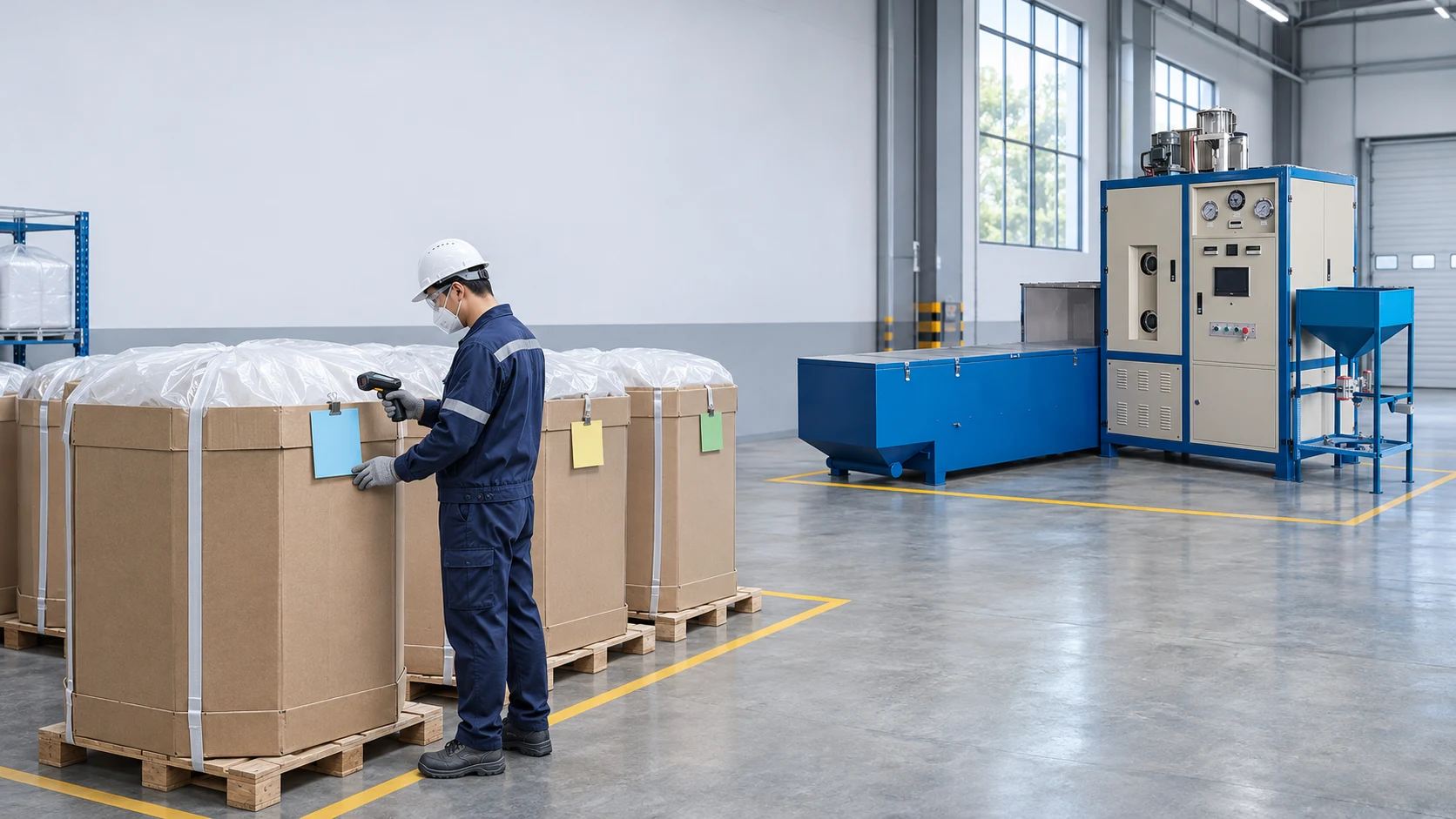
EPS raw bead storage is a process-control issue, not just a warehouse task. Keep each grade in its supplier-approved packaging, protect it from heat and direct sunlight, rotate lots by the supplier’s dated guidance, and connect every lot change to the next pre-expansion density check. If a batch no longer expands like the previous one, verify its identity and storage history before changing the machine recipe.
Why Storage Changes Pre Expansion
Expandable polystyrene contains a volatile blowing agent, commonly pentane, within the raw granule. During pre-expansion, heat softens the polymer and the blowing agent drives the increase in bead volume. While sealed raw bead is waiting in storage, a small amount of blowing agent can gradually leave the material. The rate depends on the grade, packaging, temperature, time, and handling history.
The practical consequence is simple: the same nominal recipe may not produce the same bulk density when the incoming material has changed. Operators can mistakenly compensate by increasing residence time or steam exposure, even though the first question should be whether the lot, package condition, or storage environment changed. The Plastics Europe guidance for expandable polystyrene raw beads notes that storage temperature affects blowing-agent loss and that raw EPS has a limited shelf life. Use the supplier’s current SDS, technical data sheet and dated storage instructions for the specific grade.
Separate Raw Bead Storage From Maturation
Raw bead and pre-expanded bead require different controls. Raw bead is protected before processing. Pre-expanded bead has already passed through steam and cooling and must rest so pressure can equalize as air diffuses into the cell structure. Treating these as one storage problem causes confused inventory records and unreliable process decisions.
MỘT hệ thống silo trưởng thành therefore belongs after pre-expansion, not in raw-material storage. OC Technology’s silo controls can display material type, packing density, level status, and maturation time. Those records are useful only when the upstream raw lot is also identified. A silo marked with a material family but not the producing lot, expansion time, or destination can still mix histories that behave differently in the mold.
Build a Storage Standard Around Four Controls
1. Preserve package integrity
Inspect incoming packages for punctures, loose liners, water exposure, heat damage, and unreadable labels. Do not assume that an intact outer box proves the inner barrier is intact. Use the grade-specific supplier instructions for partly used packages.
2. Control location and temperature exposure
Keep raw EPS away from direct sunlight, hot walls, steam lines, heaters, and areas with large daily temperature swings. Record actual warehouse conditions instead of relying on a thermostat located far from the pallets. When material arrives hot after transport, follow the supplier’s safe receiving and conditioning procedure before opening or processing it.
3. Use FIFO by usable lot status
First-in, first-out works only when production date, receipt date, grade, lot, and supplier status remain visible. A newer delivery should not hide older material behind it, and an opened package should not return to stock without a clear identity. Quarantined, expired, or conditionally released material needs physical and system separation from approved stock.
4. Maintain ventilation and ignition control
Raw EPS can release pentane vapor. Base storage and handling on the supplier SDS, applicable regulations and a site risk assessment completed by qualified personnel. The assessment must cover ventilation, grounding, electrical classification, smoking control, spill response, emergency procedures and the actual room and floor geometry, because pentane vapor can collect at low level.
Connect Every Lot Change to a Density Check
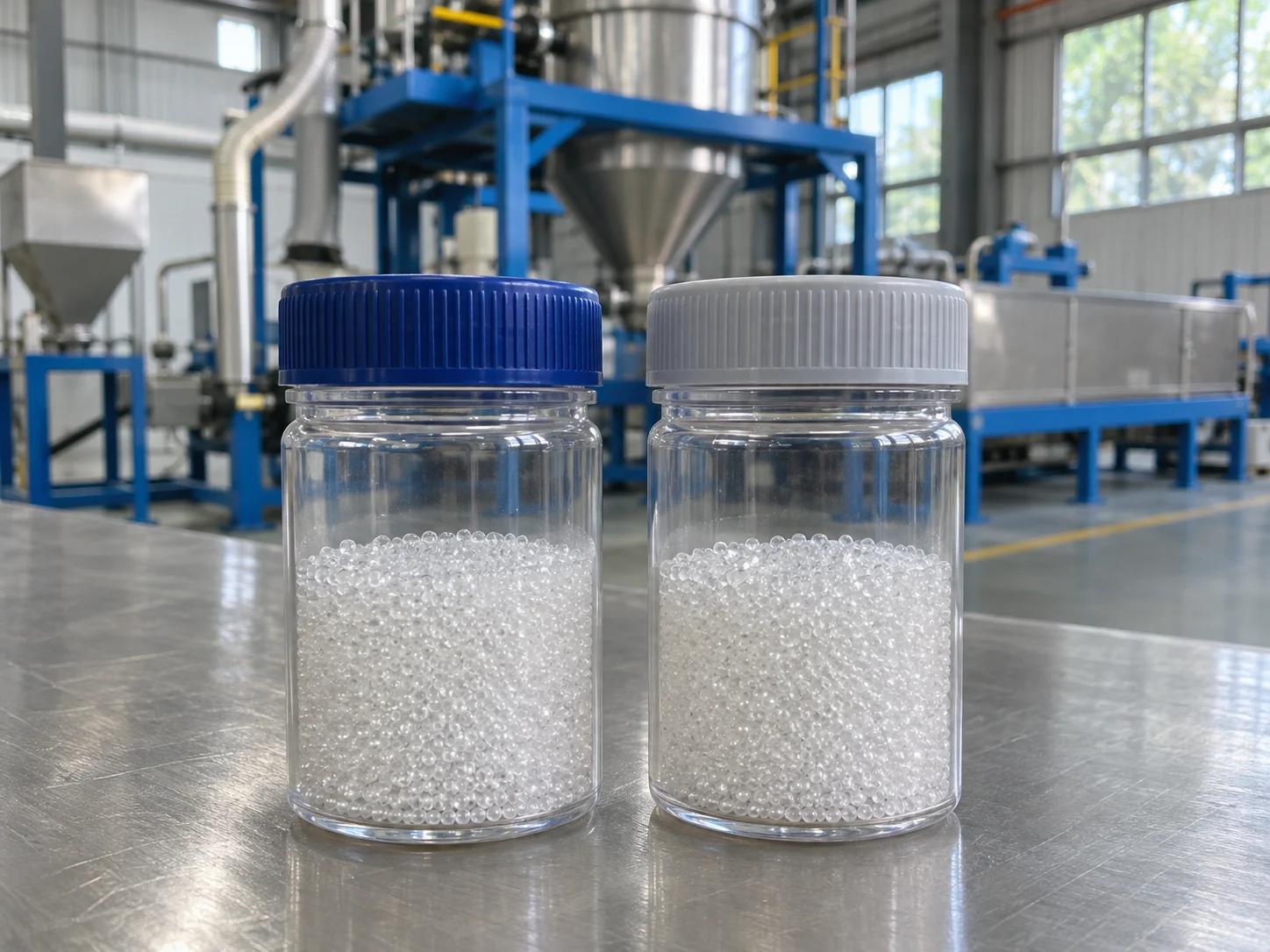
A warehouse log becomes valuable when it connects to production evidence. At minimum, the pre-expansion record should identify the raw lot, grade, package status, recipe version, input mass, time, operator or shift, and measured bulk density. Note any unusual adjustment instead of silently overwriting the established recipe.
Công nghệ OC’ S fully automatic pre-foaming machine stores pre-expansion parameters and uses electronic weighing, PLC control, and a fluidized drying bed with screening. These functions support repeatability, but they cannot establish why the feed material changed unless the plant carries the raw-lot identity into the batch record. Measurement should therefore follow a documented sampling method rather than a loose visual judgment.
If density shifts immediately after a lot change, repeat the approved test before altering process parameters. Compare a confirmed shift with an accepted lot under the same test conditions, and hold suspect material until quality and safety personnel determine its disposition. For beads that leave the machine wet, clumped, or uneven, include the pre-expander checks for wet or clumped beads in the investigation.
A Practical Receiving and Release Checklist
| Trạm kiểm soát | Evidence to record | Hold condition |
| Identity | Supplier, grade, lot, production or control date | Missing or conflicting identification |
| Đóng gói | Outer condition, liner condition, seal status | Puncture, open liner, moisture, heat damage |
| Storage | Assigned location and relevant condition record | Unapproved location or unexplained heat exposure |
| Rotation | FIFO position and supplier use-by guidance | Lot bypassed or status unclear |
| Production release | Approved recipe and first verified density result | Result outside the plant’s approved control plan |
Diagnose Storage Before Retuning the Process
Storage should move to the top of the investigation when a density change follows a new lot, a heat event, damaged packaging, an extended shutdown, or an inventory discrepancy. It is less likely to be the only cause when multiple lots show the same abrupt symptom at the same machine time. In that case, verify steam, condensate removal, weighing, temperature control, discharge, fluidized-bed airflow, and sampling technique.
Change one factor at a time. Preserve samples from the suspect and accepted lots, and keep their test conditions comparable. An aggressive recovery recipe for questionable material requires supplier and process approval. A temporary density result can conceal changes in bead strength, moisture, screening behavior, or later fusion.
Phần kết luận
Reliable EPS raw bead storage combines material identity, intact packaging, controlled exposure, disciplined rotation, ventilation, and traceable release testing. The goal is not to create one universal shelf-life number. It is to ensure that each lot reaches the pre-expander with a known history and is evaluated against the correct supplier and plant requirements.
Để đánh giá mức độ phù hợp của thiết bị, hãy liên hệ với đội ngũ kỹ thuật OC Technology with the bead grade, target density, package type, typical storage time, ambient range, batch size, and current pre-expansion records. That information allows the pre-expander and maturation arrangement to be discussed around the actual material flow.
Câu hỏi thường gặp
Can one shelf-life number be used for every EPS grade?
No. Shelf life and storage limits depend on the formulation, packaging, supplier guidance, and actual exposure history. Use the current SDS and technical data for the purchased grade.
Should operators change the recipe when an older lot expands differently?
First verify identity, storage history, package condition, and the density test. Route each recipe change through the plant’s approval process and link it to the lot.
Are raw EPS beads and pre-expanded beads stored the same way?
No. Raw material is protected before expansion; pre-expanded bead is conditioned during maturation. Their locations, records, and handling purposes should remain distinct.
What information should follow a raw lot into production?
At minimum: supplier, grade, lot, relevant date, package status, recipe version, batch time, input mass, and the verified density result.


 Vietnamese
 English
 Arabic
 Hindi
 Indonesian
 Japanese
 Korean
 Malay
 Portuguese
 Spanish
 Thai