
A lost foam casting line may meet every technical specification and still fall short in production. A fast EPS molding machine cannot compensate for insufficient maturation, drying, or vacuum capacity. Likewise, an attractive equipment quotation can become far more expensive once tooling, utilities, freight, installation, commissioning, training, and spare parts are included.
For foundry owners, project engineers, and procurement teams, the key issue is not simply the purchase price. The complete lost foam casting system must match the casting range, pattern-production method, factory utilities, workforce, and planned output. Poor capacity matching can create idle equipment, unstable production, and a longer payback period.
This guide explains the main factors behind lost foam casting line cost, the technical parameters that influence ROI, and the points buyers should verify before comparing manufacturers or requesting a formal quotation.
Is a Lost Foam Casting Line Right for Your Foundry?
Before discussing price, confirm that the production route matches the application. Repeat castings, large housings, prototypes, and short runs can require different pattern strategies, tooling, and automation.
Match the Pattern Method to Your Product Mix
Stable repeat orders may justify dedicated molds and an EPS Molding Machine. Large patterns, prototypes, and lower-volume products may be better suited to molded EPS blocks followed by CNC cutting.
Dedicated tooling supports repeatable output, while a block-molding route offers more flexibility when designs change often. The choice affects launch speed, pattern cost, and capital tied up in molds.
Replace One Machine or Rebalance the Line?
A new molding machine will not solve a line-wide bottleneck. If patterns wait for maturation, coated clusters queue outside the drying room, or several machines compete for vacuum capacity, extra molding speed only moves the delay.
Review rejects, downtime, cycle variation, and missed deliveries. An isolated problem may justify one machine; linked bottlenecks may require a wider lost foam casting production line upgrade.
Once the process route is clear, the buyer can define the equipment scope and calculate the project cost.
What Determines Lost Foam Casting Line Cost?
Output, pattern dimensions, automation, tooling, utilities, logistics, installation, and service all affect lost foam casting line cost. Separate equipment price from total installed cost.
Size White-Area Equipment as One System
A white-area system may include pre-expansion, maturation, EPS pattern molding, block molding, drying, and vacuum supply. These stages should follow the same production plan.
Các EPS Pre-Expander Machine from OC Technology uses PLC control, stored process parameters, automatic operation, remote parameter support, and electronic weighing. Stored recipes simplify repeat orders, while electronic weighing gives operators a clear control point for batch consistency.
A short molding cycle has limited value when bead preparation, mold changes, or drying cannot keep pace. Capacity must be matched across the line.
Include Costs Outside the Equipment Package
A complete budget normally includes:
- Pattern molds, fixtures, and trial modifications
- Steam, power, compressed air, drainage, foundations, and workshop changes
- Export packing, freight, duties, and inland transport
- Installation labor, lifting equipment, travel, and accommodation
- Commissioning, production trials, training, and ramp-up losses
- Initial spare parts and critical wear components
For overseas projects, put the responsibility split in writing. It should state what the supplier delivers, what the buyer prepares, and what must be ready before installation begins.
Which Parameters Have the Greatest Effect on ROI?
Nameplate capacity does not equal saleable output. Real performance depends on bead condition, cycle repeatability, mold changes, maturation, drying, utility stability, maintenance, and first-pass acceptance.
Measure Accepted Patterns per Shift
Ask for estimated net output based on the proposed products, including normal stops, cleaning, changeovers, cooling, and rejected patterns. Useful inputs include EPS density range, batch repeatability, mold dimensions, cycle time, maturation capacity, drying load, and operator count.
Accepted patterns per shift connects equipment performance to labor cost, delivery capacity, and actual good output.
Match Drying Capacity to the Real Load
Các Thiết bị sấy bằng bơm nhiệt nguồn không khí recovers heat while removing moisture from the drying room. Its value depends on room volume, pattern load, coating moisture, local climate, airflow, and required drying time.
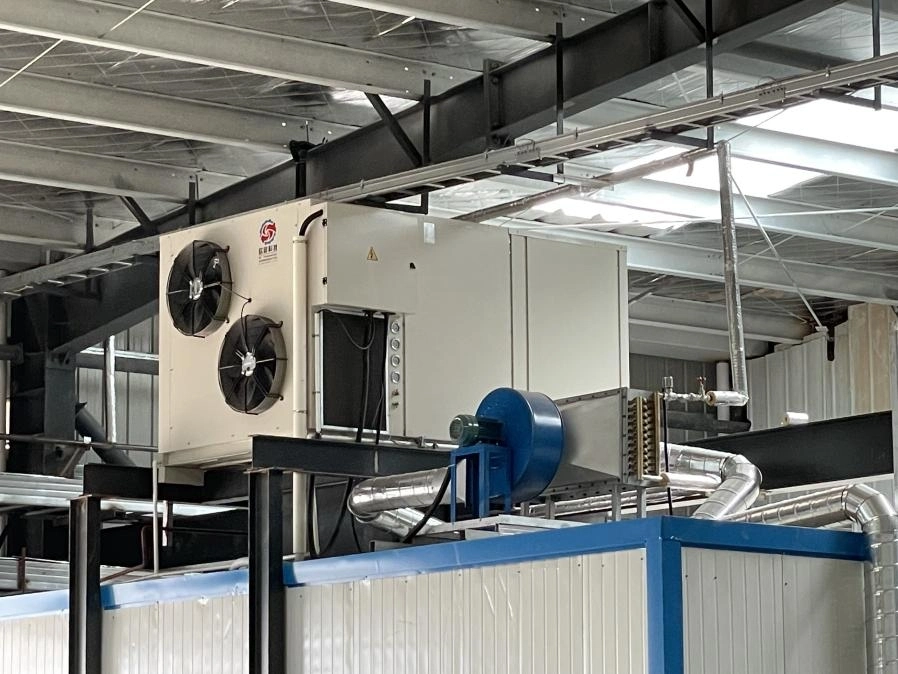
A higher compressor rating alone does not guarantee better drying. Correct sizing supports more consistent drying conditions and clearer control over energy use.
Check Shared Utilities and Automation Scope
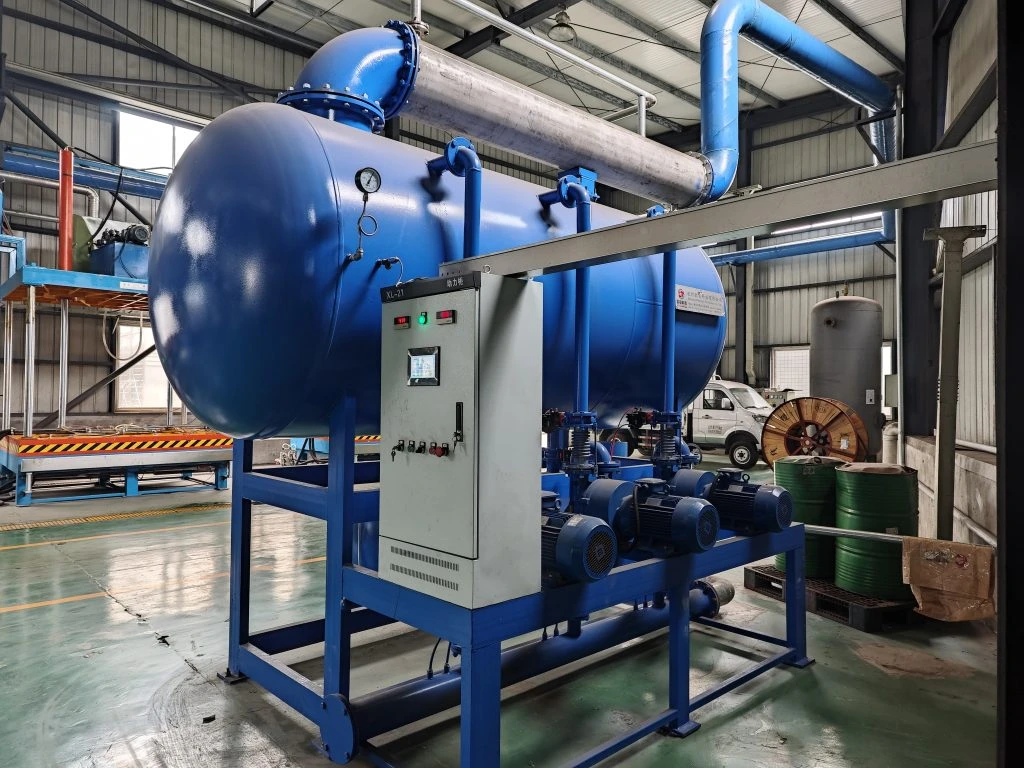
MỘT Hệ thống chân không trung tâm should be selected around connected machines, operating overlap, pipeline length, pressure stability, and expansion plans. Also check steam, compressed air, electrical load, and drying capacity.
Not every foundry needs the highest automation level. Recipe storage, stable feeding, remote diagnostics, maintenance access, and balanced capacity often provide practical value. Oversized tables, unused reserve capacity, or automated transfers for rarely used routes may not.
These parameters become financially meaningful when compared with current labor, energy, scrap, and downtime costs.
How Should Buyers Calculate Payback?
A reliable payback estimate starts with the plant’s current production baseline, not a general savings claim.
Establish the Current Cost Baseline
Use recent operating records. Record acceptable output, labor hours, utility consumption, pattern rejects, casting scrap linked to pattern quality, maintenance spending, downtime, and product-change losses.
Then identify what the new equipment is expected to change. If fewer operators are proposed, specify which tasks will be removed. If a shorter cycle is used, confirm that maturation, drying, vacuum, and downstream operations can support it.
Calculate Three Payback Scenarios
Simple payback period = Total installed investment ÷ Annual net savings
Run conservative, expected, and high-utilization cases. The conservative case should allow for commissioning, ramp-up, lower initial utilization, maintenance, training, and product-change losses.
Simple payback supports early comparison, but it does not replace a full review of financing, taxes, depreciation, exchange rates, and cash flow. If the project only works at maximum capacity from the first month, the assumptions need another look.
How to Compare Lost Foam Casting Line Manufacturers
Compare suppliers on the same project boundary. Two quotations may appear similar while covering very different equipment, commissioning, training, and spare-parts scopes.
Compare Scope, Not Just Price
| Comparison point | What to verify |
| Application fit | Part sizes, alloys, pattern route, tooling, and product mix |
| Net capacity | Accepted patterns per shift under realistic conditions |
| Utilities | Peak steam, power, air, water, drainage, and ventilation |
| Project scope | Equipment, controls, tooling, installation, and buyer duties |
| Acceptance | Trial conditions, output target, and quality criteria |
| Support | Training, warranty, remote service, documents, and spare parts |
Ask each lost foam casting line manufacturer to quote against the same technical brief. A lower price may simply mean that more work has been left to the buyer.
Review Installation, Training, and Maintenance
The project schedule should separate design confirmation, manufacturing, shipping, site preparation, installation, commissioning, training, and ramp-up. Delivery date and production date are not the same.
Late utility checks can delay overseas commissioning. Confirm steam pressure, compressed-air capacity, drainage, voltage, cable specifications, and lifting access before manufacturing.
Check whether service points are accessible, which parts require scheduled replacement, and which critical components should be stocked locally. Clear training, warranty terms, remote-support procedures, and spare-parts lead times make ownership costs easier to forecast.
How OC Technology Supports Project-Specific Selection
Công nghệ OC is a lost foam casting equipment manufacturer specializing in intelligent white-area equipment and turnkey project support. Its configurations are based on project data rather than a fixed package.
Configuration Based on Casting and Factory Data
A useful proposal starts with casting drawings, alloy, part weight, pattern dimensions, annual and peak output, shifts, product changes, utilities, workshop layout, and future capacity.
These inputs guide machine size, silo capacity, drying load, vacuum demand, tooling, and automation boundaries. Project-based selection reduces the risk of paying for unusable capacity or leaving one stage too small.
Turnkey Support From Planning to Commissioning
For a new plant or major upgrade, equipment interfaces matter as much as individual machine features. Layout planning should consider material flow, utility routing, mold handling, maintenance access, operator movement, and room for expansion.
OC Technology can review the project information and prepare a proposed equipment configuration, preliminary utility requirements, project scope, and commercial quotation.
Phần kết luận
The best lost foam casting line is not automatically the cheapest, largest, or most automated. It is the line that fits the casting program, delivers the required accepted output, stays within the plant’s utility limits, and comes with clear responsibilities for installation, training, and support.
Foundries planning a new line, expansion, or equipment replacement can request a project-specific quotation from OC Technology by sharing casting drawings, alloy, pattern dimensions, output targets, shift plans, utility conditions, and workshop layout.
Câu hỏi thường gặp
Q1: How much does a lost foam casting line cost in 2026?
A: Cost includes equipment price, total installed project cost, and operating cost. Capacity, tooling, automation, utilities, freight, commissioning, training, and spare parts all affect the final figure.
Q2: What information is required for an accurate quotation?
A: Provide casting drawings, alloy, part weight, pattern dimensions, annual and peak output, product mix, shifts, utilities, workshop space, existing equipment, and the required automation level.
Q3: Which parameters have the greatest effect on quality and operating cost?
A: Key factors include EPS density control, batch repeatability, filling consistency, cycle stability, changeover time, maturation capacity, drying load, vacuum stability, first-pass acceptance, and net output.
Q4: How long do installation, commissioning, and training take?
A: Timing depends on line scope, shipping, site readiness, local labor, utilities, tooling, and trial production. Each stage should appear separately in the project schedule.
Q5: What after-sales support should an overseas buyer require?
A: Confirm remote troubleshooting, technical documents, training, warranty terms, response responsibilities, wear parts, spare-parts stock, and replacement-part lead times.


 Vietnamese
  English
  Arabic
  Hindi
Hindi  Indonesian
  Japanese
  Korean
  Malay
Malay  Portuguese
  Spanish
  Thai
Thai