
An EPS pre-expander machine may meet every headline specification and still be the wrong fit for a foundry. The real test begins when it runs with the customer’s bead grade, target density, steam supply, conveying layout, and maturation capacity. When those conditions are not matched early, the result may be unstable batches, repeated parameter changes, delayed molding, and extra work after delivery.
That is why purchasing teams need to look beyond capacity figures, control features, and the lowest supplier price. The machine, process conditions, downstream equipment, and service responsibilities all need to support the same production target. The first step is to confirm whether the proposed configuration fits the material, batch demand, utilities, and downstream process—before comparing density control, FAT results, or quotation terms.
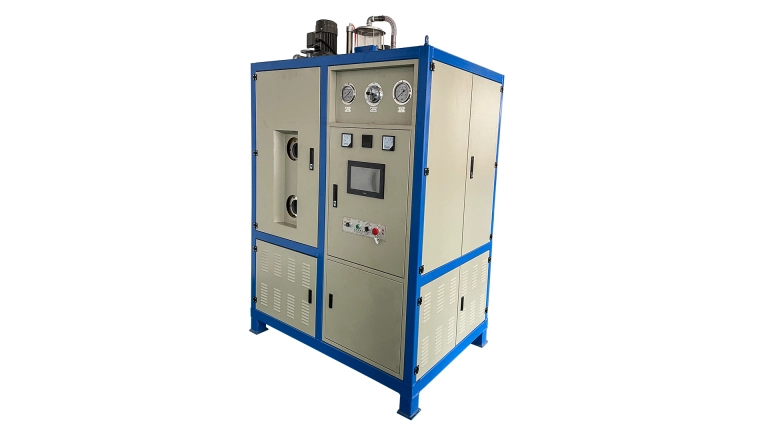
Is the EPS Pre-Expander Machine Right for the Application?
Selection starts with the production case, not the largest number in a brochure. The pre-expander has to work with the raw material, target density, daily bead demand, conveying route, maturation storage, and molding schedule. When one part of that chain is poorly matched, a larger machine may only move the bottleneck downstream.
Define the Raw Material and Density Target
Send the supplier the EPS producer, grade, bead-size range, storage condition, and required expanded density. The OC Technology EPS Pre-Expander Machine can process EPS and other agreed bead materials, but the exact grade belongs in the material trial.
Using the foundry’s normal production material gives a more useful result than one convenient factory sample. Bead condition affects the recipe, steam demand, discharge, and final density, so the customer faces fewer surprises during commissioning.
Match the Configuration to Actual Batch Demand
The OC-YF-Y450 and OC-YF-Y550 are shown with 40 kg and 60 kg ratings. The quotation should define what each rating represents and the material, target density, and cycle conditions used.
Do not convert a nominal batch figure directly into guaranteed hourly output. Recipe changes, discharge time, conveying, silo availability, and operator routines affect daily production. A high-mix foundry may gain more from practical batch changes than from the largest charge.
Confirm Utilities, Conveying, and Maturation Capacity
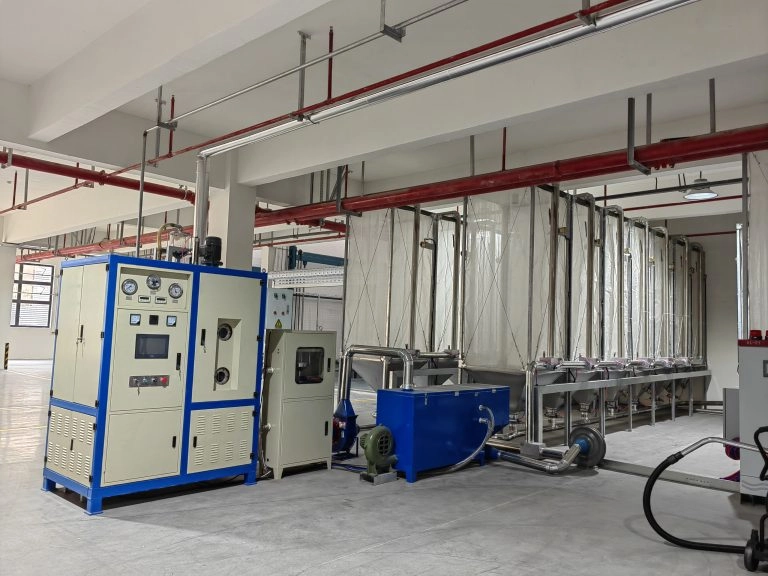
Record steam conditions, compressed-air supply, electrical requirements, discharge height, conveying distance, and storage volume. The maturation silo system needs enough capacity to receive and condition the beads without creating a queue.
A machine can run well during FAT and still struggle on site when utilities or material handling differ. A clear supply boundary shows which piping, controls, conveying parts, and site services are included. With these conditions defined, buyers can separate useful specifications from brochure numbers.
Which Specifications Actually Affect Batch Results?
Some figures look strong in a sales document but have limited value without a test range, method, and acceptance condition. Each function needs to connect with a practical production result.
Separate Weighing Deviation From Density Repeatability
The electronic weighing system has a pre-weighing deviation within ±1 gram. This relates to the input weighing point; it does not mean the final expanded-bead density will hold the same tolerance.
Density repeatability also depends on the material, steam conditions, recipe, sampling point, conditioning time, and test method. The technical agreement needs separate acceptance criteria for weighing performance and final density, together with the applicable weighing range and verification procedure.
For the customer, this prevents one precise input figure from being mistaken for proof of the complete process result.
Review the Pre-Expansion Method and Recipe Control
The machine combines electromagnetic heating with steam pre-expansion. PLC control manages the automatic cycle, while stored process parameters provide a reference for repeat production. Remote system upgrades and parameter debugging are available within the agreed service scope.
During the trial, review temperature behavior, steam regulation, bead condition, and batch-to-batch results. The value is not the technology label itself, but the ability to restart a known recipe, compare shifts, and provide useful records during technical support.
Automatic operation reduces repetitive steps, but trained operators still need controlled access to recipes and alarms.
Check Fluidization, Screening, Discharge, and Service Access
The pre-expander includes a fluidized bed, a double-layer stainless-steel vibrating screen, and bottom discharge. During testing, inspect residual material, visible clumping, screening behavior, and transfer to maturation. Electrical leakage protection and electrical leakage protection and power-outage protection also form part of the machine’s protection functions.
Clean discharge limits batch carryover, while steady screening helps the next stage receive material without waiting. Check how the weighing system is verified, how operators access the screen and fluidized bed for cleaning, and which parts need routine inspection.
How Should Batch Testing and FAT Be Organized?
A useful Factory Acceptance Test starts before the machine runs. Buyer and supplier need the same material identification, utility conditions, sampling method, and acceptance range. For a 2026 purchase, documented batch results, traceable recipe settings, and assigned retest responsibilities provide a practical basis for shipment approval.
Agree on the Test Conditions
The FAT plan records:
- Raw-material grade and batch identification
- Target density and accepted range
- Input weight and selected recipe
- Steam and compressed-air conditions
- Sampling point and density-test method
- Cycle time, alarms, and operator adjustments
- Discharge, screening, and bead condition
Use the same units, sampling point, and conditioning period for every result. Samples tested after different waiting times may not be directly comparable. Once approved, the method belongs in both the technical agreement and FAT record.
Test Consecutive Batches, Not One Showcase Run
One successful cycle proves the machine can run, not that production is stable. Test enough consecutive batches to show repeatability for the specified material and recipe, with the quantity written into the FAT procedure.
Record input weight, density, cycle time, discharge behavior, alarms, and manual changes for each batch. When a result falls outside the accepted range, document it before adjusting several settings. Changing steam, temperature, time, and weighing values together may recover the next batch, but it can hide the cause.
Turn the FAT Into a Clear Acceptance Record
The FAT covers machine assembly, valves, sensors, electrical controls, automatic sequence, recipe storage, weighing records, alarms, discharge, fluidized-bed movement, and agreed protection functions. Safety-related checks must follow the approved machine procedure.
The record identifies which deviations require adjustment, retesting, or a shipment hold, and who approves the result. FAT confirms performance under agreed factory conditions. Site commissioning still checks the actual utilities, conveying connections, maturation arrangement, and production material.
With the acceptance method fixed, technical and commercial quotations become easier to compare.
How to Compare an EPS Pre-Expander Supplier and Quotation
The lowest EPS pre-expander machine price is not always the lowest project cost. Trials, auxiliary equipment, training, inspection, local modifications, and service work may sit outside the headline quote. Purchasing teams need one comparison basis covering equipment, testing, site boundaries, and after-sales responsibilities.
Compare the Complete Equipment and Service Scope
Confirm whether the quotation includes the pre-expander, weighing system, fluidized bed, vibrating screen, control cabinet, conveying interfaces, documents, startup parts, and recommended spares.
Training needs to cover recipe selection, authorized parameter changes, batch records, cleaning, alarm handling, and safe shutdown. Also review installation guidance, warranty boundaries, remote support, service response, and replacement-part lead times.
A pre-expander does not work in isolation. OC Technology supplies フォーム鋳造機器を失った for pre-expansion, maturation, EPS molding, drying, and central vacuum applications. The downstream process can be reviewed through the EPS Molding Machine, while the guide on sizing and configuring a lost foam casting production line connects individual machine capacity with the wider line.
Avoid Paying for Capacity or Functions the Project Cannot Use
A larger batch configuration or added control option has value only when it solves a defined production problem. Extra capacity is hard to use when maturation silos, conveying, or molding demand are already the limiting factors.
Ask each supplier to connect every priced option with an operating need, acceptance test, or service outcome. This keeps the purchase focused on accepted output, maintainability, and project risk rather than a long feature list.
Define Retest, Shipment, and Site Responsibilities
The technical agreement sets out the process for fault review, parameter correction, mechanical adjustment, repeated testing, record updates, and shipment approval.
For an overseas project, clarify who supplies test material, pays for third-party inspection, prepares site utilities, handles lifting, and provides local labor. Also define spare-parts shipment, remote-support access, and the response path if commissioning is delayed.
結論
Choosing an EPS pre-expander machine takes more than comparing batch figures, weighing deviation, and automation claims. The equipment has to fit the raw material, target density, utilities, conveying route, maturation capacity, production schedule, and maintenance resources. Consecutive batch testing and a documented FAT turn quotation data into evidence that purchasing and engineering teams can review before shipment.
OC テクノロジー supplies pre-expansion and related white-area equipment for lost foam casting projects. Foundries can お問い合わせ OC Technology with the material grade, target density, required batch demand, shift plan, utility conditions, workshop layout, and preferred FAT scope. These details provide the basis for a suitable machine configuration, supply boundary, testing plan, service responsibilities, and commercial quotation.
よくある質問
Q1: What information is needed before requesting an EPS pre-expander machine quotation?
A: Provide the material grade, bead size, target density, batch demand, shift plan, utilities, conveying layout, and maturation capacity. This supports a relevant configuration rather than a generic price.
Q2: Does a ±1 gram weighing deviation prove final bead-density accuracy?
A: No. It relates to the pre-weighing input point. Final density repeatability depends on the material, recipe, utilities, sampling method, conditioning period, and agreed test procedure.
Q3: How many consecutive batches are needed for an EPS pre-expander FAT?
A: There is no universal number. Buyer and supplier need enough batches to demonstrate stable operation for the specified material and recipe, with the quantity written into the FAT procedure.
Q4: What affects EPS pre-expander machine price?
A: Price depends on batch configuration, controls, fluidized-bed and screening scope, conveying interfaces, FAT, training, spare parts, installation support, and site responsibilities.
Q5: What should an EPS pre-expander supplier provide for an overseas project?
A: Review English documents, FAT records, operator training, installation responsibilities, remote parameter support, warranty terms, critical spares, service response, replacement-part lead times, and correction and retest procedures.


 Japanese
  English
  Arabic
  Hindi
Hindi  Indonesian
  Korean
  Malay
Malay  Portuguese
  Spanish
  Thai
Thai  Vietnamese